 Bug FAQ
Green Longhorn Moth
Adela reaumurella · Order: Lepidoptera · Family: Adelidae
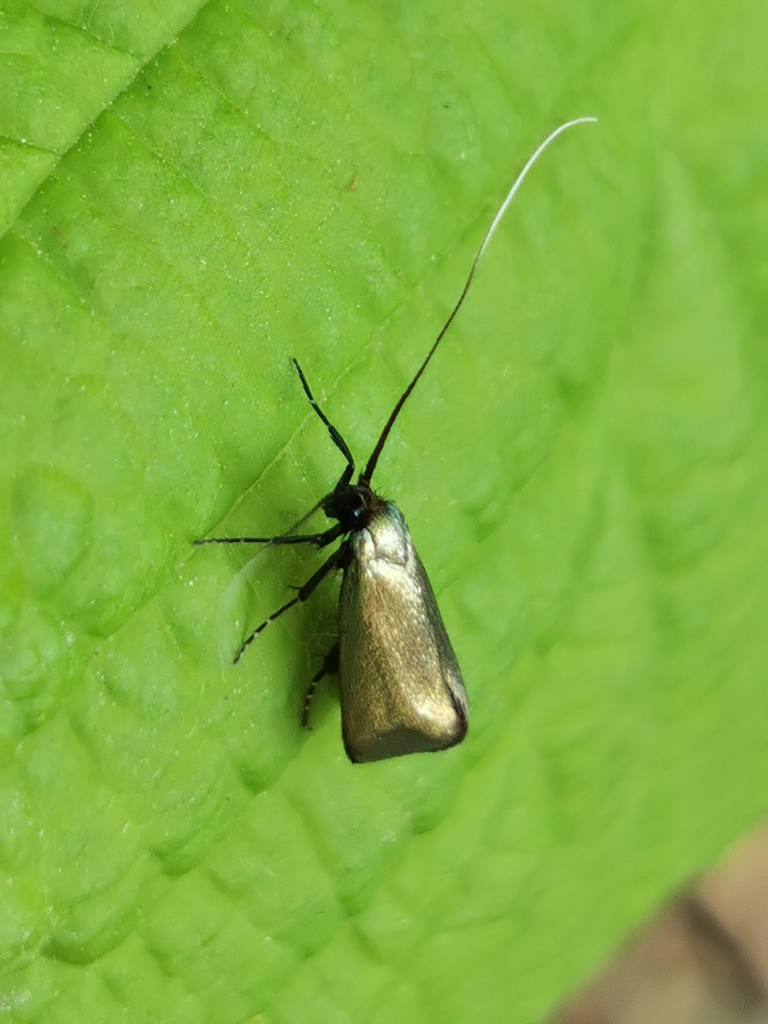
The green longhorn moth has a wingspan of about 14 to 18 mm and metallic green forewings with dark brown hindwings. It lives in forests and open meadows across southern and central Europe and flies from April to June. Caterpillars feed on leaf litter of birch and oak, mining the leaves before pupating the next spring.
Source: Wikipedia
How to recognize it
The forewings are ovoid-elongated with a rounded tip and a bronzy-green metallic sheen.
Source: Wikipedia
Size
Wingspan ranges from 14 to 18 mm.
Source: Wikipedia
Where it lives
Found in forests and open meadows.
Source: Wikipedia
What it eats
Caterpillars live among fallen birch and oak leaves, feeding on leaf litter and mining the leaves.
Source: Wikipedia
Life cycle
Pupation occurs in the larval bag during the following spring.
Source: Wikipedia
When you see it
Adults are active during the day from April through June.
Source: Wikipedia
Where it comes from
Distributed across the Palearctic, especially southern North Europe, Western, Central and Eastern Europe.
Source: Wikipedia
Lookalikes
It belongs to the fairy longhorn moth family (Adelidae).
Source: Wikipedia
More photos


Questions people ask
Are they a garden pest?
The larvae feed on leaf litter of birch and oak, not on living plant tissue, so they are not a crop or garden pest.
Source: Wikipedia
Same family (Adelidae)
Sources
- Wikipedia: https://en.wikipedia.org/wiki/Green_longhorn
Look it up elsewhere: GBIF · iNaturalist · BugGuide · Wikipedia
Text written 2026-10-22 from the sources above and checked sentence by sentence against them. Data fetched 2026-10-22.