 Bug FAQ
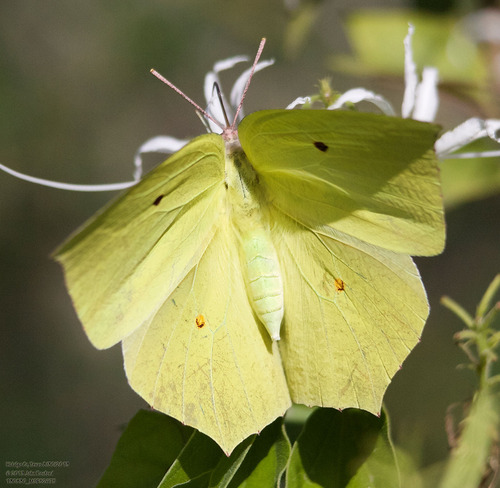
Yellow Angled-Sulphur
Anteos maerula · Order: Lepidoptera · Family: Pieridae
Also called: Angled Sulphur, Yellow Brimstone
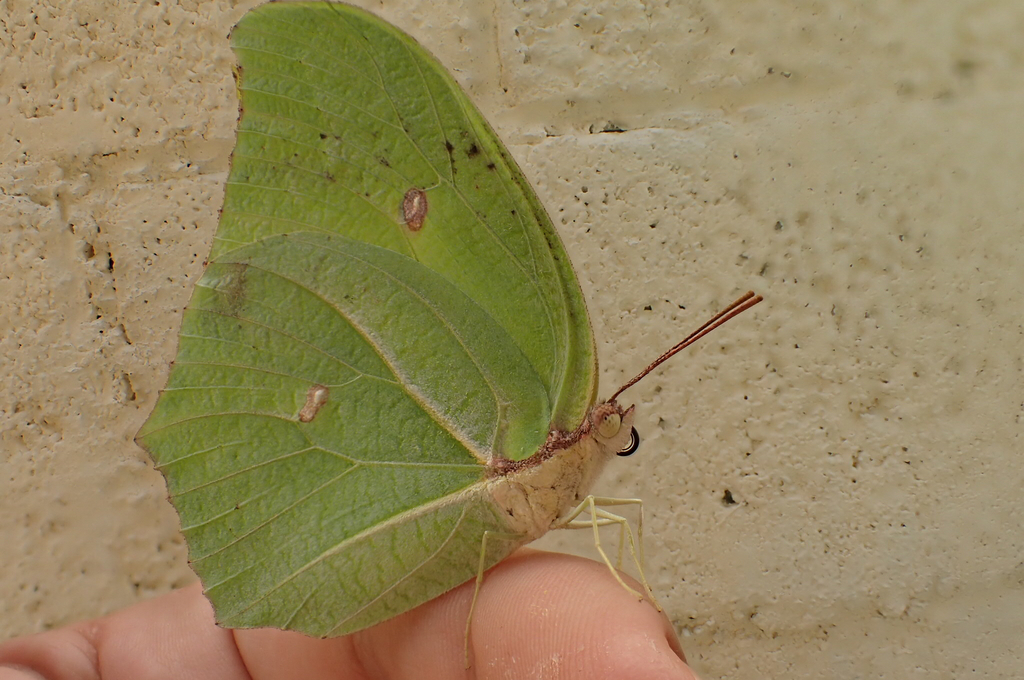
The yellow angled-sulphur has a wingspan between about 8 and 12 cm. It lives from Peru up through Mexico and occasionally shows up as a migrant in parts of the southern United States. Its caterpillars feed on plants in the Cassia genus, such as Cassia emarginata.
Source: Wikipedia
Size
Wingspan ranges from roughly 82 mm to 117 mm.
Source: Wikipedia
Where it lives
Found from Peru to Mexico, with rare migrants reaching eastern Nebraska, southeastern Arizona, southwestern New Mexico, southern Texas, Mississippi and Florida.
Source: Wikipedia
What it eats
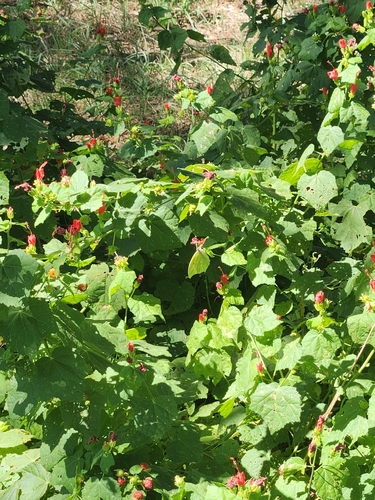
Larvae eat Cassia species, including Cassia emarginata.
Source: Wikipedia
Where it comes from
Native range extends from Peru through Mexico.
Source: Wikipedia
Where it is found in the US
Recorded in 5 of 51 states and DC. Most records: Texas, Arizona, Florida, Kansas, Illinois.
Darker = more records. Counts are museum and citizen-science records, not population size.
Source: GBIF
Months it is reported in the US
Source: GBIF
More photos
Questions people ask
What do the caterpillars eat?
The larvae feed on Cassia plants such as Cassia emarginata.
Source: Wikipedia
How big does the yellow angled-sulphur get?
Its wingspan is between about 82 mm and 117 mm.
Source: Wikipedia
Where is this butterfly found?
It occurs from Peru up through Mexico and sometimes appears as a migrant in parts of the southern United States.
Source: Wikipedia
Same family (Pieridae)



Sources
- Wikipedia: https://en.wikipedia.org/wiki/Anteos_maerula
Look it up elsewhere: GBIF · iNaturalist · BugGuide · ITIS · Wikipedia
Text written 2026-10-26 from the sources above and checked sentence by sentence against them. Data fetched 2026-10-26.