 Bug FAQ
Orange Sulphur
Colias eurytheme · Order: Lepidoptera · Family: Pieridae
Also called: Alfalfa Butterfly, Alfalfa Caterpillar, Orange Sulfur
Source: Wikipedia
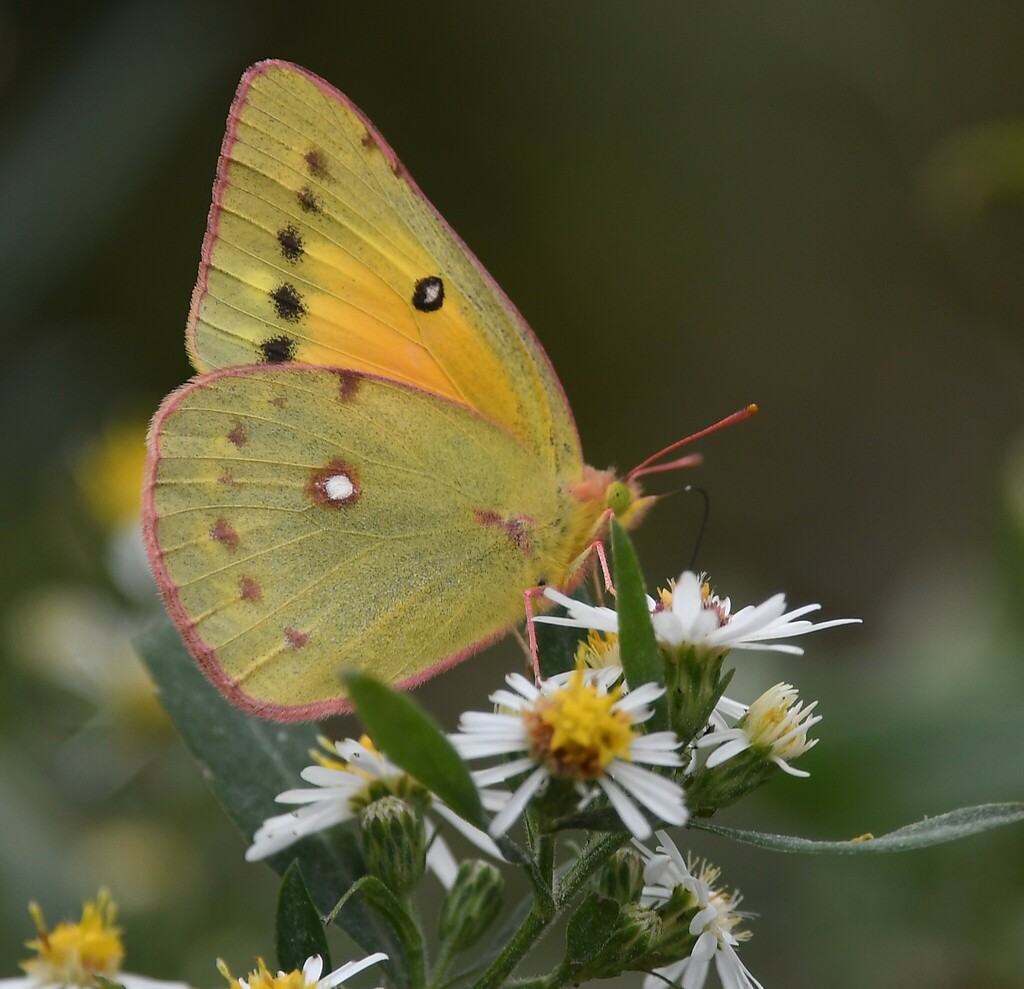
Males have ultraviolet-reflective hindwings while females have ultraviolet-absorbing hindwings, and females may appear white (alba morph). They are found from southern Canada through the United States to Mexico and were originally western Nearctic species displaced eastward by logging and alfalfa fields. Caterpillars feed on pea-family plants and large numbers can damage alfalfa crops.
Source: Wikipedia
How to recognize it
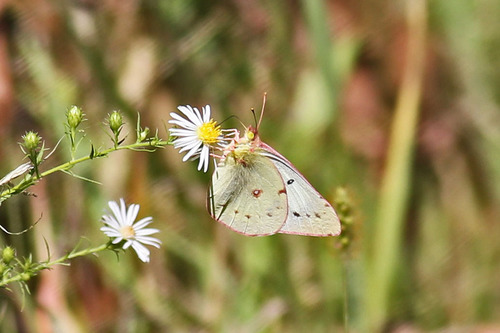
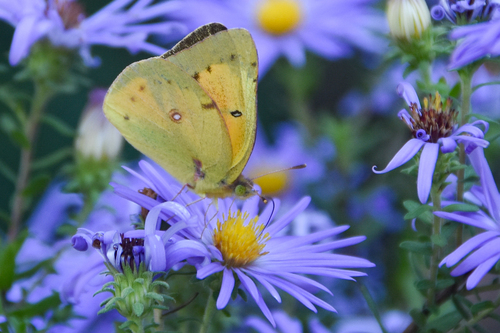
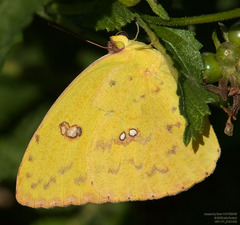
Male hindwings show an ultraviolet reflectance pattern, while female hindwings absorb ultraviolet light. Female orange sulphurs sometimes have a white (alba) form.
Source: Wikipedia
Is it a pest in the house?
When numbers get high, they can become a serious pest of alfalfa crops.
Source: Wikipedia
Where it lives
They occur throughout North America, from southern Canada down to Mexico.
Source: Wikipedia
What it eats
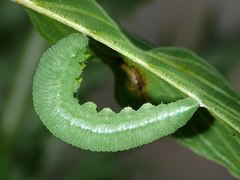
Caterpillars eat various legumes in the pea family (Fabaceae). Males use visual cues to find and recognize females.
Source: Wikipedia
Life cycle
The species has a polyandrous mating system. After using a spermatophore, a female enters a refractory period, then seeks another mate.
Source: Wikipedia
When you see it
In summer, females re-mate every 4 to 6 days and may mate up to four times in their life.
Source: Wikipedia
Where it comes from
Historically they lived mainly in the western Nearctic but were pushed east by logging and alfalfa planting.
Source: Wikipedia
Lookalikes
They resemble other Colias species such as the common sulphur (C. philodice) and C. eriphyle. The white alba morph also occurs in other Colias species, which can cause confusion.
Source: Wikipedia
Where it is found in the US
Recorded in 50 of 51 states and DC. Most records: Texas, Illinois, California, Ohio, Maryland, Pennsylvania, Virginia, Vermont.
Darker = more records. Counts are museum and citizen-science records, not population size.
Source: GBIF
Status: native in North America; native in Canada; native in United States. Source: iNaturalist
Months it is reported in the US
Source: GBIF
More photos


Questions people ask
How can I control an orange sulphur outbreak in my alfalfa field?
A biological control option is the parasitoid wasp Cotesia medicaginis, which attacks the caterpillars.
Source: Wikipedia
Same family (Pieridae)



Sources
- Wikipedia: https://en.wikipedia.org/wiki/Colias_eurytheme
Look it up elsewhere: GBIF · iNaturalist · BugGuide · ITIS · Wikipedia
Text written 2026-10-22 from the sources above and checked sentence by sentence against them. Data fetched 2026-10-22.