 Bug FAQ
Wormwood Pug
Eupithecia absinthiata · Order: Lepidoptera · Family: Geometridae
Also called: Ling Pug
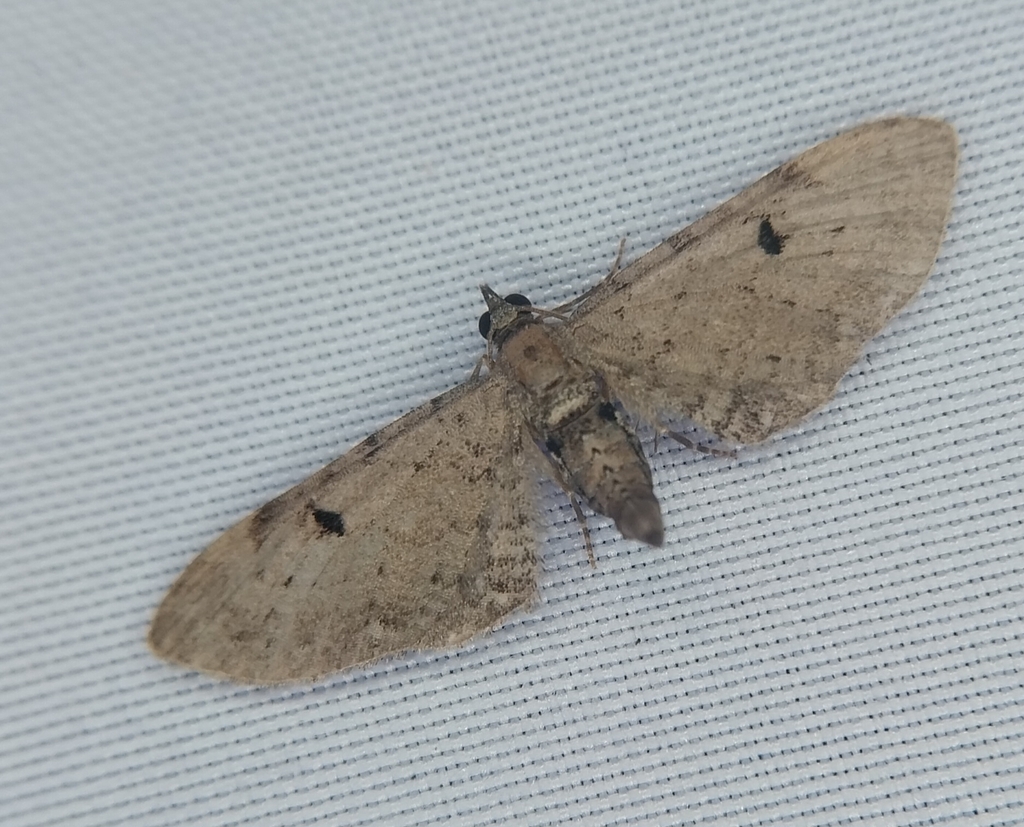
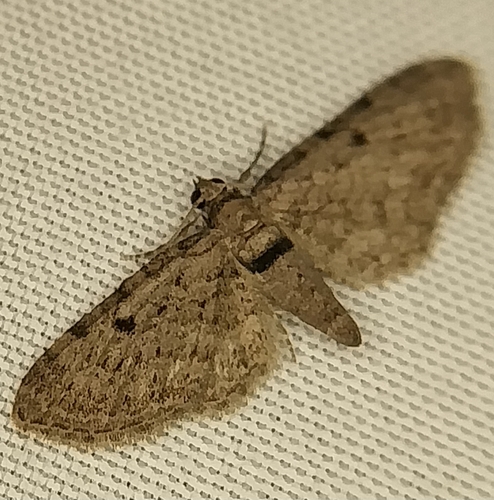
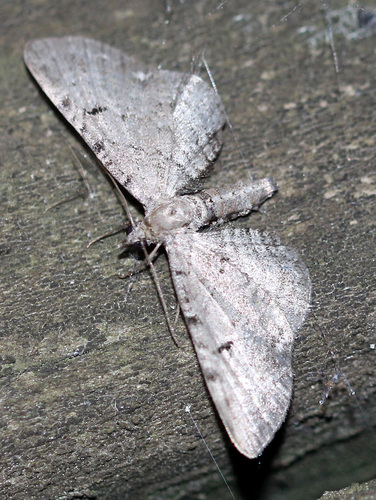
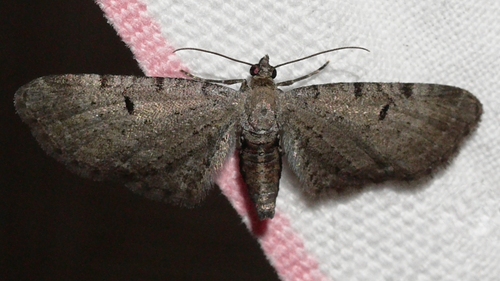
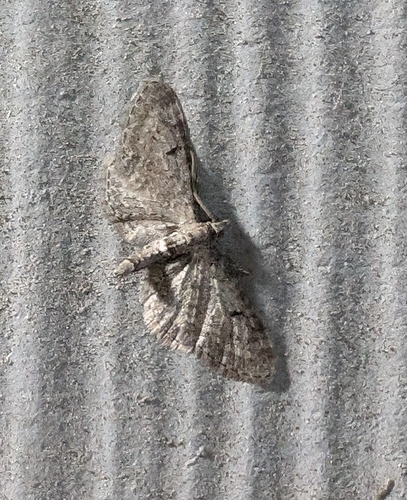
The wormwood pug has a wingspan of about 21 to 23 mm and warm-brown forewings marked with two black spots on the leading edge and a black discal spot forming a triangle. Its larvae feed on mugwort flowers and other plant blossoms, and the species overwinters as a yellow-brown pupa with greenish wing sheaths. Adults fly at night in June and July, are attracted to light, and can be confused with Eupithecia assimilata or Eupithecia expallidata.
Source: Wikipedia
How to recognize it
A narrow pale line near the fringe and a whitish spot near the tornus are present, though less prominent than in the similar currant pug.
Source: Wikipedia
Size
The wingspan measures 21 to 23 mm.
Source: Wikipedia
What it eats
The larvae feed on the flowers of mugwort and a variety of other plants.
Source: Wikipedia
Life cycle
The species overwinters as a pupa. The pupa is yellow-brown with greenish wing sheaths.
Source: Wikipedia
When you see it
Adults fly at night during June and July and are attracted to light.
Source: Wikipedia
Where it comes from
It occurs widely in the Palearctic and also in North America.
Source: Wikipedia
Lookalikes
It can be mistaken for Eupithecia assimilata. It can also be confused with Eupithecia expallidata.
Source: Wikipedia
Where it is found in the US
Recorded in 31 of 51 states and DC. Most records: Pennsylvania, New York, Massachusetts, Vermont, Michigan, California, Ohio, Connecticut.
Darker = more records. Counts are museum and citizen-science records, not population size.
Source: GBIF
Status: native in North America; native in Canada; native in United States. Source: iNaturalist
Months it is reported in the US
Source: GBIF
More photos
Questions people ask
How can I tell the wormwood pug apart from similar moths?
Look for the warm-brown forewings with two black costal spots and a black discal spot forming a triangle, plus a narrow pale line near the fringe and a whitish spot near the tornus.
Source: Wikipedia
When are adult wormwood pugs active?
Adults are nocturnal and fly in June and July, often coming to lights.
Source: Wikipedia
What do the caterpillars eat?
The larvae feed on mugwort flowers and other plant blossoms.
Source: Wikipedia
Where is the wormwood pug found?
It is common across the Palearctic region and North America.
Source: Wikipedia
Same family (Geometridae)




Sources
- Wikipedia: https://en.wikipedia.org/wiki/Wormwood_pug
Look it up elsewhere: GBIF · iNaturalist · BugGuide · ITIS · Wikipedia
Text written 2026-10-25 from the sources above and checked sentence by sentence against them. Data fetched 2026-10-25.