 Bug FAQ
Wood Cricket
Nemobius sylvestris · Order: Orthoptera · Family: Trigonidiidae
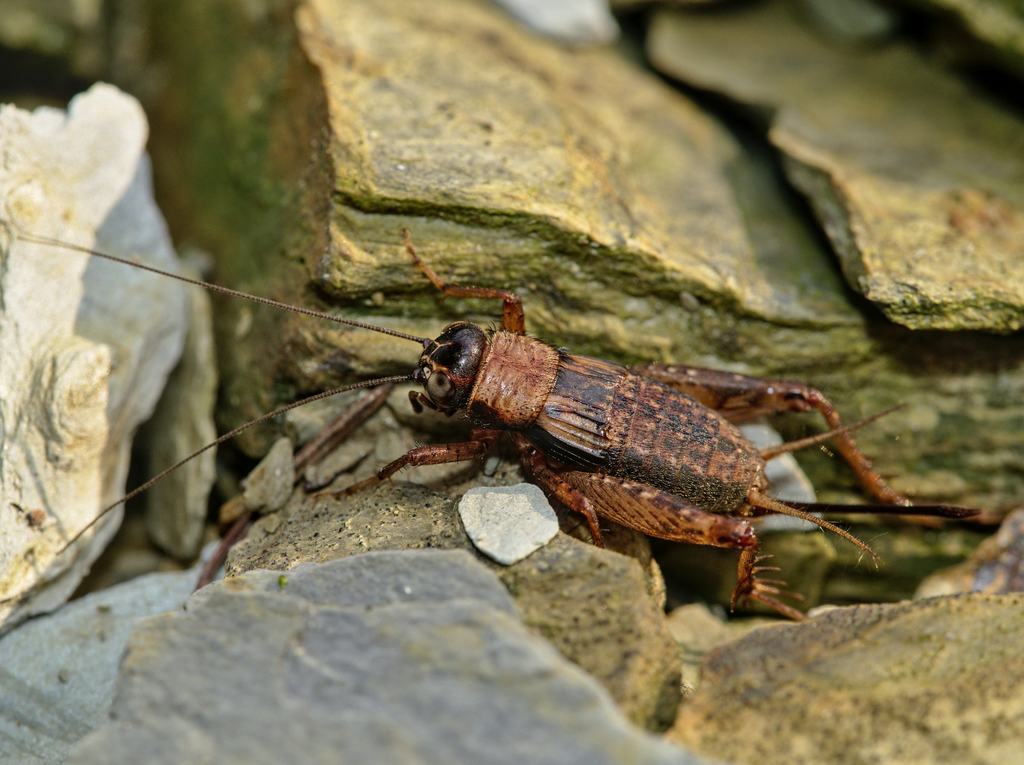
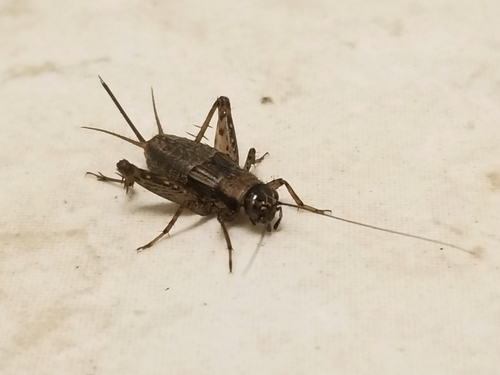
Wood crickets are tiny, dark brown insects about 1 cm long that live in leaf litter on warm, sunny forest edges. They feed on decaying leaves and the fungi that grow there, lay eggs in the litter in summer and autumn, and can live for two years, maturing in June.
Source: Wikipedia
How to recognize it
They look like small, dark brown grasshoppers with long, thread-like antennae; males have fore-wings that reach halfway down the abdomen, while females have only short wing stubs.
Source: Wikipedia
Size
An adult is about 1 cm (0.4 in) long.
Source: Wikipedia
Where it lives
They are found on forest edges and clearings, especially among oak, beech, hazel, holly and bracken, preferring warm sunny spots in leaf litter.
Source: Wikipedia
What it eats
They eat decaying leaf litter and the fungi that grow on it.
Source: Wikipedia
Life cycle
Eggs are deposited in leaf litter during summer and autumn; the species can overwinter as eggs or nymphs and the young become adults in June, and individuals may live for two years.
Source: Wikipedia
When you see it
When it’s hot enough, males will sing both day and night.
Source: Wikipedia
Where it is found in the US
Recorded in 3 of 51 states and DC. Most records: Washington, New York, Michigan.
Darker = more records. Counts are museum and citizen-science records, not population size.
Source: GBIF
Status: introduced in United States. Source: iNaturalist
Months it is reported in the US
Source: GBIF
More photos
Questions people ask
Are wood crickets a garden pest?
They feed on leaf litter and fungi, not on living plants, so they are not a crop or garden pest.
Source: Wikipedia
Same family (Trigonidiidae)
Sources
- Wikipedia: https://en.wikipedia.org/wiki/Nemobius_sylvestris
Look it up elsewhere: GBIF · iNaturalist · BugGuide · Wikipedia
Text written 2026-10-22 from the sources above and checked sentence by sentence against them. Data fetched 2026-10-22.