 Bug FAQ
Winter Moth
Operophtera brumata · Order: Lepidoptera · Family: Geometridae
Source: Wikipedia
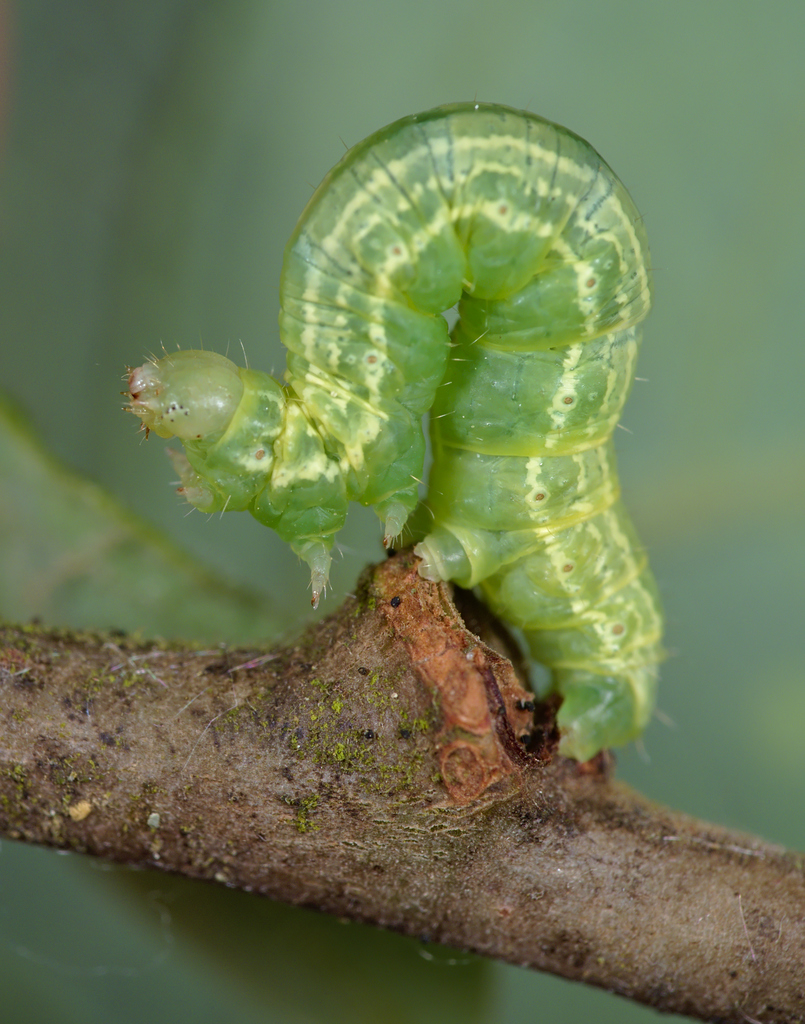
The larvae feed on many deciduous leaves and some conifers, growing from about 2.5 mm to 19 mm in six weeks. In North America the species is invasive and causes noticeable defoliation of trees in several northeastern states.
Source: Wikipedia
How to recognize it
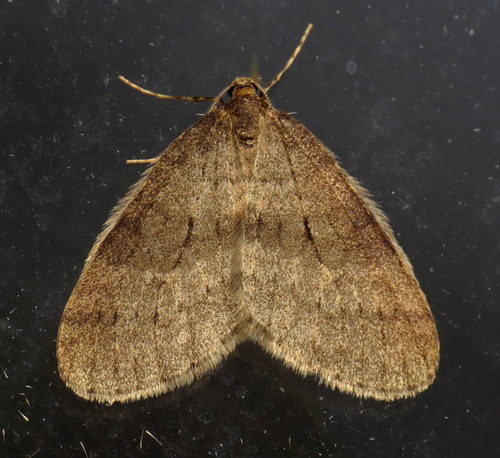
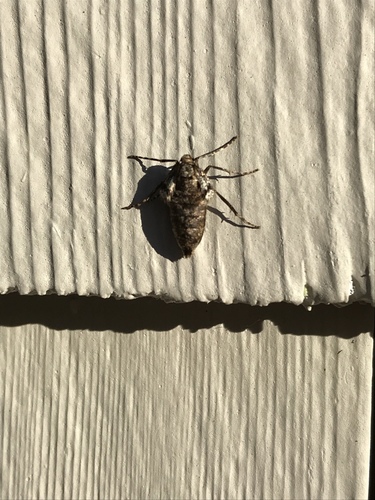
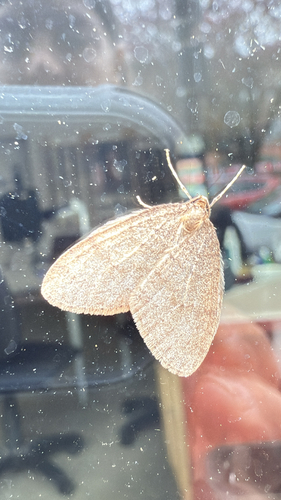
Male winter moths have forewings that range from grey-yellow to beige-brown, sometimes with a reddish tint. Female winter moths are flightless, with a brownish-grey body and short wing stubs that are brown to grey with dark bands.
Source: Wikipedia
Size
Both male and female adults are about 1 cm (0.4 in) long. Newly hatched larvae are about 2.5 mm (0.1 in) and grow to roughly 19 mm (0.75 in) over six weeks.
Source: Wikipedia
Is it a pest in the house?
In North America the winter moth is an invasive pest that causes defoliation, especially noted in several northeastern U.S. states.
Source: Wikipedia
How to get rid of it
Since 2005, the parasitoid fly Cyzenis albicans has been released as a biological control agent. Ongoing efforts continue to use biological control methods against the winter moth.
Source: Wikipedia
Where it lives
Winter moths are native to northern and central Europe, extending south to northern Italy and east to the Caucasus and Asia Minor. They have become an invasive species in North America.
Source: Wikipedia
What it eats
Larvae and adults can survive below-freezing night temperatures. They feed on a wide variety of deciduous leaves and some conifers.
Source: Wikipedia
Life cycle
After the first frosts of late fall, females emerge, climb trees and release pheromones to attract males in the evening. Caterpillars hatch in early spring from eggs laid near leaf buds when daytime highs reach about 10 °C.
Source: Wikipedia
When you see it
Adults are active during late autumn and early winter, which is unusual for temperate lepidopterans.
Source: Wikipedia
Where it comes from
Their native range includes northern and central Europe, northern Italy, the Caucasus, Asia Minor, and the Baltic region.
Source: Wikipedia
Lookalikes
In North America it can be confused with the native Bruce spanworm, and the two species can hybridize.
Source: Wikipedia
Where it is found in the US
Recorded in 8 of 51 states and DC. Most records: Massachusetts, Kansas, New Hampshire, Maine, Washington, New York, Rhode Island, Connecticut.
Darker = more records. Counts are museum and citizen-science records, not population size.
Source: GBIF
Status: introduced in Canada; introduced in United States. Source: iNaturalist
Months it is reported in the US
Source: GBIF
More photos

Questions people ask
What damage do winter moths cause?
Their larvae eat the leaves of many trees and shrubs, leading to defoliation and stress on the plants.
Source: Wikipedia
How can I control winter moths?
Biological control using the parasitoid fly Cyzenis albicans has been employed since 2005, and other biological methods are being researched.
Source: Wikipedia
Same family (Geometridae)
 Willow BeautyPeribatodes rhomboidaria
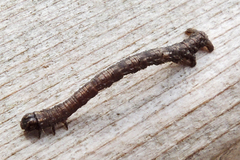 Pale BeautyCampaea perlataDamages trees, gardens or crops
 Large Lace-border MothScopula limboundataDamages trees, gardens or crops
 Riband WaveIdaea aversata
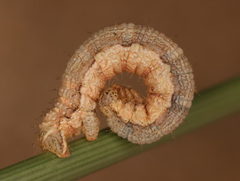 Yellow Shell MothCamptogramma bilineata
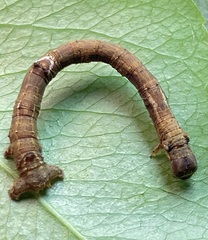 Large Maple Spanworm MothProchoerodes lineolaDamages trees, gardens or crops
Sources
- Wikipedia: https://en.wikipedia.org/wiki/Winter_moth
Look it up elsewhere: GBIF · iNaturalist · BugGuide · ITIS · Wikipedia
Text written 2026-10-22 from the sources above and checked sentence by sentence against them. Data fetched 2026-10-22.