 Bug FAQ
White-spotted Sable
Anania funebris · Order: Lepidoptera · Family: Crambidae
Also called: White-spotted Sable Moth
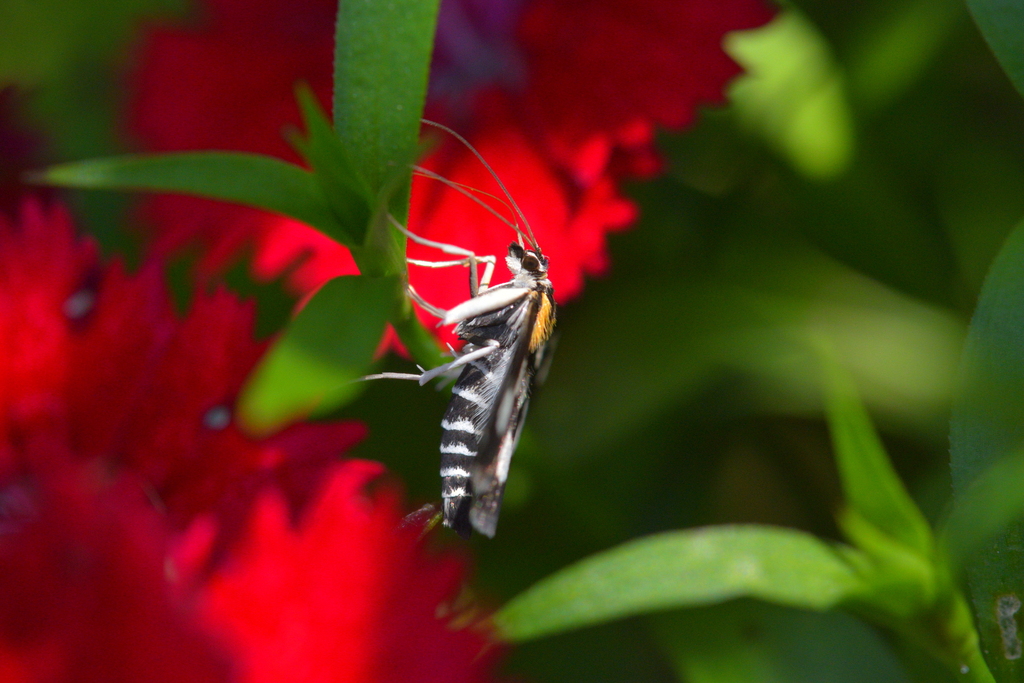
The White-spotted Sable is a small moth with a wingspan of about 20 to 23 mm. Adults fly by day from late April through August, peaking in June and July.
Source: Wikipedia
How to recognize it
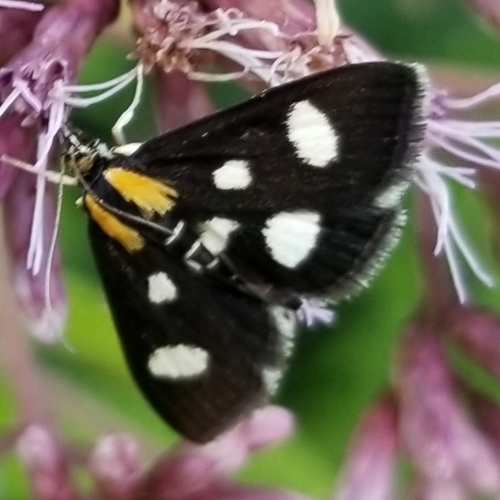
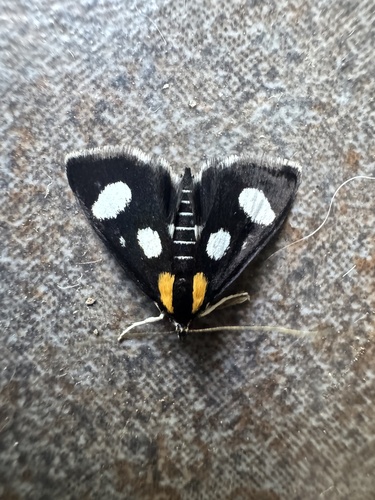
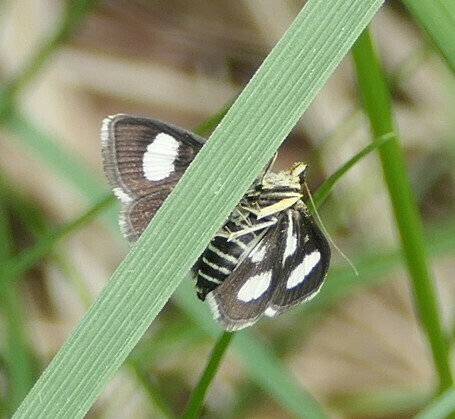
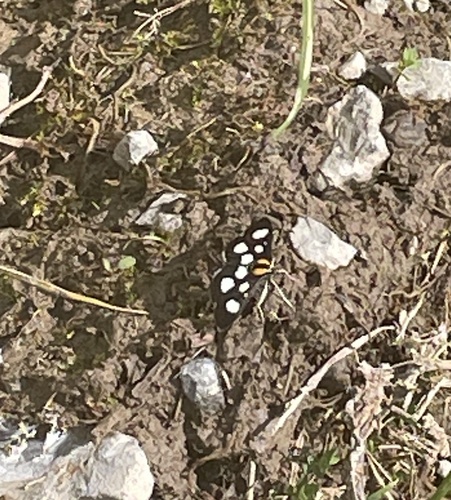
Forewings are black with one large round white spot before the middle and another beyond the middle; sometimes a tiny white dot appears above the first spot, and the wing edges have white tips. Hindwings match the forewings but lack the extra white dot. The caterpillar is pale ochre-white with a deep green line along its back, green side stripes, whitish-green spiracles, green dots, and a whitish-brown head.
Source: Wikipedia
Where it lives
It is widely found across Europe, northern Asia, and North America.
Source: Wikipedia
What it eats
Caterpillars feed on the leaves of goldenrod species such as Solidago virgaurea. They will also eat dyer’s greenweed (Genista tinctoria) on occasion.
Source: Wikipedia
Life cycle
Adults are day-flying moths active from late April to August, with the greatest activity in June and July.
Source: Wikipedia
When you see it
The flight season runs from late April through August, peaking in June and July.
Source: Wikipedia
Where it comes from
Its native range includes Europe, northern Asia, and North America.
Source: Wikipedia
Lookalikes
Other moths may look similar; see Parsons et al. for comparison.
Source: Wikipedia
Where it is found in the US
Recorded in 31 of 51 states and DC. Most records: Vermont, New York, Massachusetts, Michigan, New Hampshire, Pennsylvania, Wisconsin, Connecticut.
Darker = more records. Counts are museum and citizen-science records, not population size.
Source: GBIF
Status: native in North America; native in Canada; native in United States. Source: iNaturalist
Months it is reported in the US
Source: GBIF
More photos
Questions people ask
When can I see the White-spotted Sable?
Adults are on the wing from late April to August, with most sightings in June and July.
Source: Wikipedia
What do the caterpillars eat?
They feed on goldenrod leaves and sometimes on dyer’s greenweed.
Source: Wikipedia
Where is the White-spotted Sable found?
It occurs widely across Europe, northern Asia, and North America.
Source: Wikipedia
Same family (Crambidae)
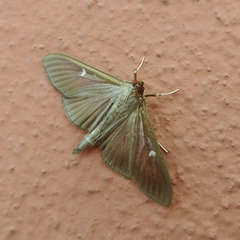 Box Tree MothCydalima perspectalisDamages trees, gardens or crops
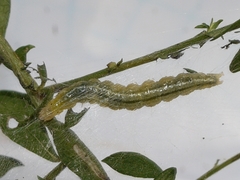 Celery Leaftier MothUdea rubigalisDamages trees, gardens or crops
 Elegant Grass-veneerMicrocrambus elegans
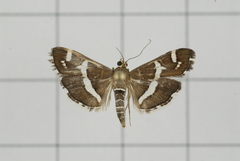 Hawaiian Beet Webworm MothSpoladea recurvalisDamages trees, gardens or crops
 Garden Grass-veneerChrysoteuchia culmellaDamages trees, gardens or crops
 Bluegrass Webworm MothParapediasia teterrellusDamages trees, gardens or crops
Sources
- Wikipedia: https://en.wikipedia.org/wiki/Anania_funebris
Look it up elsewhere: GBIF · iNaturalist · BugGuide · Wikipedia
Text written 2026-10-23 from the sources above and checked sentence by sentence against them. Data fetched 2026-10-23.