 Bug FAQ
White-footed House Ant
Technomyrmex jocosus · Order: Hymenoptera · Family: Formicidae
Also called: Eastern White-footed ant
Source: Wikipedia
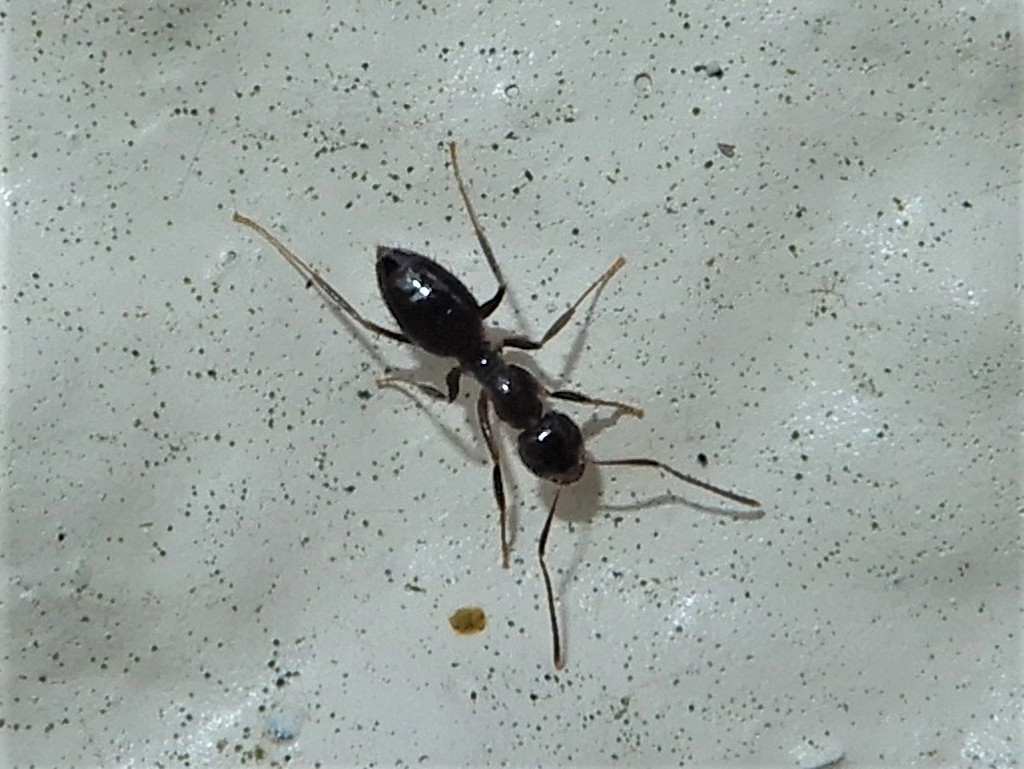
Workers are about 3 mm long and have twelve antennal segments. They live in New Zealand’s North Island forests, suburbs and open areas, often under rotten logs, in crevices or wall cavities. They are generalist scavengers that also tend aphids for honeydew.
Source: Wikipedia
How to recognize it
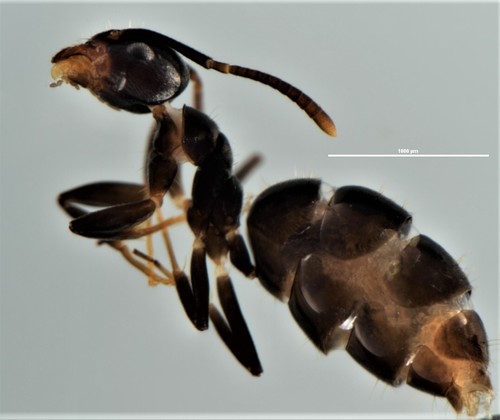
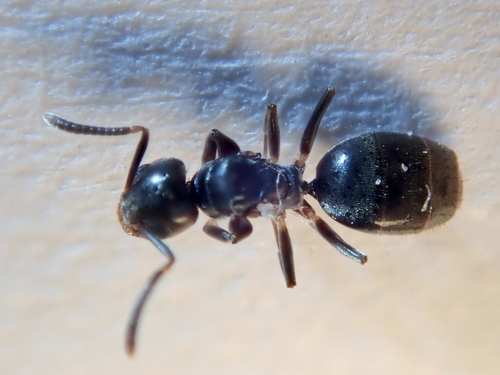
Workers measure 3.0 to 3.4 mm long and have 12 antennal segments. A pair of setae behind the eyes on the head distinguishes them from T. albipes.
Source: Wikipedia
Size
They are about three millimetres in length.
Source: Wikipedia
Is it a pest in the house?
They can be found in wall cavities, making them a household pest.
Source: Wikipedia
Where it lives
Found in suburban, forested and open habitats on New Zealand’s North Island. Also live under rotten logs, in crevices and inside house wall cavities.
Source: Wikipedia
What it eats
They are generalist scavengers that forage in open and forested areas. They farm aphids and other hemipterans for honeydew.
Source: Wikipedia
Life cycle
Colonies are maintained by many intercastes that lay eggs and have spermathecae.
Source: Wikipedia
Where it comes from
The species is native to Australia.
Source: Wikipedia
Lookalikes
Often confused with Technomyrmex albipes, which shares the common name white-footed ant.
Source: Wikipedia
More photos
Questions people ask
Where might I find white-footed house ants in my garden or home?
They live in forested, suburban and open areas and often hide under rotten logs, in crevices, or inside wall cavities.
Source: Wikipedia
Same family (Formicidae)
 Eastern Black Carpenter AntCamponotus pennsylvanicusCan damage your home
 Red Imported Fire AntSolenopsis invictaCan sting
 American Winter AntPrenolepis imparis
 Argentine AntLinepithema humileNuisance, not dangerous
 Immigrant Pavement AntTetramorium immigransCan sting
 Odorous House AntTapinoma sessileCan damage your home
Sources
- Wikipedia: https://en.wikipedia.org/wiki/Technomyrmex_jocosus
Look it up elsewhere: GBIF · iNaturalist · BugGuide · ITIS · Wikipedia
Text written 2026-10-23 from the sources above and checked sentence by sentence against them. Data fetched 2026-10-23.