 Bug FAQ
White Albatross
Appias albina · Order: Lepidoptera · Family: Pieridae
Also called: Common Albatross
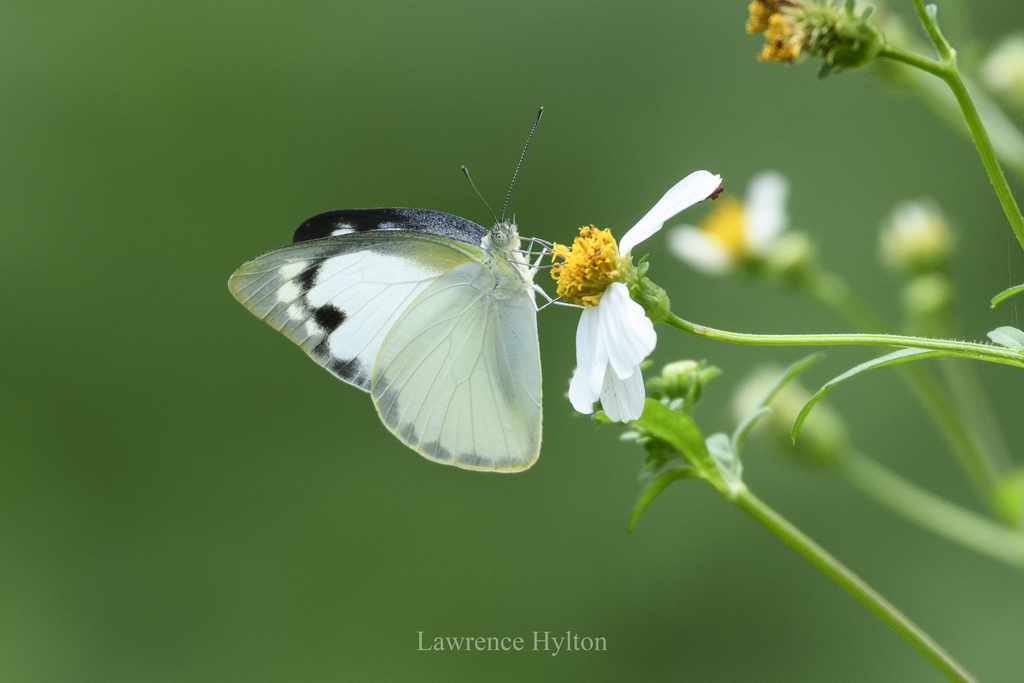
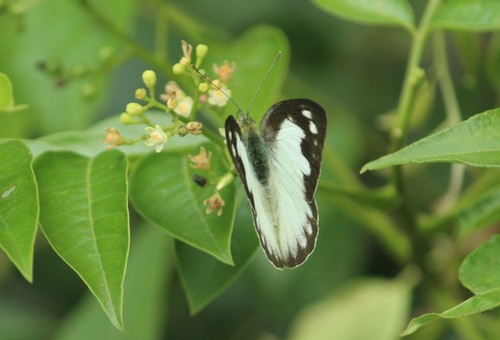
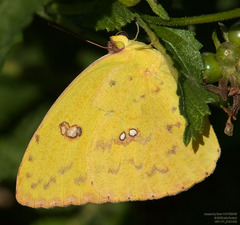
The White Albatross butterfly has a wingspan of about 60 to 74 mm and lives in parts of South and Southeast Asia, extending to Australia. Males show black speckling on the upper forewing tips and a dusky-black antenna, while both sexes have pale ochraceous undersides that lack the yellow seen in similar species.
Source: Wikipedia
How to recognize it
Males have black speckles on the forewing apex and along the edge, fewer than in Appias paulina.
Source: Wikipedia
Size
The wingspan ranges from 60 to 74 mm.
Source: Wikipedia
Where it lives
It occurs up to about 1,200 m in Sikkim, Bengal, western and southern India, as well as northeastern India, Burma and the Malay Peninsula.
Source: Wikipedia
What it eats
Caterpillars feed on Drypetes oblongifolia, D. roxburghii and D. venusta.
Source: Wikipedia
Life cycle
The antennae are dusky black with white speckles; males have a white underside of the thorax, never yellow.
Source: Wikipedia
Where it comes from
Its native range covers South and Southeast Asia through to Australia.
Source: Wikipedia
More photos
Questions people ask
How can I tell the White Albatross apart from Appias paulina?
Look for the more acute forewing tip in males and the narrower black band on the underside of the female's forewing.
Source: Wikipedia
What plants do the caterpillars eat?
They feed on species of Drypetes such as D. oblongifolia, D. roxburghii and D. venusta.
Source: Wikipedia
Where is this butterfly found?
It lives from the Indian subcontinent up through Burma and the Malay Peninsula, reaching into Australia.
Source: Wikipedia
Same family (Pieridae)


Sources
- Wikipedia: https://en.wikipedia.org/wiki/Appias_albina
Look it up elsewhere: GBIF · iNaturalist · BugGuide · Wikipedia
Text written 2026-10-24 from the sources above and checked sentence by sentence against them. Data fetched 2026-10-22.