 Bug FAQ
Western Velvety Tree Ant
Liometopum occidentale · Order: Hymenoptera · Family: Formicidae
Also called: Velvety Tree Ant
Source: Wikipedia
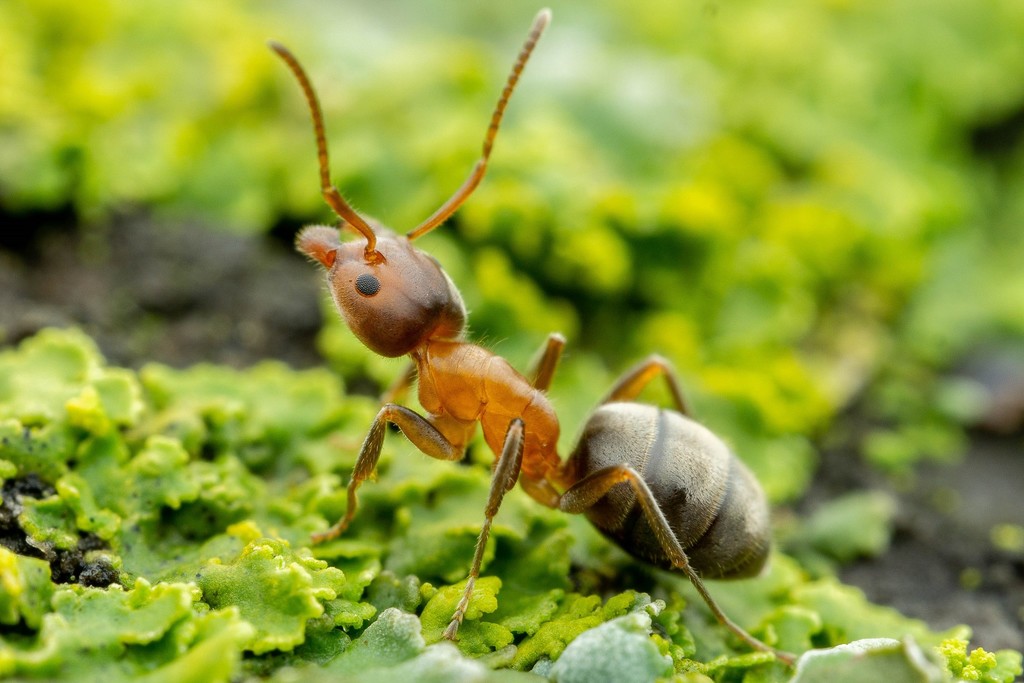
These ants are found from sea level up to 1840 m along the coast from southern Washington to northern Mexico, nesting in tree crevices, soil and under bark of dead trees. They are opportunistic omnivores that tend hemipterans and bring captured insects back to the nest, and they may affect biological control in citrus groves. Colonies of 40 000 to 60 000 workers produce 2 to 2.8 kg of brood each year for 4 to 8 years, with reproductive flights observed in May.
Source: Wikipedia
How to recognize it
People often confuse western velvety tree ants with carpenter ants because they have similar worker shapes, a smooth rounded thorax, and they also chew wood.
Source: Wikipedia
Is it a pest in the house?
Their role as structural pests may be underreported, especially in California, Oregon, and Washington.
Source: Wikipedia
How to get rid of it
More research on their feeding preferences is needed to develop effective baits. Understanding nest architecture requires excavating additional nests.
Source: Wikipedia
Where it lives
They prefer to nest in cracks of oaks, alders, elms, cottonwoods, creosote, in soil, and under the bark of dead trees.
Source: Wikipedia
What it eats
These ants are opportunistic omnivores that tend sap-feeding insects and carry prey back to their nests. They are commonly found in citrus groves attending hemipterans, though their impact on biological control is unclear.
Source: Wikipedia
Life cycle
Reproductive flights have been recorded throughout May. A mature colony of 40 000 to 60 000 workers can produce 2 to 2.8 kg of brood each year for up to eight years.
Source: Wikipedia
When you see it
Nuptial flights of reproductives occur in May.
Source: Wikipedia
Lookalikes
They are often mistaken for carpenter ants by homeowners and pest professionals.
Source: Wikipedia
Where it is found in the US
Recorded in 8 of 51 states and DC. Most records: California, Oregon, Utah, Arizona, Washington, Nevada, New Mexico, Texas.
Darker = more records. Counts are museum and citizen-science records, not population size.
Source: GBIF
Status: native in North America; native in United States. Source: iNaturalist
Months it is reported in the US
Source: GBIF
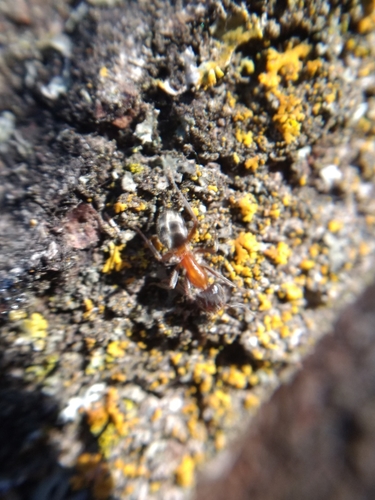
More photos
Questions people ask
How can I tell western velvety tree ants apart from carpenter ants?
They look similar, but note their smooth convex thorax and the fact they also excavate wood, which leads to frequent misidentification.
Source: Wikipedia
Where do these ants usually nest?
They nest in crevices of various trees, in soil, and under the bark of dead trees.
Source: Wikipedia
Do they damage my house?
Yes, they can damage structures by excavating wood, and this problem may be underreported in the western United States.
Source: Wikipedia
What is the best way to control them?
Research suggests studying their food preferences to create baits and excavating nests to learn more about their colony structure.
Source: Wikipedia
Same family (Formicidae)
 Eastern Black Carpenter AntCamponotus pennsylvanicusCan damage your home
 Red Imported Fire AntSolenopsis invictaCan sting
 American Winter AntPrenolepis imparis
 Argentine AntLinepithema humileNuisance, not dangerous
 Immigrant Pavement AntTetramorium immigransCan sting
 Odorous House AntTapinoma sessileCan damage your home
Sources
- Wikipedia: https://en.wikipedia.org/wiki/Liometopum_occidentale
Look it up elsewhere: GBIF · iNaturalist · BugGuide · ITIS · Wikipedia
Text written 2026-10-22 from the sources above and checked sentence by sentence against them. Data fetched 2026-10-22.