 Bug FAQ
Western Amazon Ant
Polyergus mexicanus · Order: Hymenoptera · Family: Formicidae
Also called: Mexican Amazon Ant
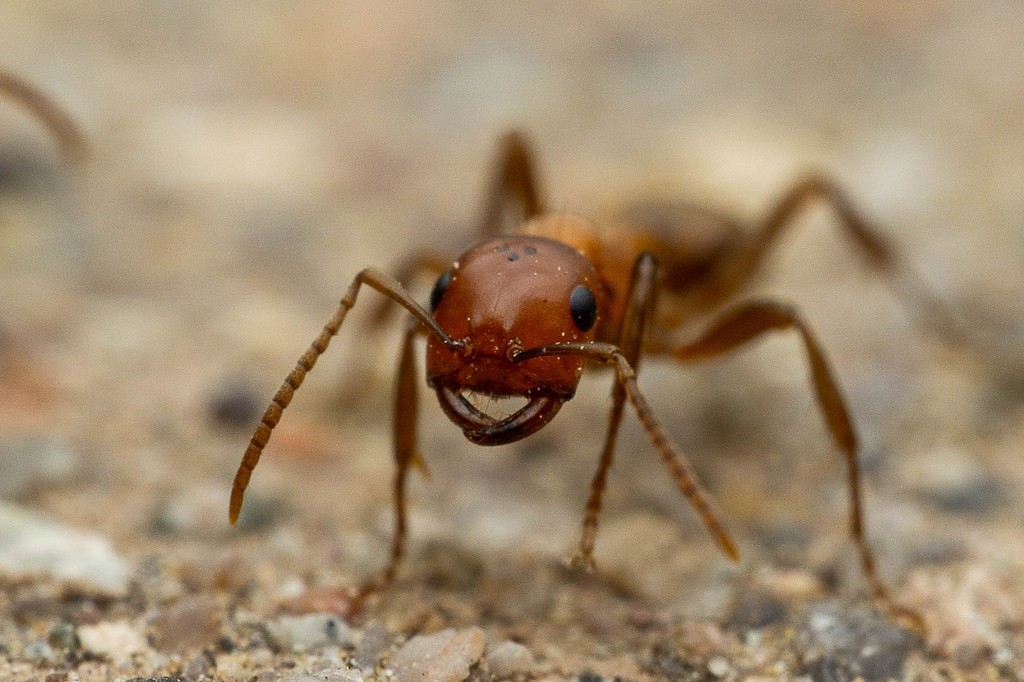
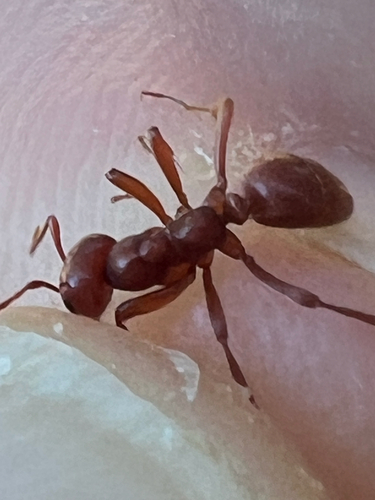
The Western Amazon ant is about 6 mm long and mostly red with brown-tinged rear segments. It lives in open woodlands, mixed wood-grass areas, and at higher elevations in coniferous forests of the western US, Canada, and Mexico. The species is a dulotic ant that invades host nests, uses pheromones to subdue workers, and relies on the host ants to care for its brood.
Source: Wikipedia
How to recognize it
Its body is generally red, with the rear tergites showing a brown tint, and the legs are slightly darker than the rest of the body. Grey hairs cover the dorsal surface, never yellowish, and longer brownish hairs may wear away leaving dark scars on the tergites.
Source: Wikipedia
Size
Adults average about 6 mm (0.24 in) in total length.
Source: Wikipedia
Where it lives
It prefers open woodland with little undergrowth and mixed wood-grassland habitats. Further south it is found at higher altitudes, such as 2,200 m in the Chiricahua Mountains and 2,800 m in Chihuahua, usually in open coniferous forests.
Source: Wikipedia
What it eats
It is a dulotic (slave-making) ant that relies on host ants to feed its queen and brood.
Source: Wikipedia
Life cycle
A newly mated queen enters a potential host nest and uses pheromones to calm the resident workers. The dulotic ants cannot perform nest maintenance or brood care themselves and depend on the host ants for these tasks.
Source: Wikipedia
Lookalikes
It can be confused with P. breviceps, but unlike that species its dorsal hairs are grey, not yellowish, and it may have longer brownish macrosetae that wear away.
Source: Wikipedia
Where it is found in the US
Recorded in 21 of 51 states and DC. Most records: California, Arizona, Colorado, Utah, Arkansas, New Mexico, Illinois, Washington.
Darker = more records. Counts are museum and citizen-science records, not population size.
Source: GBIF
Status: native in North America; native in United States; native in Canada. Source: iNaturalist
Months it is reported in the US
Source: GBIF
More photos
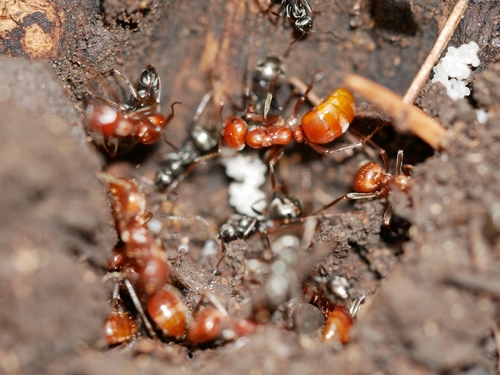
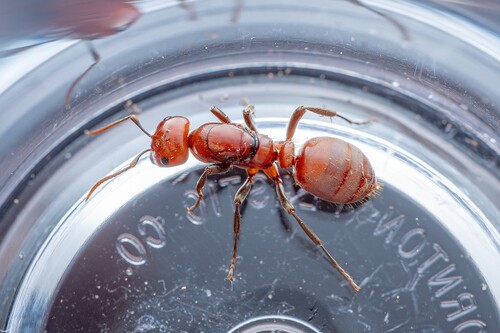
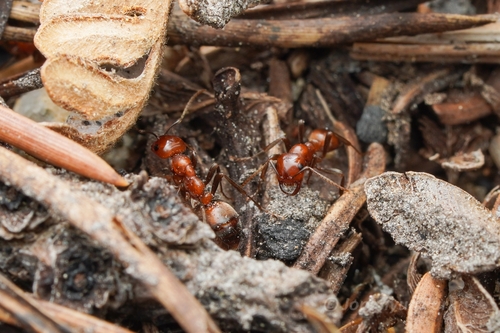
Questions people ask
What does the Western Amazon ant look like?
It is mostly red with brown-tinged rear segments, slightly darker legs, and grey dorsal hairs; worn longer hairs may leave dark scars on the tergites.
Source: Wikipedia
Where is this ant found?
It lives in open woodlands and mixed wood-grass areas across the western United States, Canada, and parts of Mexico, often at higher elevations in coniferous forests.
Source: Wikipedia
How does the ant reproduce?
A newly mated queen invades a host nest, uses pheromones to subdue the workers, and then relies on the host ants to care for her brood.
Source: Wikipedia
What makes this ant different from similar species?
Unlike P. breviceps, its dorsal hairs are grey, not yellowish, and it may have longer brownish hairs that wear away, leaving dark scars.
Source: Wikipedia
Same family (Formicidae)
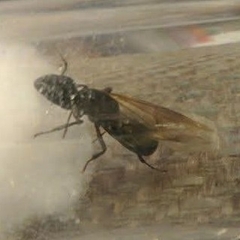 Eastern Black Carpenter AntCamponotus pennsylvanicusCan damage your home
 Red Imported Fire AntSolenopsis invictaCan sting
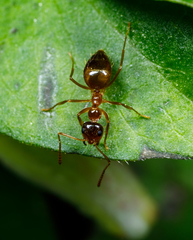 American Winter AntPrenolepis imparis
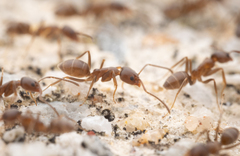 Argentine AntLinepithema humileNuisance, not dangerous
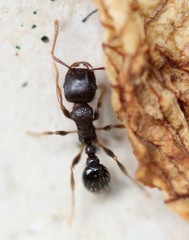 Immigrant Pavement AntTetramorium immigransCan sting
 Odorous House AntTapinoma sessileCan damage your home
Sources
- Wikipedia: https://en.wikipedia.org/wiki/Polyergus_mexicanus
Look it up elsewhere: GBIF · iNaturalist · BugGuide · Wikipedia
Text written 2026-10-24 from the sources above and checked sentence by sentence against them. Data fetched 2026-10-24.