 Bug FAQ
Welsh Wave Moth
Venusia cambrica · Order: Lepidoptera · Family: Geometridae
Also called: Welsh Wave
Source: Wikipedia
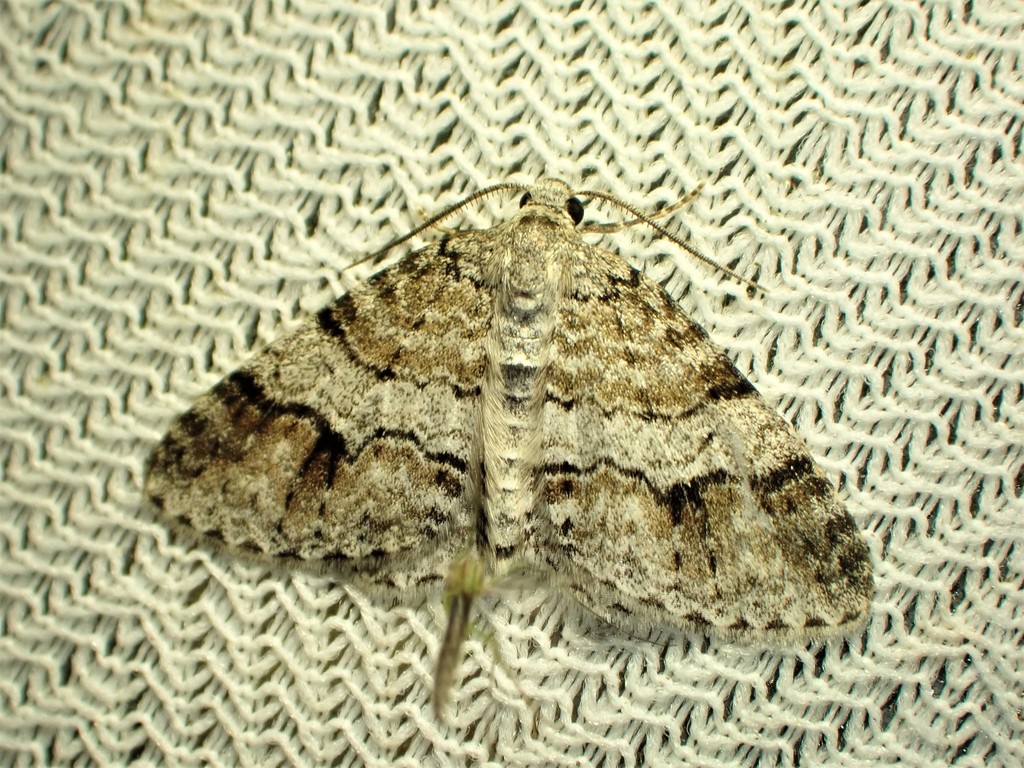
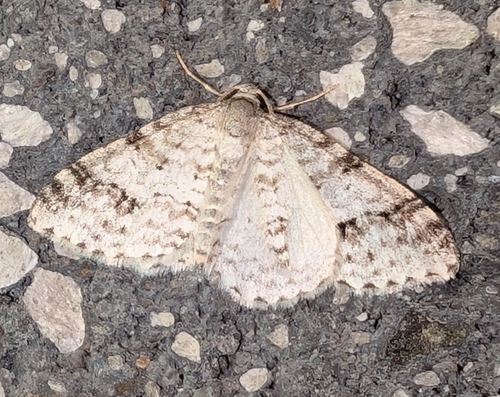
The Welsh Wave Moth has a wingspan of about 27 to 30 mm and a light-grey forewing marked with black and brown cross lines, including two striking protruding black lines near the middle of the wing. It lives across Europe, much of northern Asia and North America, from Canada to the United States as far south as California and Georgia. Adults fly in summer months (July-August in Europe, June-September in eastern Canada, March-August in California) and the species produces two generations each year.
Source: Wikipedia
How to recognize it
The forewing is light grey with black and brown cross lines, and two protruding black lines near the middle of the outer cross line are the most noticeable marks.
Source: Wikipedia
Size
Wingspan ranges from 27 to 30 mm.
Source: Wikipedia
Life cycle
The species has two generations per year.
Source: Wikipedia
When you see it
Adults appear in summer months, varying by region: July-August in Europe, June-September in eastern Canada, and March-August in California. There are two generations each year.
Source: Wikipedia
Where it comes from
Native to Europe, parts of Asia and North America, including Canada and the United States.
Source: Wikipedia
Lookalikes
The black marks on the third radial and first median veins resemble those of Oporinia species. The form ab. webbi Prout has most markings faded except near the costal margin and median vein, recalling Oporinia antumnata gueneata.
Source: Wikipedia
Where it is found in the US
Recorded in 18 of 51 states and DC. Most records: Alaska, North Carolina, Washington, Oregon, West Virginia, California, New Hampshire, Michigan.
Darker = more records. Counts are museum and citizen-science records, not population size.
Source: GBIF
Status: native in North America; native in Canada. Source: iNaturalist
Months it is reported in the US
Source: GBIF
More photos
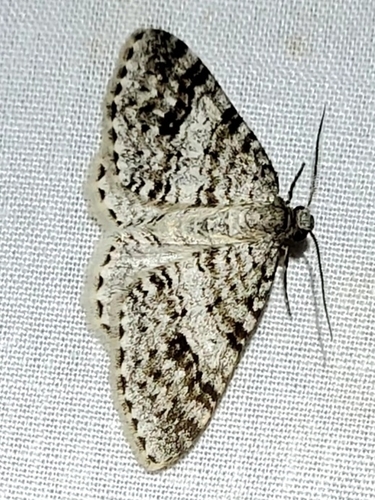
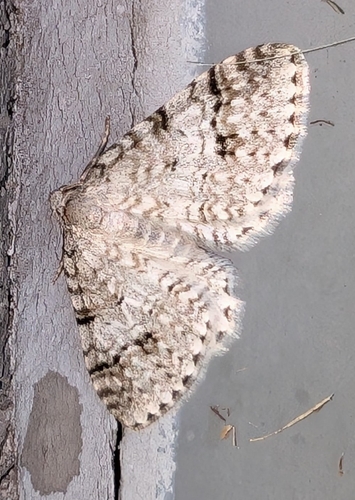
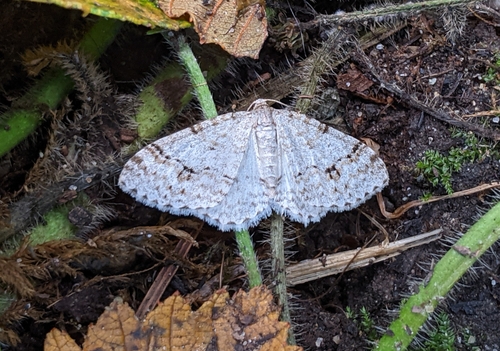
Questions people ask
When are adult Welsh Wave Moths active?
Adults fly in July-August in Europe, June-September in eastern Canada, and March-August in California.
Source: Wikipedia
How can I recognize this moth?
Look for a light-grey forewing with black and brown cross lines and two prominent protruding black lines near the middle of the outer line.
Source: Wikipedia
What other moths does it look like?
Its wing markings are similar to those of Oporinia species, especially the black marks on certain veins.
Source: Wikipedia
Same family (Geometridae)




Sources
- Wikipedia: https://en.wikipedia.org/wiki/Venusia_cambrica
Look it up elsewhere: GBIF · iNaturalist · BugGuide · ITIS · Wikipedia
Text written 2026-10-24 from the sources above and checked sentence by sentence against them. Data fetched 2026-10-24.