 Bug FAQ
Water Veneer
Acentria ephemerella · Order: Lepidoptera · Family: Crambidae
Also called: Small Water-veneer, European water moth
Source: Wikipedia
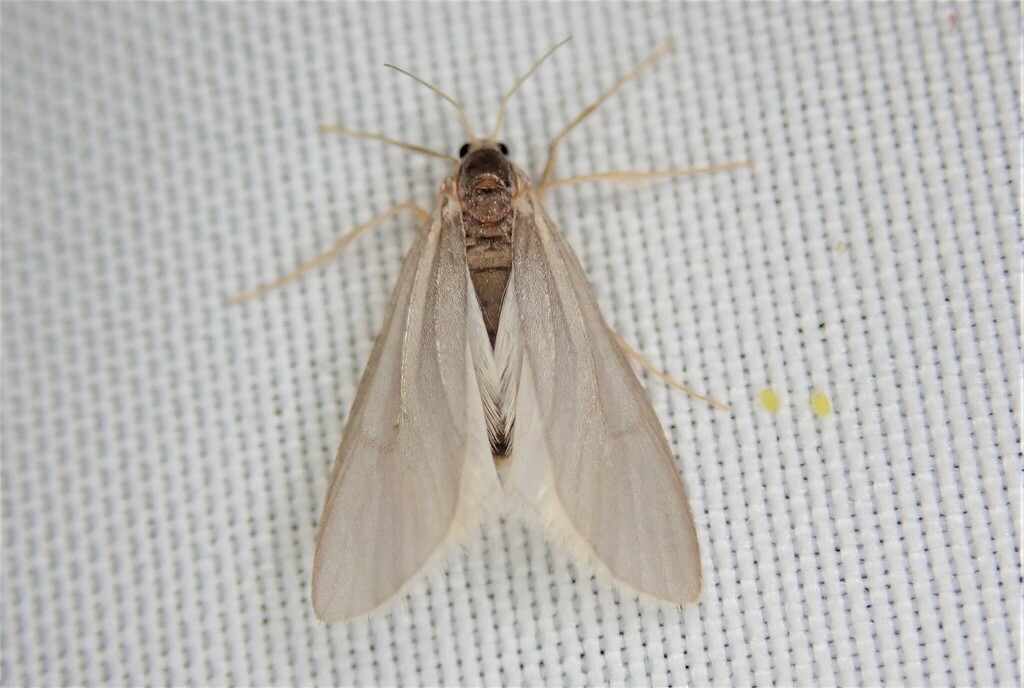
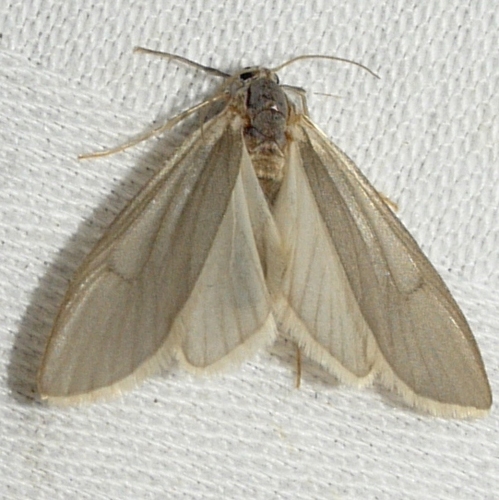
The water veneer moth is a small white moth; males have a 12 mm wingspan while females may have wings up to 23 mm, sometimes flightless and living on water surfaces. Its larvae bore into stems of aquatic plants, girdling them and creating damage that can reduce watermilfoil infestations but also harms native vegetation.
Source: Wikipedia
How to recognize it
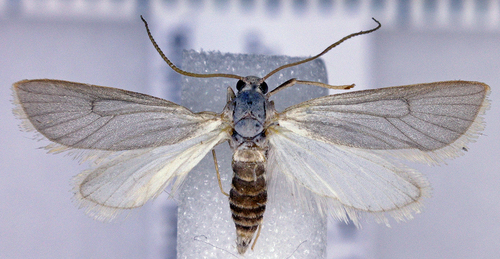
Forewings are whitish with faint brownish veins and costa, while hindwings are also whitish.
Source: Wikipedia
Size
Males have a wingspan of about 12 mm. Females may have rudimentary wings or larger wings up to 23 mm.
Source: Wikipedia
Is it a pest in the house?
The moth is used as a biocontrol agent against watermilfoil, but it can also attack other plant species, including natives.
Source: Wikipedia
How to get rid of it
It is employed carefully for biocontrol because it lacks host specificity and may damage non-target plants.
Source: Wikipedia
Where it lives
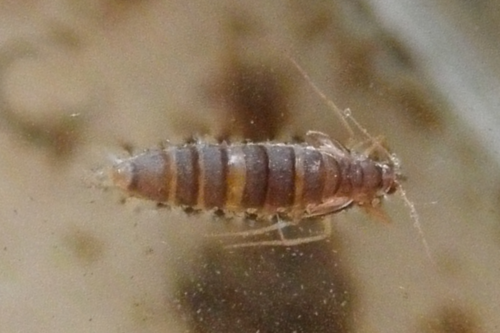
It is an aquatic insect, spending most of its life cycle in water. Most females are flightless and live on or just below the water surface.
Source: Wikipedia
What it eats
Larvae emerge and bore into plant stems, gluing plant material together to make shelters. While feeding, they girdle stems, causing damage that leads to stem and leaf death.
Source: Wikipedia
Life cycle
Larvae pupate inside underwater cocoons that contain an air pocket. When adults emerge, males and any flighted females swim to the surface and fly away.
Source: Wikipedia
Where it comes from
It is native to Europe. It was introduced to Canada in the 1920s, likely by accident.
Source: Wikipedia
Where it is found in the US
Recorded in 21 of 51 states and DC. Most records: New York, Montana, Illinois, Colorado, Iowa, Michigan, Minnesota, California.
Darker = more records. Counts are museum and citizen-science records, not population size.
Source: GBIF
Status: introduced in United States; introduced in Canada. Source: iNaturalist
Months it is reported in the US
Source: GBIF
More photos
Questions people ask
How does the water veneer moth damage plants?
Its larvae bore into stems and girdle them, causing the stems and leaves to die.
Source: Wikipedia
Can this moth be used to control watermilfoil?
Yes, it is used as a biocontrol agent, but it may also attack other aquatic plants.
Source: Wikipedia
Where is the water veneer moth originally from?
It is native to Europe and was introduced to Canada in the 1920s.
Source: Wikipedia
Same family (Crambidae)
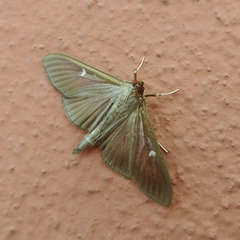 Box Tree MothCydalima perspectalisDamages trees, gardens or crops
 Celery Leaftier MothUdea rubigalis
 Elegant Grass-veneerMicrocrambus elegans
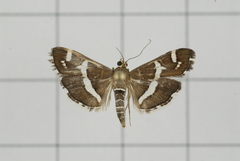 Hawaiian Beet Webworm MothSpoladea recurvalisDamages trees, gardens or crops
 Garden Grass-veneerChrysoteuchia culmellaDamages trees, gardens or crops
 Bluegrass Webworm MothParapediasia teterrellusDamages trees, gardens or crops
Sources
- Wikipedia: https://en.wikipedia.org/wiki/Acentria
Look it up elsewhere: GBIF · iNaturalist · BugGuide · ITIS · Wikipedia
Text written 2026-10-28 from the sources above and checked sentence by sentence against them. Data fetched 2026-10-28.