 Bug FAQ
Walsingham's Moth
Pseudochelaria walsinghami · Order: Lepidoptera · Family: Gelechiidae
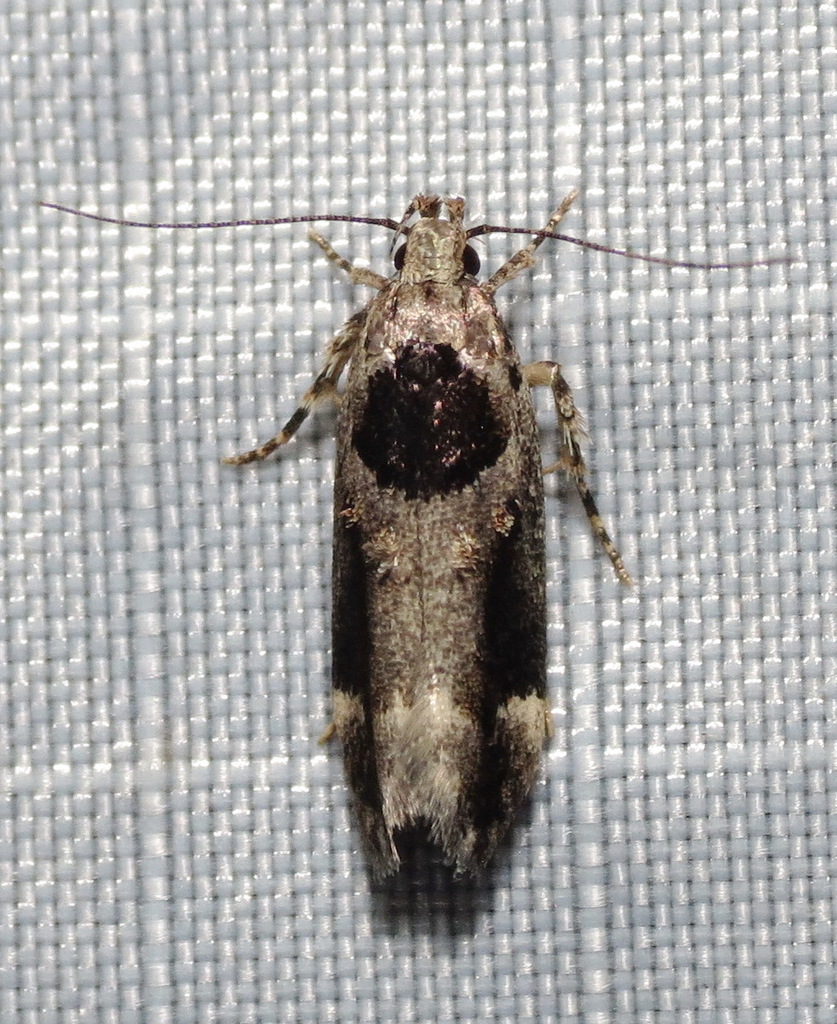
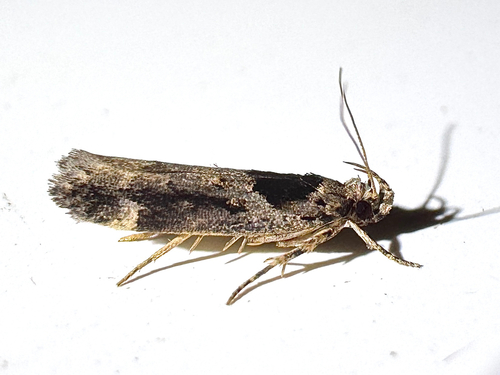
Pseudochelaria walsinghami is a small moth with a wingspan of about 17 mm. Its forewings are dark rich brown and bear two brown spots, the first surrounded by raised white scales.
Source: Wikipedia
How to recognize it
The forewings are dark rich brown and show two brown spots in the dorsal half, the first at two-fifths of the wing and edged with raised white scales.
Source: Wikipedia
Size
The moth’s wingspan measures roughly 17 mm.
Source: Wikipedia
What it eats
The caterpillars are pale green and bear isolated hairs.
Source: Wikipedia
Where it comes from
Its native range is North America, specifically the states listed for its habitat.
Source: Wikipedia
Where it is found in the US
Recorded in 26 of 51 states and DC. Most records: Alabama, Maryland, Mississippi, Virginia, Tennessee, North Carolina, New Jersey, Pennsylvania.
Darker = more records. Counts are museum and citizen-science records, not population size.
Source: GBIF
Status: native in North America; native in Canada. Source: iNaturalist
Months it is reported in the US
Source: GBIF
More photos
Questions people ask
Same family (Gelechiidae)
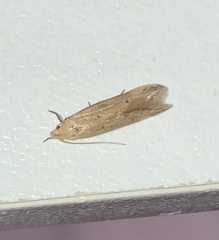 Angoumois Grain MothSitotroga cerealellaDamages trees, gardens or crops
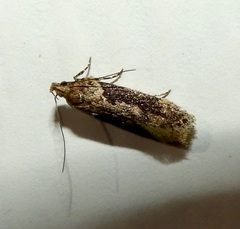 Black-smudged Chionodes MothChionodes mediofuscella
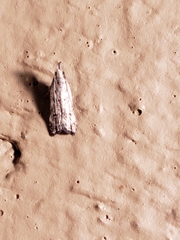 Inverse and Kimball's Dichomeris MothsDichomeris inversella
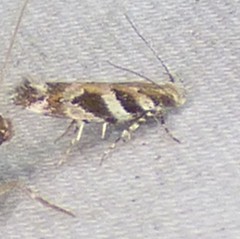 Pink-washed Aristotelia MothAristotelia roseosuffusella
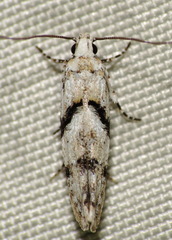 White Stripe-backed MothArogalea cristifasciella
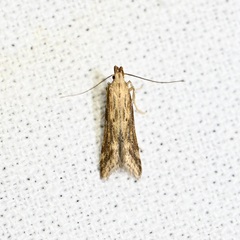 Burdock Seedhead MothMetzneria lappella
Sources
- Wikipedia: https://en.wikipedia.org/wiki/Pseudochelaria_walsinghami
Look it up elsewhere: GBIF · iNaturalist · BugGuide · Wikipedia
Text written 2026-10-25 from the sources above and checked sentence by sentence against them. Data fetched 2026-10-25.