 Bug FAQ
Variegated Cutworm Moth
Peridroma saucia · Order: Lepidoptera · Family: Noctuidae
Also called: Pearly Underwing, Variegated Cutworm
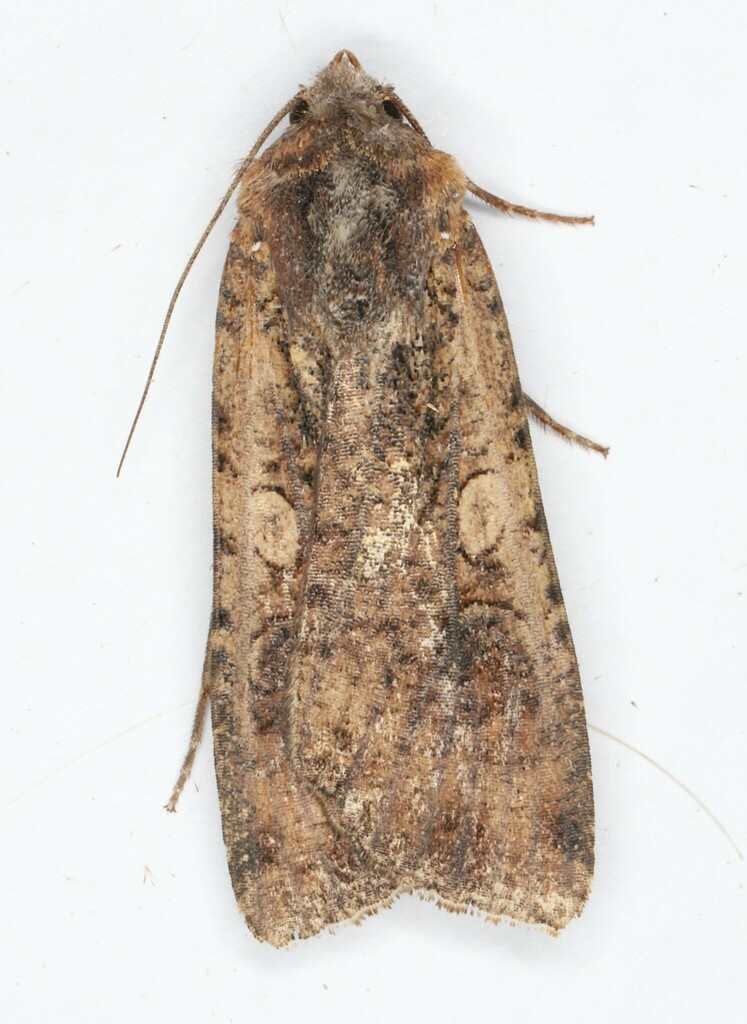
The larvae eat many common fruits and vegetables, cutting plants at the soil surface and can consume up to 160 cm² of potato foliage per larva. Insecticides and garden clean-up (removing weeds and rubbish) are common ways to reduce their damage.
Source: Wikipedia
How to recognize it
Most larval deaths are caused by wasp and fly parasites.
Source: Wikipedia
Is it a pest in the house?
It is considered one of the most damaging garden pests.
Source: Wikipedia
How to get rid of it
Insecticides are often applied to reduce larval damage to crops. Cleaning gardens by removing weeds and rubbish lowers larval numbers.
Source: Wikipedia
Where it lives
They often invade greenhouses where food is abundant.
Source: Wikipedia
What it eats
A single larva can eat up to 125 cm² of sugar beet or 160 cm² of potato foliage during development.
Source: Wikipedia
Life cycle
The species produces two to four generations each year. It overwinters both as larvae and as adults.
Source: Wikipedia
When you see it
Adults fly from May to November, varying by location. Damage declines around early August as temperatures drop and the moth disappears from fields.
Source: Wikipedia
Where it comes from
Found in North and South America, Europe, Asia and Africa. Where it first came from is unclear; the oldest description is from Europe in 1790.
Source: Wikipedia
Where it is found in the US
Recorded in 51 of 51 states and DC. Most records: Texas, California, Illinois, Michigan, Arizona, Pennsylvania, Oregon, Colorado.
Darker = more records. Counts are museum and citizen-science records, not population size.
Source: GBIF
Status: native in North America; native in United States; native in Canada. Source: iNaturalist
Months it is reported in the US
Source: GBIF
More photos
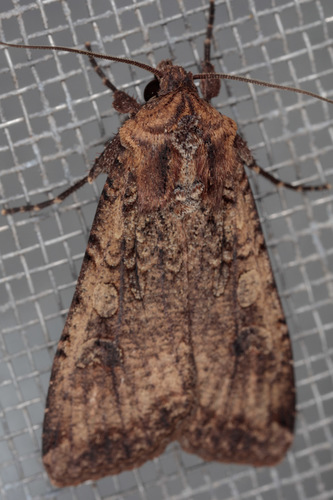
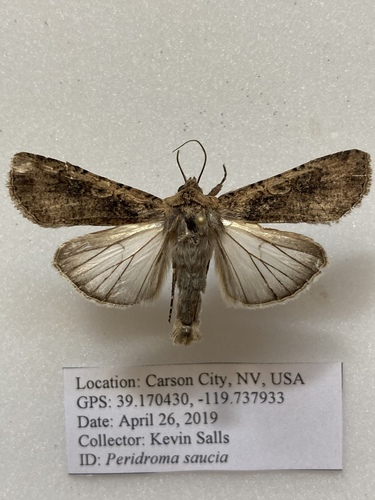

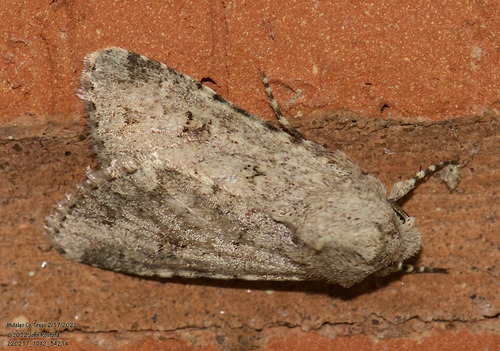
Questions people ask
How can I protect my garden from variegated cutworms?
Use insecticides and keep the garden clean by removing weeds and debris to reduce larval populations.
Source: Wikipedia
When are variegated cutworms most active?
Adults are active from May through November, with damage decreasing after early August as temperatures fall.
Source: Wikipedia
Same family (Noctuidae)
 Ipsilon Dart MothAgrotis ipsilonDamages trees, gardens or crops
 Fall Armyworm MothSpodoptera frugiperdaDamages trees, gardens or crops
 Army Cutworm MothEuxoa auxiliarisDamages trees, gardens or crops
 Large Yellow UnderwingNoctua pronubaDamages trees, gardens or crops
 Silver ΥAutographa gamma
 American DaggerAcronicta americanaCan irritate skin
Sources
- Wikipedia: https://en.wikipedia.org/wiki/Peridroma_saucia
Look it up elsewhere: GBIF · iNaturalist · BugGuide · ITIS · Wikipedia
Text written 2026-10-22 from the sources above and checked sentence by sentence against them. Data fetched 2026-10-22.