 Bug FAQ
Variable Sedgesitter
Platycheirus podagratus · Order: Diptera · Family: Syrphidae
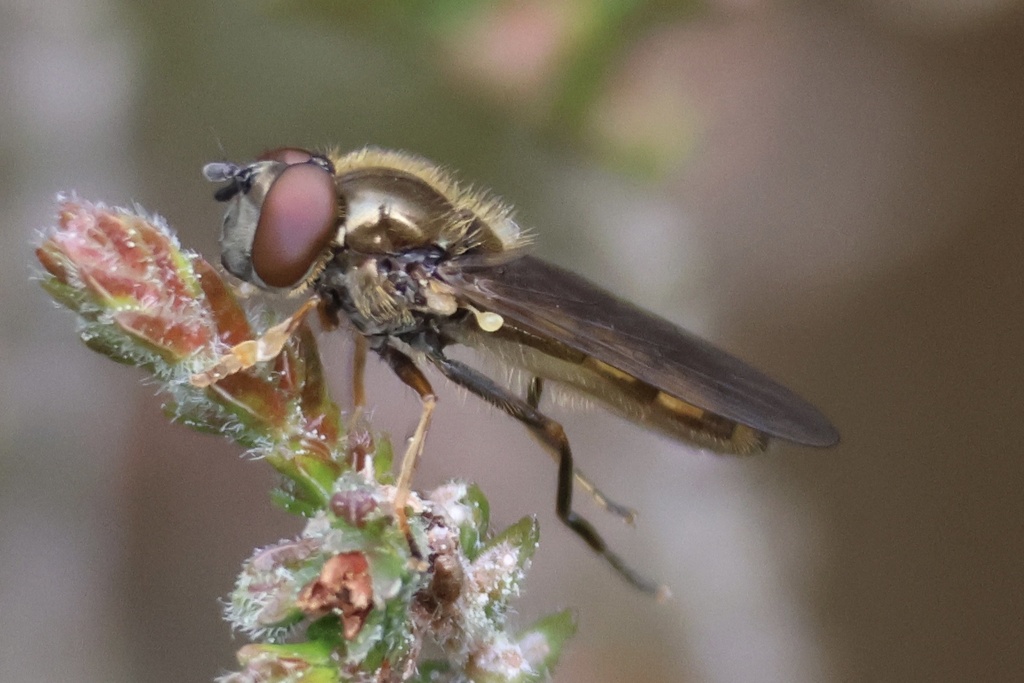
The variable sedgesitter has the first pair of tibiae that widen sharply on the last third of the leg. It lives in fens and the edges of lakes, rivers and brooks, especially in unimproved grasslands, taiga, moor, and alpine meadows. Its range covers the whole Holarctic, from Fennoscandia down to the Pyrenees and across northern Europe into Siberia, and it is also found in parts of Canada such as Alberta and Ontario.
Source: Wikipedia
How to recognize it
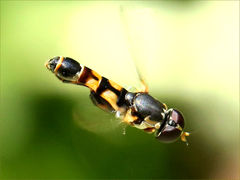
The first tibia expands strongly on the apical third, then narrows slightly toward the tip. The third leg is black with a yellow knee, and the abdomen is slender.
Source: Wikipedia
Where it lives
It inhabits fens and the margins of lakes, rivers and brooks, preferring unimproved grassland, taiga, moor, and alpine grasslands.
Source: Wikipedia
When you see it
Adults are on the wing from late May through mid-August.
Source: Wikipedia
Where it comes from
It is a Holarctic species. In the Palearctic it ranges from Fennoscandia south to the Pyrenees, across Ireland and northern Europe into central mountainous areas, Russia and southeast Siberia; in the Nearctic it occurs in Alberta and Ontario.
Source: Wikipedia
Where it is found in the US
Recorded in 2 of 51 states and DC. Most records: Alaska, Colorado.
Darker = more records. Counts are museum and citizen-science records, not population size.
Source: GBIF
Status: native in Canada. Source: iNaturalist
Months it is reported in the US
Source: GBIF
Questions people ask
When can I see the variable sedgesitter?
They fly from the end of May until about mid-August.
Source: Wikipedia
Where does this hoverfly live?
It lives in fens and along the edges of lakes, rivers and brooks, especially in unimproved grassland, taiga, moor and alpine grasslands.
Source: Wikipedia
How can I tell it apart from similar species?
Check the distinctive leg markings: the first tibia widens sharply on the last third, and the third leg is black with a yellow knee, plus a slender abdomen.
Source: Wikipedia
Same family (Syrphidae)


Sources
- Wikipedia: https://en.wikipedia.org/wiki/Platycheirus_podagratus
Look it up elsewhere: GBIF · iNaturalist · BugGuide · Wikipedia
Text written 2026-10-28 from the sources above and checked sentence by sentence against them. Data fetched 2026-10-28.