 Bug FAQ
Variable Duskyface Fly
Melanostoma mellinum · Order: Diptera · Family: Syrphidae
Also called: Hover Fly
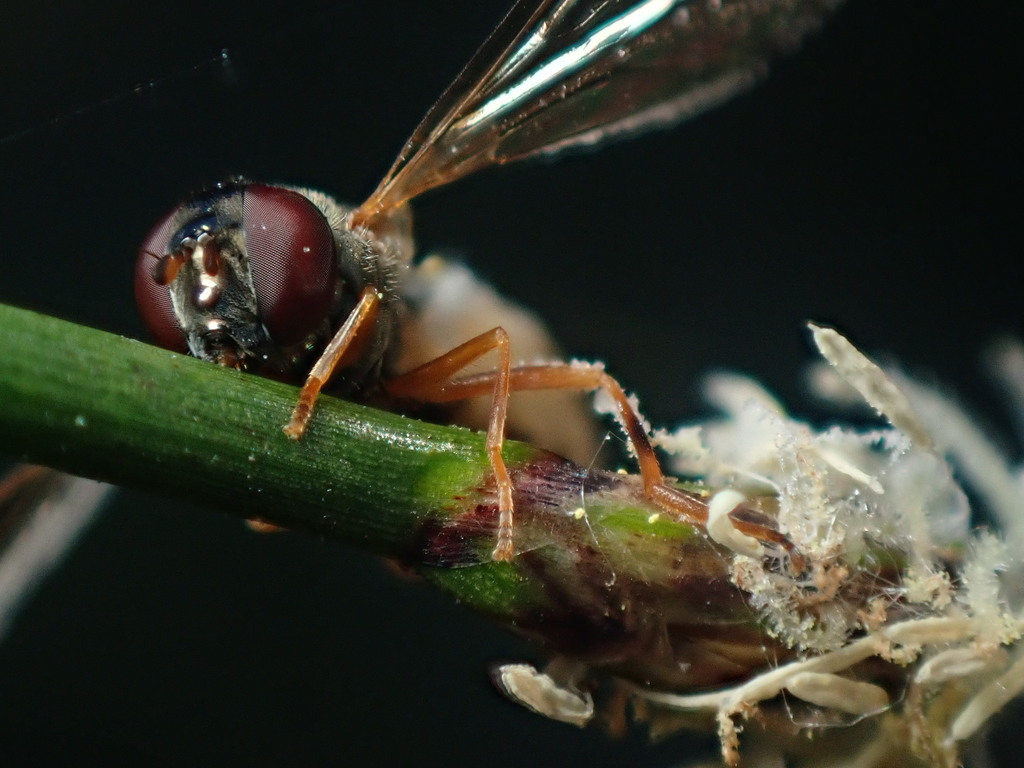
The duskyface fly is a small hoverfly with a wingspan of about 5 to 7 mm. It lives in grasslands and moorlands, especially in hilly or mountainous areas, and adults feed on grass pollen and other wind-pollinated plants. Males look like Platycheirus clypeatus but lack the broadened front legs, while females resemble Melanostoma scalare but have a shiny black face.
Source: Wikipedia
How to recognize it
Males resemble Platycheirus clypeatus but do not have the flattened front legs typical of that genus.
Source: Wikipedia
Size
Adults are small, with a wingspan ranging from 4.7 to 7.0 mm.
Source: Wikipedia
Where it lives
They prefer grasslands and moorlands, including hilly and mountainous regions.
Source: Wikipedia
What it eats
Adults feed on pollen from grasses and other wind-pollinated plants. Larvae are thought to be general predators of small insects in leaf litter.
Source: Wikipedia
Life cycle
Little is known, but larvae are suspected to be general predators in leaf litter.
Source: Wikipedia
Lookalikes
They are very similar to other Platycheirus and Melanostoma species, but can be distinguished by close inspection of leg shape and facial coloration.
Source: Wikipedia
Where it is found in the US
Recorded in 39 of 51 states and DC. Most records: Alaska, California, Washington, Oregon, Maine, Vermont, New York, Pennsylvania.
Darker = more records. Counts are museum and citizen-science records, not population size.
Source: GBIF
Status: native in North America; native in United States; native in Canada. Source: iNaturalist
Months it is reported in the US
Source: GBIF
More photos
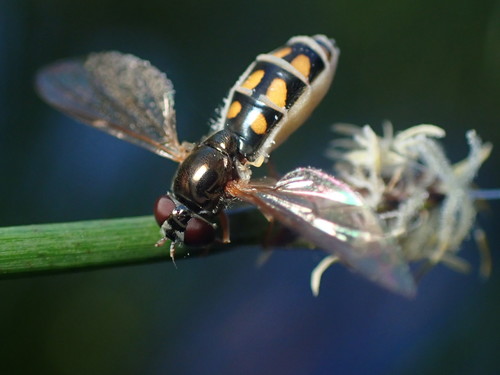
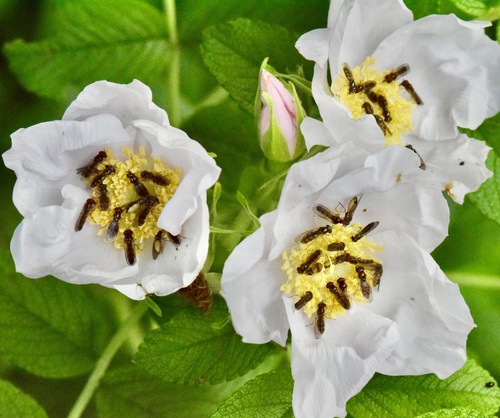
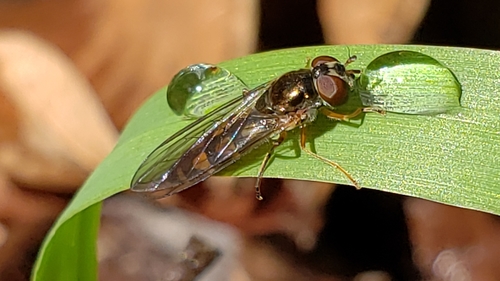
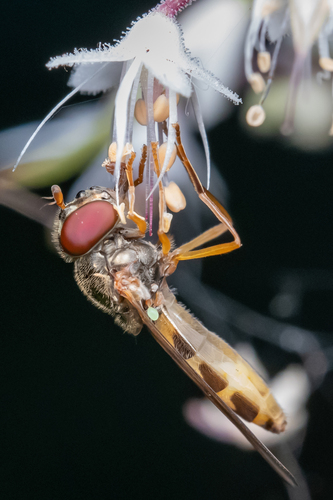
Same family (Syrphidae)






Sources
- Wikipedia: https://en.wikipedia.org/wiki/Melanostoma_mellinum
Look it up elsewhere: GBIF · iNaturalist · BugGuide · ITIS · Wikipedia
Text written 2026-10-22 from the sources above and checked sentence by sentence against them. Data fetched 2026-10-22.