 Bug FAQ
Variable Big-headed Ant
Pheidole bicarinata · Order: Hymenoptera · Family: Formicidae

The big-headed ant lives in many different habitats. It is found across the United States, from the central plains to the east coast and the Gulf region. These ants eat other insects, gather seeds such as Kentucky bluegrass and dandelion, and sip nectar from extrafloral nectaries.
Source: Wikipedia
Where it lives
They occur in a wide range of habitats.
Source: Wikipedia
What it eats
They prey on insects, collect seeds (e.g., Poa pratensis, Taraxacum officinale, Oenothera biennis), and feed on nectar from extrafloral nectaries.
Source: Wikipedia
Life cycle
Colonies grow quickly when kept in captivity. The species has four larval instars.
Source: Wikipedia
Where it is found in the US
Recorded in 37 of 51 states and DC. Most records: Mississippi, Arizona, Texas, Utah, North Carolina, Arkansas, Alabama, Tennessee.
Darker = more records. Counts are museum and citizen-science records, not population size.
Source: GBIF
Status: native in North America; native in United States. Source: iNaturalist
Months it is reported in the US
Source: GBIF
More photos
Questions people ask
What does the big-headed ant eat?
It eats other insects, gathers seeds such as Kentucky bluegrass and dandelion, and drinks nectar from extrafloral nectaries.
Source: Wikipedia
Where is this ant found in the United States?
It occurs from Nebraska, Colorado, Texas, Utah and Nevada eastward to New Jersey and Florida.
Source: Wikipedia
Same family (Formicidae)
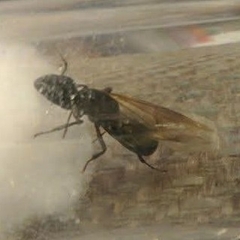 Eastern Black Carpenter AntCamponotus pennsylvanicusCan damage your home
 Red Imported Fire AntSolenopsis invictaCan sting
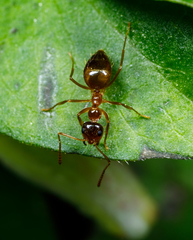 American Winter AntPrenolepis imparis
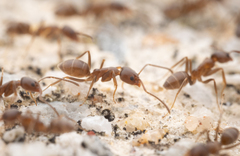 Argentine AntLinepithema humileNuisance, not dangerous
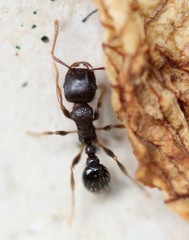 Immigrant Pavement AntTetramorium immigransCan sting
 Odorous House AntTapinoma sessileCan damage your home
Sources
- Wikipedia: https://en.wikipedia.org/wiki/Pheidole_bicarinata
Look it up elsewhere: GBIF · iNaturalist · BugGuide · ITIS · Wikipedia
Text written 2026-10-23 from the sources above and checked sentence by sentence against them. Data fetched 2026-10-23.