 Bug FAQ
Uncertain Field Ant
Formica incerta · Order: Hymenoptera · Family: Formicidae
Also called: Uncertain Ant
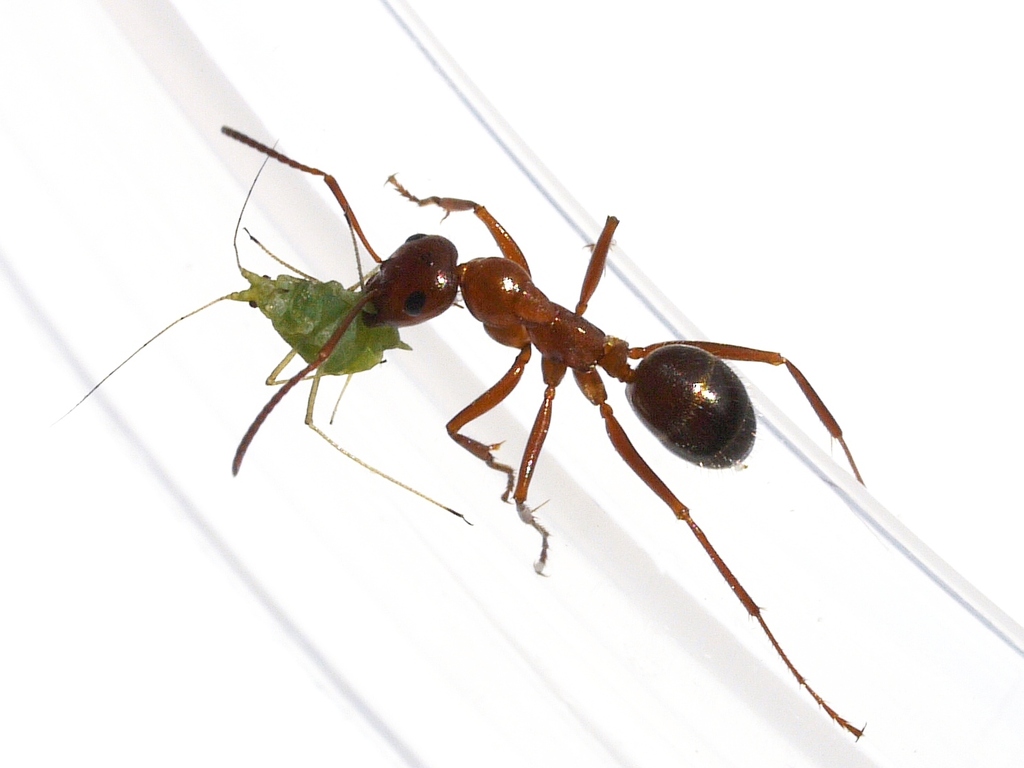
Formica incerta lives in the eastern United States, from the Midwest and New England down to the Rockies. It prefers open habitats such as old grasslands, meadows, heathland and sandy or clayey soils, but also occurs in parks, lawns and roadside verges. Workers forage by day for nectar from extrafloral nectaries and honeydew from aphids and treehoppers, and the colony’s late-season larvae overwinter to boost the next year’s workforce.
Source: Wikipedia
How to recognize it
A worker of this species looks like Formica pallidefulva but has a few short hairs on the mesosoma and around the petiole, which the other lacks.
Source: Wikipedia
Size
Queens are larger than the workers and can be recognized by three dark spots on their thorax.
Source: Wikipedia
Where it lives
In many places it is the most common Formica species and the first to recolonize restored grassland.
Source: Wikipedia
What it eats
Workers collect nectar from extrafloral nectaries on plants such as sunflowers and partridge peas. They also harvest honeydew produced by aphids and treehoppers.
Source: Wikipedia
Life cycle
Some larvae that develop late in the season survive the winter and join the early-season workforce the following year.
Source: Wikipedia
When you see it
Workers leave the nest to forage during daylight hours.
Source: Wikipedia
Lookalikes
A worker of Formica incerta resembles Formica pallidefulva but can be told apart by the presence of a few chaetae on the mesosoma and petiole.
Source: Wikipedia
Where it is found in the US
Recorded in 30 of 51 states and DC. Most records: Massachusetts, New York, New Jersey, Rhode Island, Virginia, Connecticut, Pennsylvania, Illinois.
Darker = more records. Counts are museum and citizen-science records, not population size.
Source: GBIF
Status: native in North America; native in Canada; native in United States. Source: iNaturalist
Months it is reported in the US
Source: GBIF
More photos
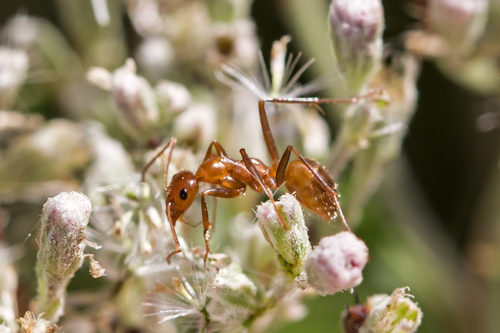
Questions people ask
What do Uncertain Field Ants eat?
They gather nectar from extrafloral nectaries and harvest honeydew from aphids and treehoppers.
Source: Wikipedia
Where are these ants found?
They are native to the eastern United States and live in open habitats like grasslands, meadows, heathland and also in parks and roadside verges.
Source: Wikipedia
How can I tell this ant apart from similar species?
Look for a few short hairs on the mesosoma and around the petiole; the similar Formica pallidefulva lacks these hairs.
Source: Wikipedia
Same family (Formicidae)
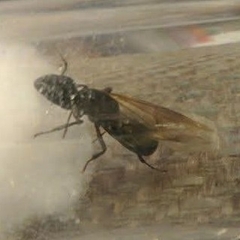 Eastern Black Carpenter AntCamponotus pennsylvanicusCan damage your home
 Red Imported Fire AntSolenopsis invictaCan sting
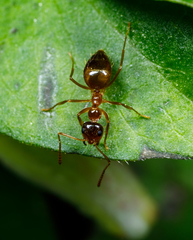 American Winter AntPrenolepis imparis
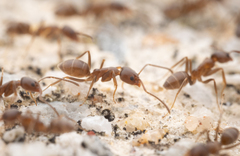 Argentine AntLinepithema humileNuisance, not dangerous
 Immigrant Pavement AntTetramorium immigransCan sting
 Odorous House AntTapinoma sessileCan damage your home
Sources
- Wikipedia: https://en.wikipedia.org/wiki/Formica_incerta
Look it up elsewhere: GBIF · iNaturalist · BugGuide · Wikipedia
Text written 2026-10-24 from the sources above and checked sentence by sentence against them. Data fetched 2026-10-24.