 Bug FAQ
Two-banded wasp hoverfly
Chrysotoxum bicinctum · Order: Diptera · Family: Syrphidae
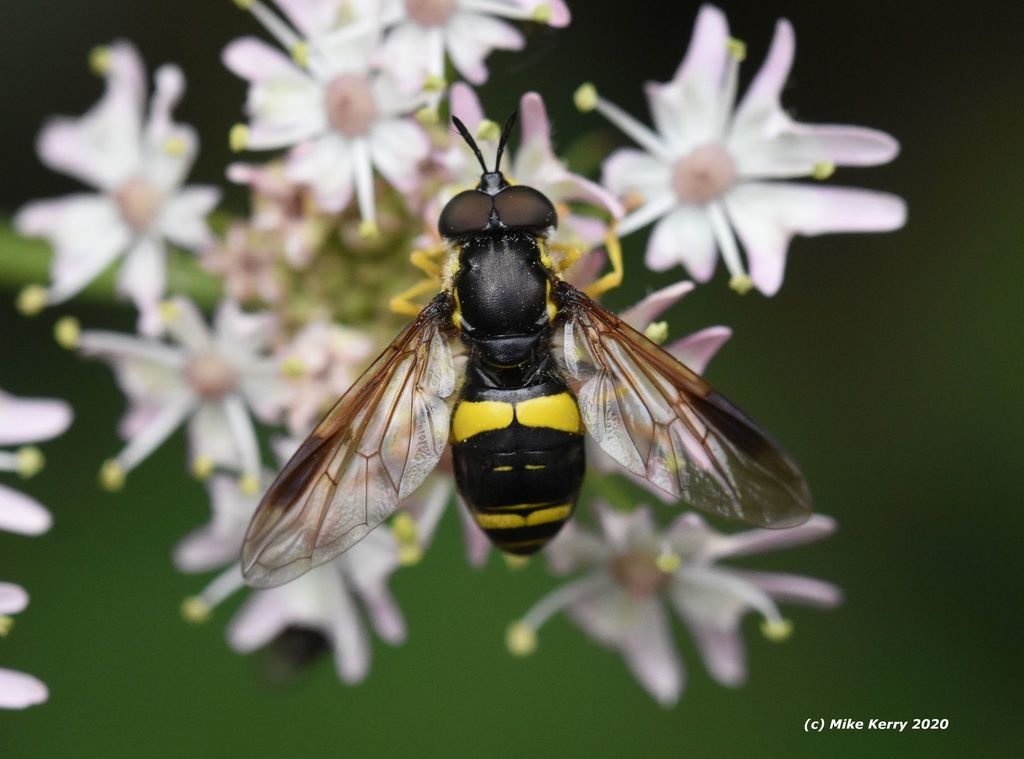
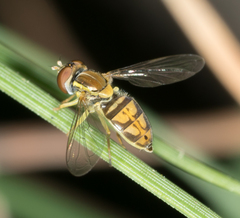
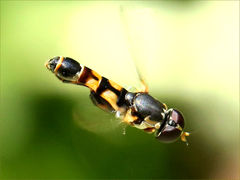
The two-banded wasp hoverfly is about 10 to 13 mm long and has a glossy black thorax with two gray stripes. Its long oval abdomen is black with two light yellow bands, and the wings are clear with a dark brown spot near the tip. Adults are seen from May to September, especially mid-June to August, on woodland edges, scrub, hedgerows and many flowers.
Source: Wikipedia
How to recognize it
The abdomen is black with two light yellow bands. Antennae are long, dark, forward-pointing and extend beyond the head.
Source: Wikipedia
Size
It measures about 10 to 13 mm in length.
Source: Wikipedia
What it eats
Adults visit a wide range of flowers for food.
Source: Wikipedia
Life cycle
Adults are present from May to September, with peak numbers mid-June to August.
Source: Wikipedia
When you see it
The flight period runs from May through September, most common mid-June to August.
Source: Wikipedia
Where it comes from
It occurs from Fennoscandia south to Iberia and the Mediterranean, across Central and Southern Europe into Turkey, European Russia and central Siberia.
Source: Wikipedia
Lookalikes
Like other Chrysotoxum species, it has relatively long antennae that are dark and point forward, longer than the head. Its wings are clear with a distinctive large dark brown spot near the tip.
Source: Wikipedia
More photos
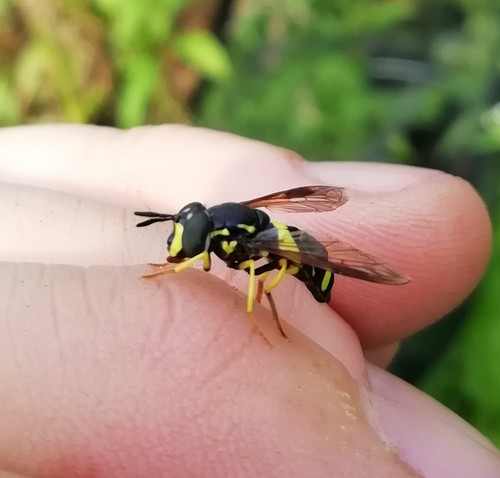
Questions people ask
How can I tell this hoverfly apart from similar species?
Look for the glossy black thorax with two gray stripes, the black abdomen with two yellow bands, long forward-pointing antennae, and a clear wing with a dark spot near the tip.
Source: Wikipedia
When are these hoverflies active?
Adults fly from May to September, most commonly from mid-June to August.
Source: Wikipedia
Where might I find them in my garden?
They are usually seen on woodland edges, scrub, or hedgerows, visiting many types of flowers.
Source: Wikipedia
Same family (Syrphidae)


Sources
- Wikipedia: https://en.wikipedia.org/wiki/Chrysotoxum_bicinctum
Look it up elsewhere: GBIF · iNaturalist · BugGuide · Wikipedia
Text written 2026-10-23 from the sources above and checked sentence by sentence against them. Data fetched 2026-10-22.