 Bug FAQ
Turnip Moth
Agrotis segetum · Order: Lepidoptera · Family: Noctuidae
Source: Wikipedia
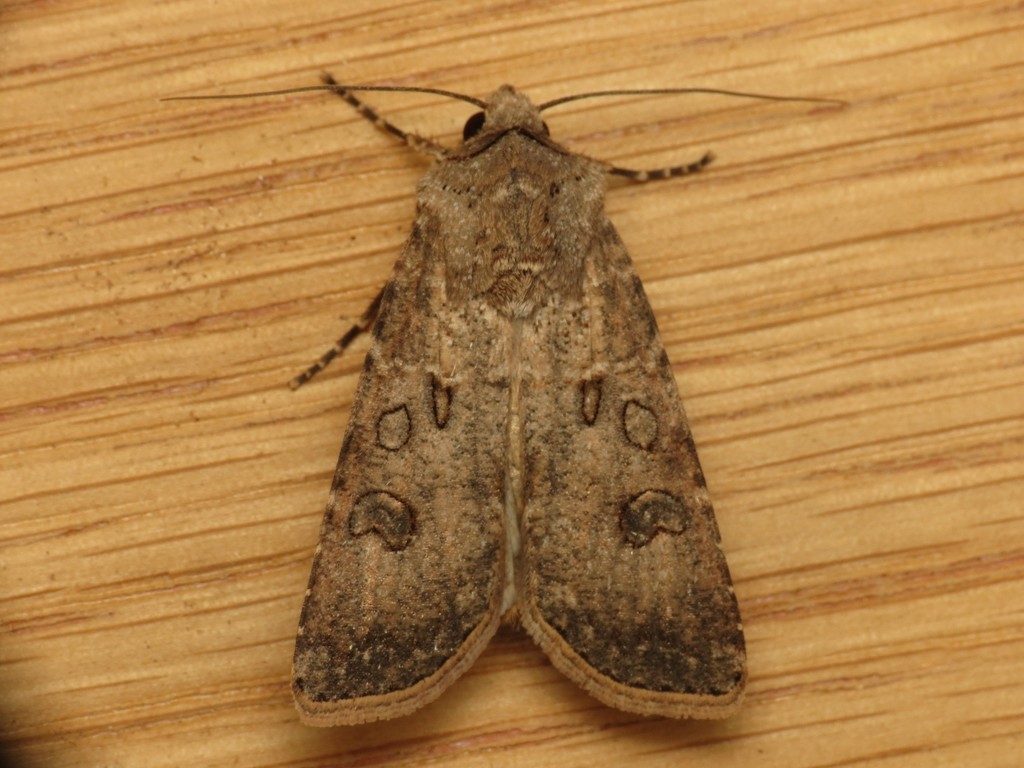
The turnip moth is a medium-sized nocturnal moth whose fore-wings vary from pale buff to almost black with distinct dark markings. It is common across Europe, Africa and most of Eurasia, overwinters as a caterpillar, and produces two generations per year in the British Isles.
Source: Wikipedia
How to recognize it
Fore-wings range from light buff to nearly black and show dark streaks and spots outlined in black.
Source: Wikipedia
Size
Wingspan is about 32 to 42 mm. Another source gives a range of 33 to 41 mm.
Source: Wikipedia
How to get rid of it
Leaving land fallow before sowing or ploughing during the dry season can starve or expose larvae and pupae, helping control infestations. Various insecticides and sweetened-bran baits have been used with success for many years.
Source: Wikipedia
Where it lives
It is a common European species also found in Africa and most of Eurasia, except the far north.
Source: Wikipedia
What it eats
Adults are nocturnal, attracted to lights, and feed on nectar-rich flowers.
Source: Wikipedia
Life cycle
The species overwinters as a caterpillar. In the British Isles it has two broods, flying in late spring-early summer and again in late summer-early autumn.
Source: Wikipedia
When you see it
Adults are on the wing in May-June and again in August-September in the British Isles.
Source: Wikipedia
Where it comes from
Its native range includes Europe, Africa and much of Eurasia.
Source: Wikipedia
Lookalikes
It is hard to separate reliably from close relatives such as Agrotis clavis and Agrotis exclamationis.
Source: Wikipedia
Where it is found in the US
Recorded in 4 of 51 states and DC. Most records: New Hampshire, Utah, Washington, Colorado.
Darker = more records. Counts are museum and citizen-science records, not population size.
Source: GBIF
Questions people ask
Does the turnip moth damage crops?
Yes, its larvae can damage field crops such as maize, and control methods focus on reducing larval survival.
Source: Wikipedia
When are turnip moths active?
Adults fly in two periods: May-June and August-September in the British Isles.
Source: Wikipedia
How can I identify a turnip moth?
Look for a medium wingspan (about 32 to 42 mm) and fore-wings that vary from pale buff to dark brown or black with distinct dark spots and lines.
Source: Wikipedia
What habitats does it prefer?
It is common throughout Europe, Africa and most of Eurasia, preferring open fields where its larvae can feed.
Source: Wikipedia
Same family (Noctuidae)
 Ipsilon Dart MothAgrotis ipsilonDamages trees, gardens or crops
 Fall Armyworm MothSpodoptera frugiperdaDamages trees, gardens or crops
 Army Cutworm MothEuxoa auxiliarisDamages trees, gardens or crops
 Large Yellow UnderwingNoctua pronubaDamages trees, gardens or crops
 Silver ΥAutographa gamma
 American DaggerAcronicta americanaCan irritate skin
Sources
- Wikipedia: https://en.wikipedia.org/wiki/Turnip_moth
Look it up elsewhere: GBIF · iNaturalist · BugGuide · Wikipedia
Text written 2026-10-22 from the sources above and checked sentence by sentence against them. Data fetched 2026-10-22.