 Bug FAQ
Tulip-tree Beauty
Epimecis hortaria · Order: Lepidoptera · Family: Geometridae
Source: Wikipedia

Tulip-tree beauty is a relatively large moth with a wingspan of about 4 to 5 cm found across the eastern United States. Its larvae feed on a variety of trees including magnolia, sassafras, poplar, pawpaw and tulip tree, which can lead to damage of those plants. Adults are on the wing from late March through early October.
Source: Wikipedia
How to recognize it
One form, Dendraria, has a broader median band with subterminal lines; the other, Carbonaria, is darker with white edging. The caterpillar is thick-bodied with a swollen third thoracic segment, gray to brown coloration, faint pinstripes, darker markings, and orange spiracles.
Source: Wikipedia
Size
The moth’s wingspan ranges from 43 to 55 mm, making it one of the larger geometer moths.
Source: Wikipedia
What it eats
Caterpillars feed on Magnolia, Asimina (pawpaw), Populus, Sassafras and Liriodendron (tulip tree).
Source: Wikipedia
Where it comes from
Epimecis hortaria is native to North America and belongs to the Ennominae subfamily.
Source: Wikipedia
Lookalikes
There are two adult forms: Dendraria and Carbonaria.
Source: Wikipedia
Where it is found in the US
Recorded in 32 of 51 states and DC. Most records: North Carolina, Virginia, Maryland, Alabama, Pennsylvania, Georgia, Tennessee, Ohio.
Darker = more records. Counts are museum and citizen-science records, not population size.
Source: GBIF
Status: native in North America; native in Canada; native in United States. Source: iNaturalist
Months it is reported in the US
Source: GBIF
More photos


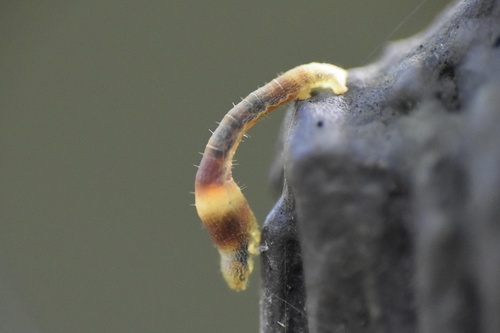
Same family (Geometridae)
 Willow BeautyPeribatodes rhomboidaria
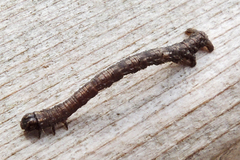 Pale BeautyCampaea perlataDamages trees, gardens or crops
 Large Lace-border MothScopula limboundataDamages trees, gardens or crops
 Riband WaveIdaea aversata
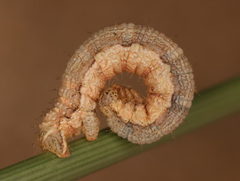 Yellow Shell MothCamptogramma bilineata
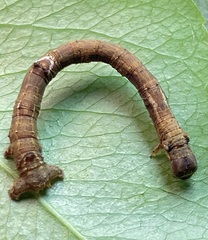 Large Maple Spanworm MothProchoerodes lineolaDamages trees, gardens or crops
Sources
- Wikipedia: https://en.wikipedia.org/wiki/Epimecis_hortaria
Look it up elsewhere: GBIF · iNaturalist · BugGuide · ITIS · Wikipedia
Text written 2026-10-22 from the sources above and checked sentence by sentence against them. Data fetched 2026-10-22.