 Bug FAQ
Tropical Rockmaster
Diphlebia euphoeoides · Order: Odonata · Family: Lestoideidae

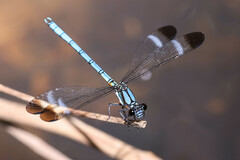
The tropical rockmaster is a relatively large damselfly that rests with its wings spread. Males are bright blue and black with dark wings, while females are brown and yellow-green with smoky wings. It lives near lakes, waterfalls or streams in Queensland, Australia and Papua New Guinea, and adults emerge in September and October.
Source: Wikipedia
How to recognize it
Males have a bright blue and black body and dark wings. Females are mostly brown and yellow-green with smoky-coloured wings.
Source: Wikipedia
Size
It is unusually large for a damselfly and rests with its wings outspread.
Source: Wikipedia
Where it lives
It is found near lakes, waterfalls, streams and sometimes dry pools at low altitudes.
Source: Wikipedia
Life cycle
It develops by incomplete metamorphosis. The nymph stage lasts about a year, with adults emerging in September and October.
Source: Wikipedia
When you see it
Adults usually appear in September and October.
Source: Wikipedia
Where it comes from
Its range includes Queensland in Australia and Papua New Guinea.
Source: Wikipedia
Lookalikes
It can be mistaken for dragonflies, but damselfly eyes do not meet and the body is less robust. It differs from the sapphire rockmaster by having smaller blue markings at the base and on the underside of terga 4-6.
Source: Wikipedia
More photos


Questions people ask
How can I tell male and female tropical rockmasters apart?
Males are bright blue and black with dark wings, while females are brown and yellow-green with smoky wings.
Source: Wikipedia
When do adult tropical rockmasters appear?
Adults usually emerge in September and October.
Source: Wikipedia
What insects might I confuse with a tropical rockmaster?
It is often confused with dragonflies, but damselfly eyes do not meet and the body is less robust; it also resembles the sapphire rockmaster but has smaller blue markings on the base and underside of terga 4-6.
Source: Wikipedia
Same family (Lestoideidae)




Sources
- Wikipedia: https://en.wikipedia.org/wiki/Diphlebia_euphoeoides
Look it up elsewhere: GBIF · iNaturalist · BugGuide · Wikipedia
Text written 2026-10-23 from the sources above and checked sentence by sentence against them. Data fetched 2026-10-22.