 Bug FAQ
Sapphire Rockmaster
Diphlebia coerulescens · Order: Odonata · Family: Lestoideidae

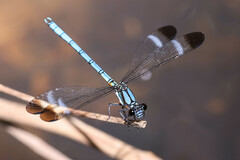
The male sapphire rockmaster is bright blue and black with dark wings, while the female is brown-olive with smoky wings.
Source: Wikipedia
How to recognize it
Males have a bright blue and black body and dark wings. Females are mostly brown and olive-green with smoky-coloured wings.
Source: Wikipedia
Where it lives
They are found near fast-flowing streams and rivers.
Source: Wikipedia
Lookalikes
They differ from the tropical rockmaster by having larger blue markings on the base and underside of terga 4-6.
Source: Wikipedia
More photos


Questions people ask
How can I tell a sapphire rockmaster apart from a tropical rockmaster?
Look for the larger blue spots on the front base and underside of terga 4 to 6; the tropical rockmaster lacks these prominent markings.
Source: Wikipedia
Same family (Lestoideidae)




Sources
- Wikipedia: https://en.wikipedia.org/wiki/Diphlebia_coerulescens
Look it up elsewhere: GBIF · iNaturalist · BugGuide · Wikipedia
Text written 2026-10-23 from the sources above and checked sentence by sentence against them. Data fetched 2026-10-22.