 Bug FAQ
Tree-lichen Beauty
Cryphia algae · Order: Lepidoptera · Family: Noctuidae
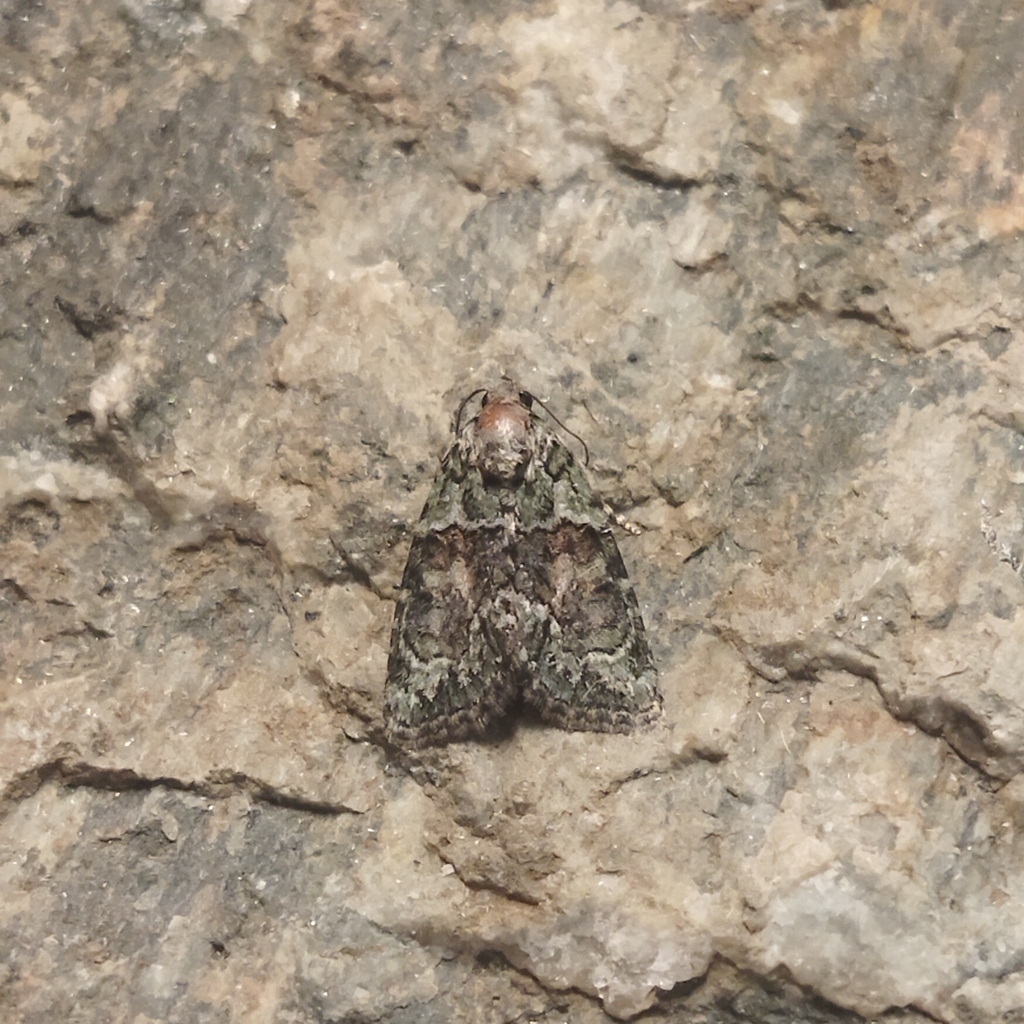
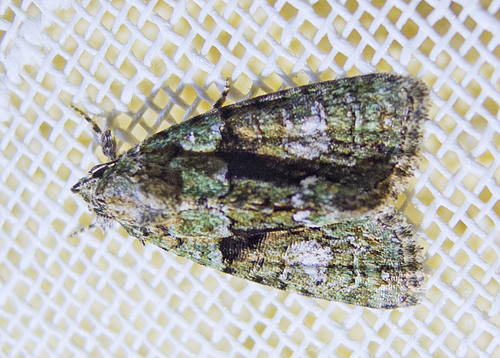
The Tree-lichen Beauty moth has a wingspan of about 24 to 30 mm and forewings 10 to 13 mm long. Its forewings are pale green with black markings, while the larva is grey with bluish sides and a dark dorsal line. It lives in Mediterranean Europe and the Near East, the larvae feed on tree lichens, and adults fly from July to September.
Source: Wikipedia
How to recognize it
Forewings are mostly pale green with black spots, and the larva is grey with bluish sides and a dark dorsal line.
Source: Wikipedia
Size
Wingspan ranges from 24 to 30 mm. Forewing length is 10 to 13 mm.
Source: Wikipedia
What it eats
Larvae feed on various species of tree lichen.
Source: Wikipedia
Life cycle
Adults are on the wing from July through September, depending on location.
Source: Wikipedia
When you see it
Flight period is July to September, varying with locality.
Source: Wikipedia
Where it comes from
Its native range is the Mediterranean region of Europe and the Near East.
Source: Wikipedia
Lookalikes
It can be confused with M. algae (spoliatricula) and the form ab. degener, which is more uniformly colored.
Source: Wikipedia
More photos
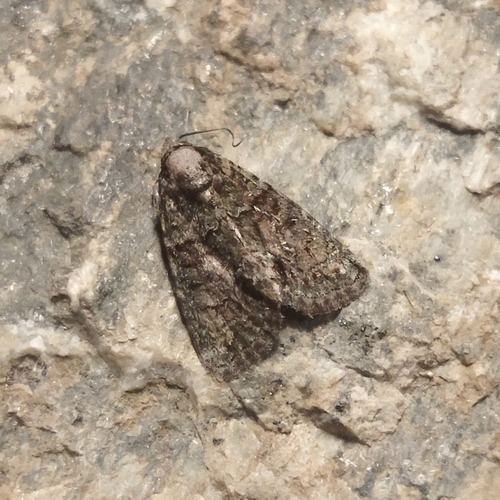
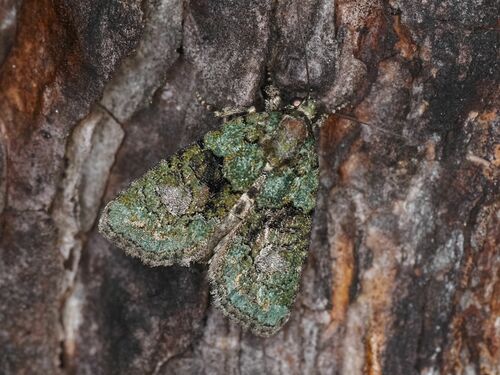
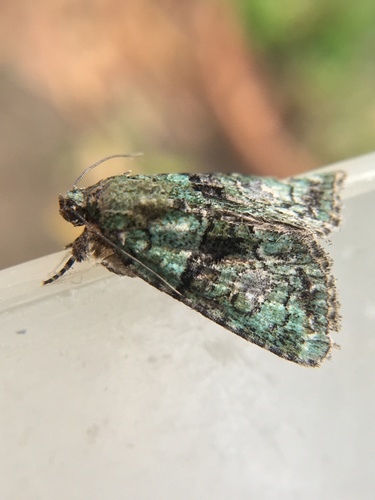
Questions people ask
When can I see the Tree-lichen Beauty moth?
Adults fly from July to September, depending on where you are.
Source: Wikipedia
What do the caterpillars look like?
The caterpillars are grey with bluish sides and have a dark grey line along the back.
Source: Wikipedia
What do the moth’s wings look like?
The forewings are pale green with black markings.
Source: Wikipedia
Same family (Noctuidae)
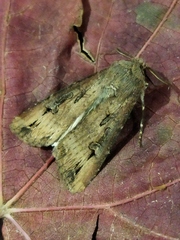 Ipsilon Dart MothAgrotis ipsilonDamages trees, gardens or crops
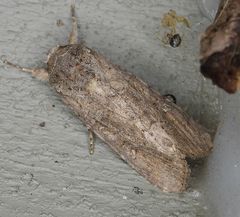 Fall Armyworm MothSpodoptera frugiperdaDamages trees, gardens or crops
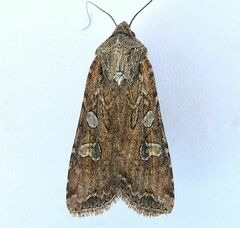 Army Cutworm MothEuxoa auxiliarisDamages trees, gardens or crops
 Large Yellow UnderwingNoctua pronubaDamages trees, gardens or crops
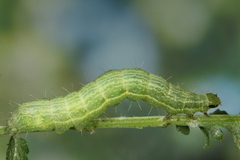 Silver ΥAutographa gamma
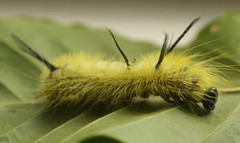 American DaggerAcronicta americanaCan irritate skin
Sources
- Wikipedia: https://en.wikipedia.org/wiki/Cryphia_algae
Look it up elsewhere: GBIF · iNaturalist · BugGuide · Wikipedia
Text written 2026-10-22 from the sources above and checked sentence by sentence against them. Data fetched 2026-10-22.