 Bug FAQ
Torpedo Bug
Siphanta acuta · Order: Hemiptera · Family: Flatidae
Also called: Green Planthopper
Source: Wikipedia
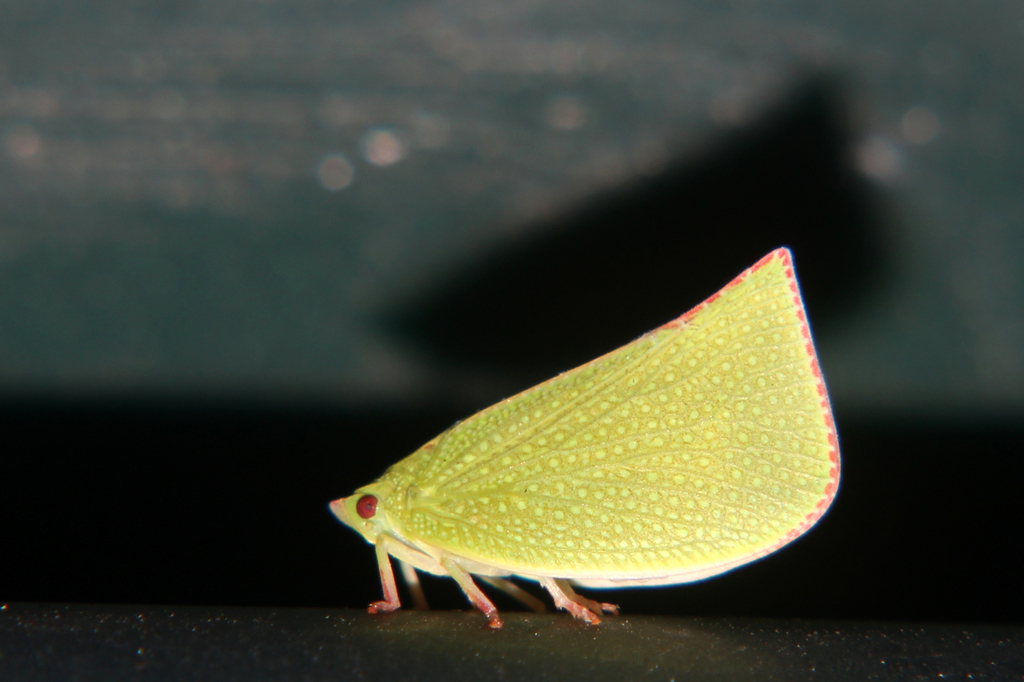
Adult Torpedo Bugs are bright green, about 10 mm long, with triangular wings held like a steep roof. They are native to Australia, live on trees, and are most common in summer and autumn. Females lay egg clusters on leaves and the insects molt through several growth stages.
Source: Wikipedia
How to recognize it
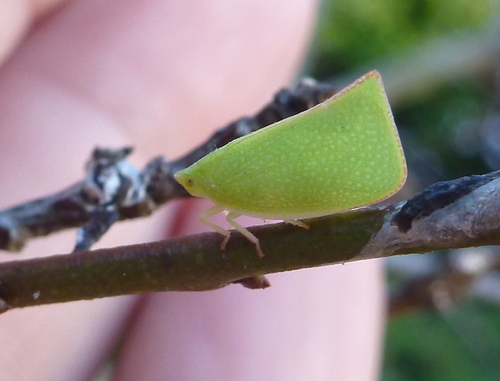
Adults are large-winged, bright green planthoppers with sharply pointed, triangular wings.
Source: Wikipedia
Size
They measure roughly 10 mm in length. Mature green planthoppers are about 9.3 mm long.
Source: Wikipedia
Is it a pest in the house?
They are pests of Australian citrus, contributing to citrus die-back, and also feed on weeds like bridal creeper.
Source: Wikipedia
How to get rid of it
They have been used in biological control programs to reduce green planthopper numbers in America. Steel-blue ladybirds (Orcus chalybeus) prey on their egg cushions, especially in citrus orchards.
Source: Wikipedia
Where it lives
They resemble small leaves and are usually found on trees. Their eggs are often parasitized by other insects.
Source: Wikipedia
What it eats
They feed by piercing plant tissue and sucking sap. Common hosts include coprosma, citrus, ornamental shrubs, and many native and exotic plants.
Source: Wikipedia
Life cycle
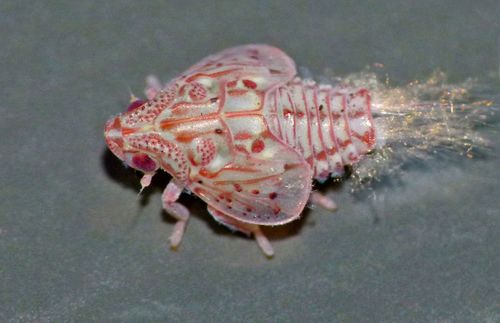
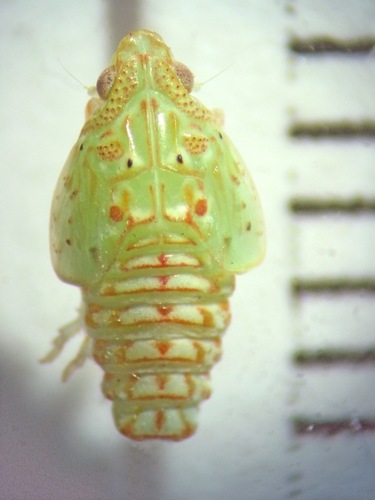
After mating, a female deposits 90 to 110 eggs in a flat oval cluster on a leaf. They molt several times as they grow through instars.
Source: Wikipedia
When you see it
Adults are most abundant in summer and autumn.
Source: Wikipedia
Where it comes from
The species originates from Australia.
Source: Wikipedia
Lookalikes
Eggs are commonly parasitized, especially by the hymenopteran Aphanomerus pusillus.
Source: Wikipedia
Where it is found in the US
Recorded in 4 of 51 states and DC. Most records: California, Hawaii, Maryland, New Mexico.
Darker = more records. Counts are museum and citizen-science records, not population size.
Source: GBIF
Status: introduced in North America; introduced in United States. Source: iNaturalist
Months it is reported in the US
Source: GBIF
More photos

Questions people ask
How can I reduce Torpedo Bugs in my garden?
Encourage steel-blue ladybirds, which eat their eggs, and consider biological control options.
Source: Wikipedia
What plants do Torpedo Bugs damage?
They feed on citrus trees and a variety of ornamental shrubs and native plants.
Source: Wikipedia
When are Torpedo Bugs most active?
Adult bugs are most common during the summer and autumn months.
Source: Wikipedia
Same family (Flatidae)


Sources
- Wikipedia: https://en.wikipedia.org/wiki/Siphanta_acuta
Look it up elsewhere: GBIF · iNaturalist · BugGuide · ITIS · Wikipedia
Text written 2026-10-22 from the sources above and checked sentence by sentence against them. Data fetched 2026-10-22.