 Bug FAQ
Citrus Flatid Planthopper
Metcalfa pruinosa · Order: Hemiptera · Family: Flatidae
Also called: Citrus Planthopper, Floury Mothbug
Source: Wikipedia

Adults are 5.5 to 8 mm long and 2 to 3 mm wide. They feed on many plants, including grapes, citrus, apricots, peaches, blackberries, raspberries, maples and willows. One generation appears each year; eggs overwinter and hatch in spring, with adults most common in summer and fall.
Source: Wikipedia
How to recognize it
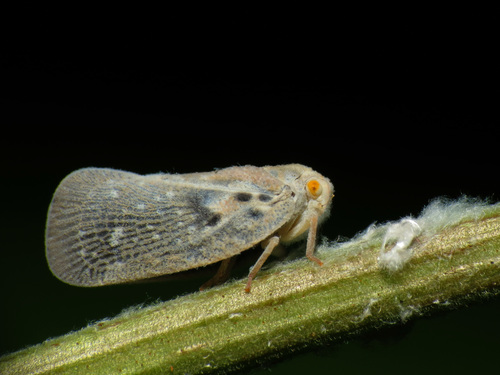
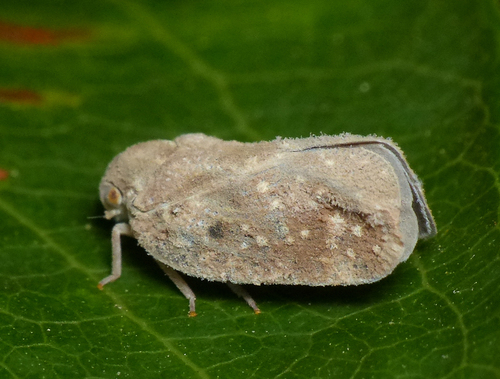
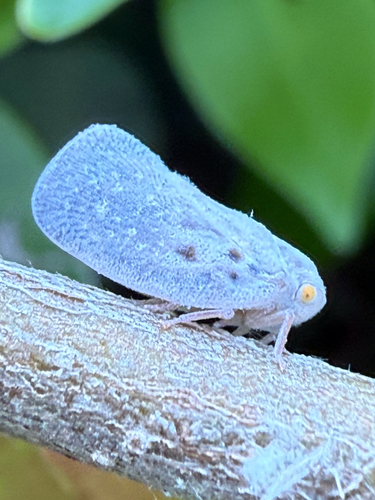
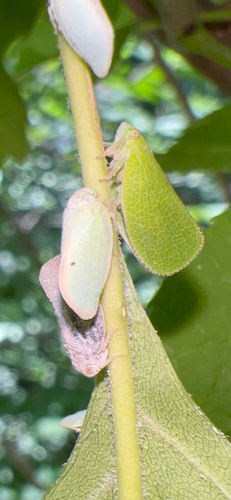
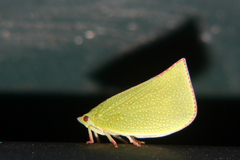
Young insects are whitish, while adults range from brown to gray with a bluish-white wax coating.
Source: Wikipedia
Size
Adults measure 5.5 to 8 mm in length and 2 to 3 mm at the widest point.
Source: Wikipedia
Is it a pest in the house?
Feeding causes serious damage to crops and ornamental plants, and the honeydew they excrete attracts bees.
Source: Wikipedia
Life cycle
The bug has one generation per year; females lay about 100 eggs in bark, which overwinter and hatch in spring.
Source: Wikipedia
When you see it
Adults are most often seen feeding in summer and fall.
Source: Wikipedia
Where it comes from
The species is native to North America.
Source: Wikipedia
Where it is found in the US
Recorded in 40 of 51 states and DC. Most records: Texas, Ohio, Pennsylvania, North Carolina, Maryland, Virginia, Illinois, New York.
Darker = more records. Counts are museum and citizen-science records, not population size.
Source: GBIF
Months it is reported in the US
Source: GBIF
More photos
Questions people ask
What plants do they damage?
They damage a wide range of crops and ornamental plants, including grapes, citrus, stone fruits, berries and many trees such as maples and willows.
Source: Wikipedia
When are they most active?
Adults are most active in the summer and fall, feeding gregariously on plant sap.
Source: Wikipedia
Same family (Flatidae)


Sources
- Wikipedia: https://en.wikipedia.org/wiki/Metcalfa_pruinosa
Look it up elsewhere: GBIF · iNaturalist · BugGuide · Wikipedia
Text written 2026-10-22 from the sources above and checked sentence by sentence against them. Data fetched 2026-10-22.