 Bug FAQ
Toothless bull ant
Myrmecia mandibularis · Order: Hymenoptera · Family: Formicidae
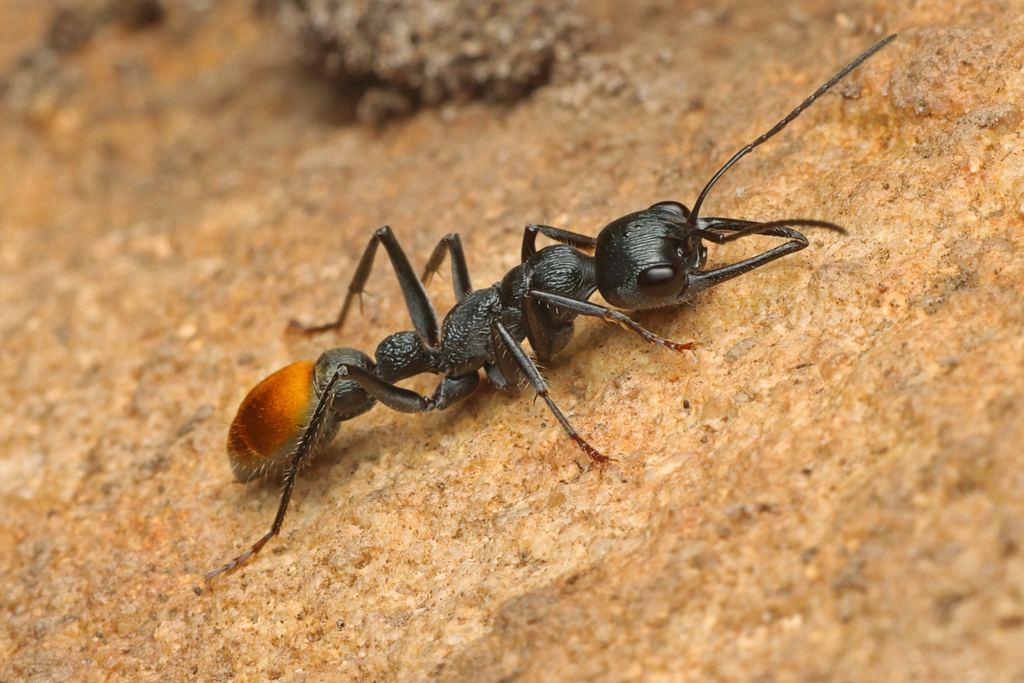
The toothless bull ant is an Australian ant that measures about 15 to 30 mm in length. It looks like the similar Myrmecia pilosula but has all-black mandibles and an orange abdomen. It was described in 1858 and is most often seen in southern Australia, especially around Perth.
Source: Wikipedia
How to recognize it
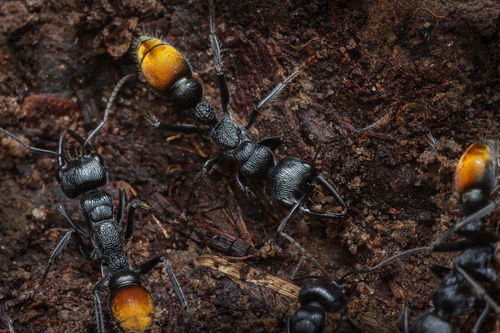
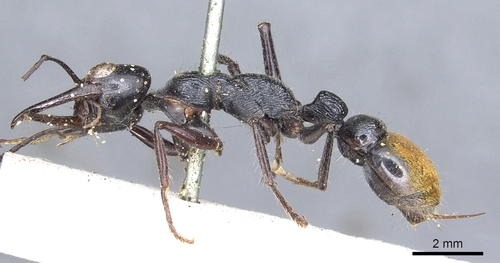
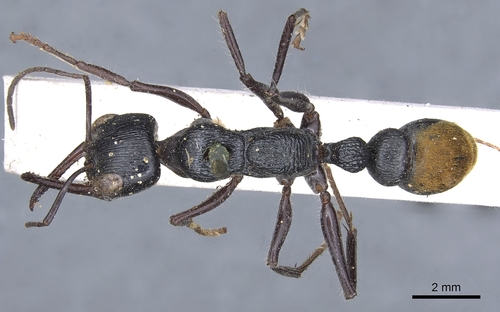
Mandibles are completely black while most of the abdomen is orange, resembling Myrmecia pilosula otherwise.
Source: Wikipedia
Size
Adults are typically 15 to 30 mm long.
Source: Wikipedia
Where it comes from
It is native to Australia. The species is mainly found in southern regions, especially around Perth.
Source: Wikipedia
More photos
Questions people ask
How can I identify a toothless bull ant?
Look for a 15 to 30 mm ant with all-black mandibles and an orange abdomen; it otherwise resembles Myrmecia pilosula.
Source: Wikipedia
Where is the toothless bull ant found?
It lives in southern Australia, most commonly around Perth.
Source: Wikipedia
Same family (Formicidae)
 Eastern Black Carpenter AntCamponotus pennsylvanicusCan damage your home
 Red Imported Fire AntSolenopsis invictaCan sting
 American Winter AntPrenolepis imparis
 Argentine AntLinepithema humileNuisance, not dangerous
 Immigrant Pavement AntTetramorium immigransCan sting
 Odorous House AntTapinoma sessileCan damage your home
Sources
- Wikipedia: https://en.wikipedia.org/wiki/Myrmecia_mandibularis
Look it up elsewhere: GBIF · iNaturalist · BugGuide · ITIS · Wikipedia
Text written 2026-10-23 from the sources above and checked sentence by sentence against them. Data fetched 2026-10-23.