 Bug FAQ
Toadflax Brocade Moth
Calophasia lunula · Order: Lepidoptera · Family: Noctuidae
Also called: Toadflax Brocade
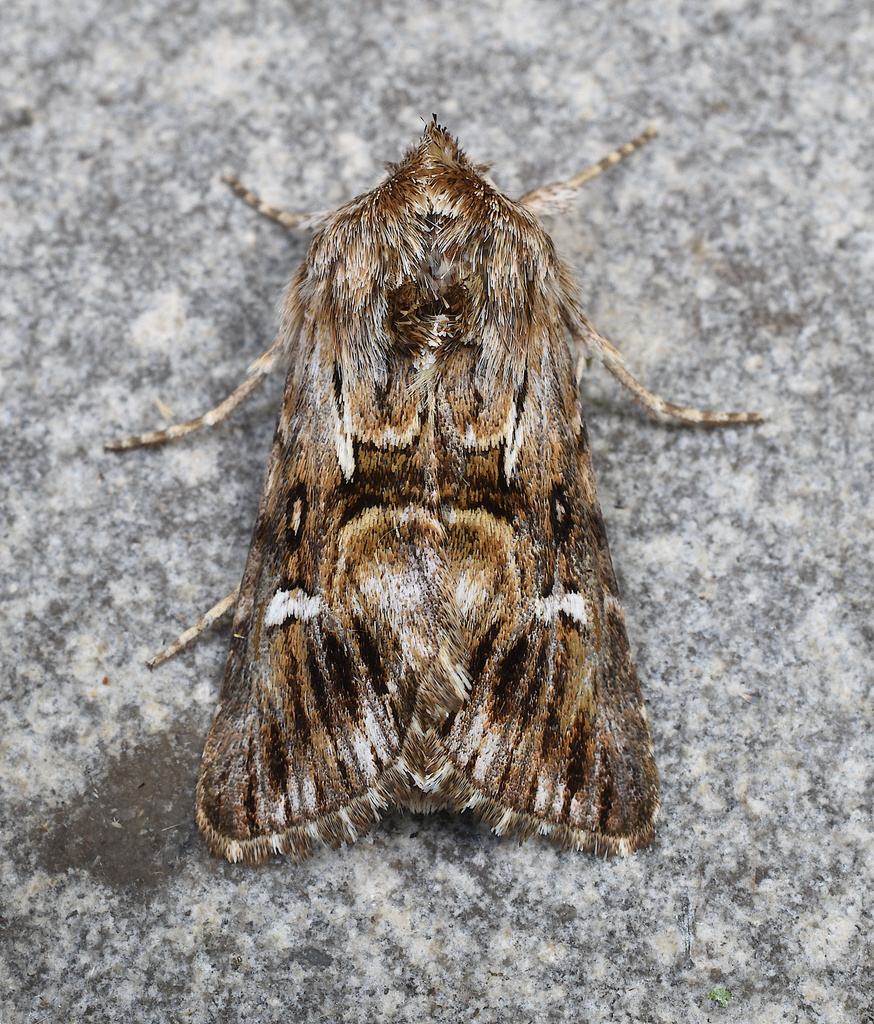
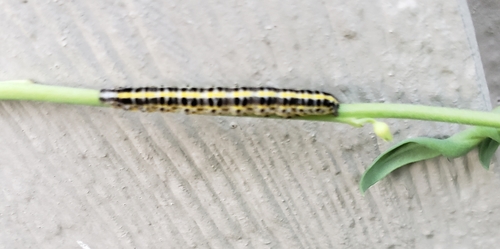
Its caterpillars grow to about 4 cm, molt five times in a month, then pupate in a winter cocoon made of chewed plant matter. It was introduced to Canada and the United States in the 1960s as a biological control agent against invasive toadflax weeds.
Source: Wikipedia
How to recognize it
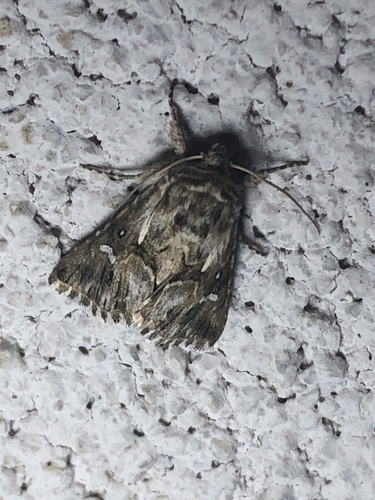
Forewings are bluish-grey, heavily suffused with olive fuscous, especially in the middle and along an oblique band from the apex toward the anal angle.
Source: Wikipedia
Size
Mature larvae reach about 4 cm in length. Adult moths are about 12 mm long.
Source: Wikipedia
Where it lives
In North America it is released on toadflax weeds as a biocontrol agent.
Source: Wikipedia
What it eats
Adults feed on nectar and do not cause plant damage.
Source: Wikipedia
Life cycle
The caterpillar molts five times over roughly one month. It then pupates through winter in a cocoon of chewed plant material and leaf litter.
Source: Wikipedia
When you see it
It was first released in Canada in the early 1960s and shortly after in the United States. The moth establishes less readily in colder climates.
Source: Wikipedia
Where it comes from
It is native to the Palearctic region. Its range extends across Europe into Russia, Central Asia and the Russian Far East.
Source: Wikipedia
Where it is found in the US
Recorded in 19 of 51 states and DC. Most records: New York, Wisconsin, Pennsylvania, Minnesota, Massachusetts, Montana, Michigan, Washington.
Darker = more records. Counts are museum and citizen-science records, not population size.
Source: GBIF
Status: introduced in United States; introduced in Canada. Source: iNaturalist
Months it is reported in the US
Source: GBIF
More photos


Questions people ask
How big does this moth get?
Adults are about 12 mm long, while mature caterpillars grow to roughly 4 cm.
Source: Wikipedia
When was it introduced to North America?
It was released in Canada in the early 1960s and soon after in the United States.
Source: Wikipedia
Same family (Noctuidae)
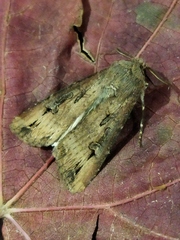 Ipsilon Dart MothAgrotis ipsilonDamages trees, gardens or crops
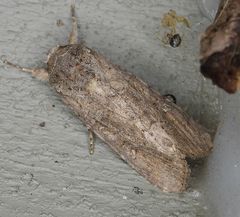 Fall Armyworm MothSpodoptera frugiperdaDamages trees, gardens or crops
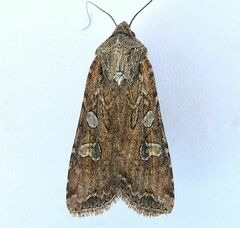 Army Cutworm MothEuxoa auxiliarisDamages trees, gardens or crops
 Large Yellow UnderwingNoctua pronubaDamages trees, gardens or crops
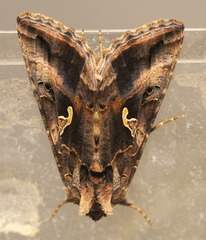 Silver ΥAutographa gamma
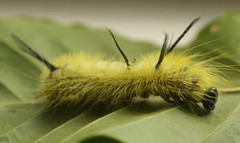 American DaggerAcronicta americanaCan irritate skin
Sources
- Wikipedia: https://en.wikipedia.org/wiki/Calophasia_lunula
Look it up elsewhere: GBIF · iNaturalist · BugGuide · ITIS · Wikipedia
Text written 2026-10-25 from the sources above and checked sentence by sentence against them. Data fetched 2026-10-25.