 Bug FAQ
The White-Point
Mythimna albipuncta · Order: Lepidoptera · Family: Noctuidae
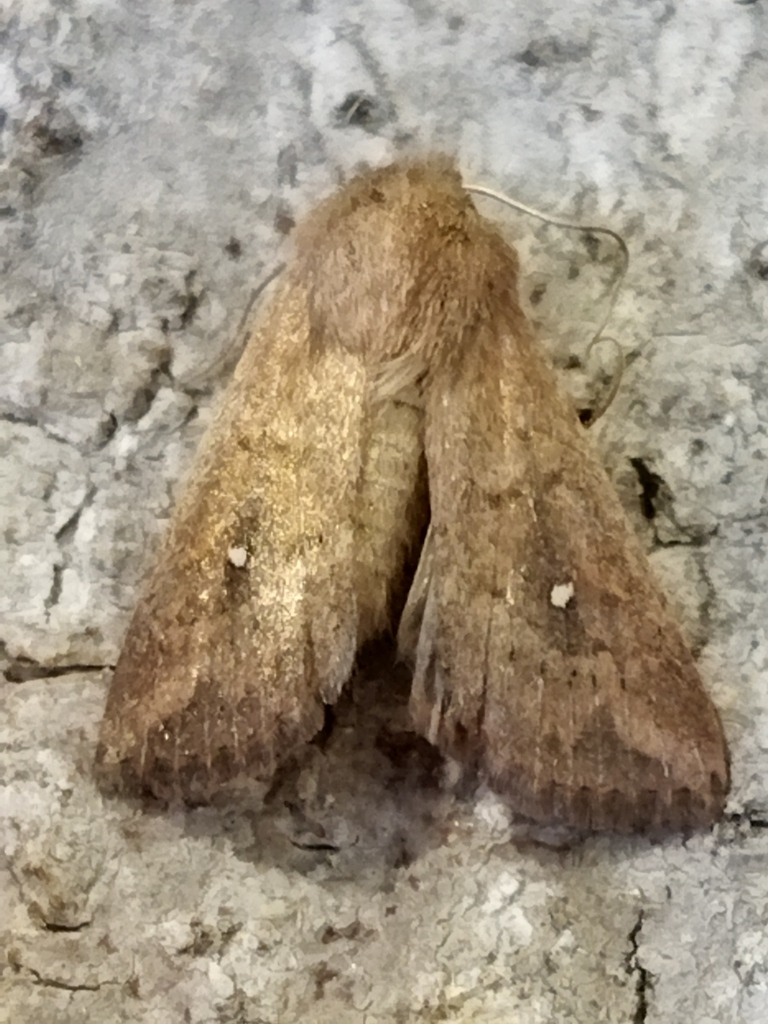
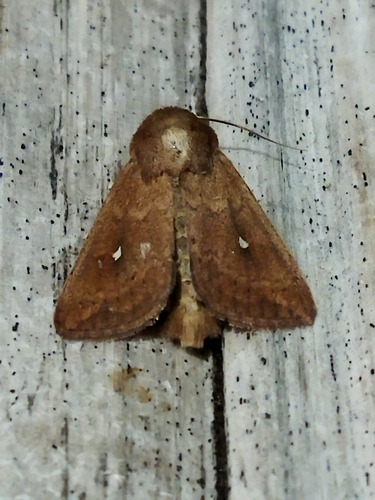
The White-Point moth has a wingspan of about 30 to 35 mm and forewings 14 to 17 mm long. Its forewings are rufous-brown with grey dusting and a distinctive white spot formed by the reniform stigma. It flies mainly in August and September, the larvae feed on various grasses and overwinter as caterpillars.
Source: Wikipedia
How to recognize it
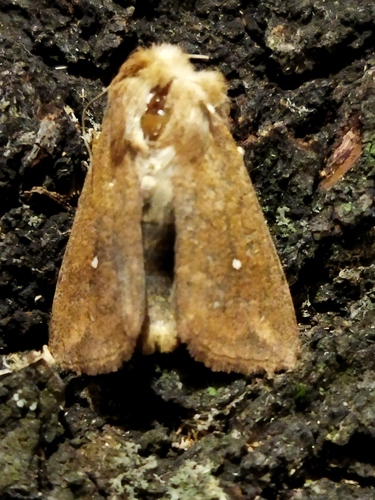
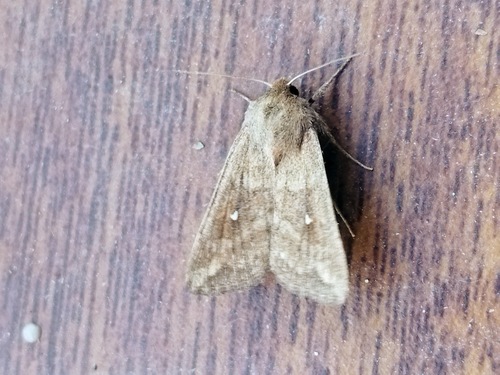
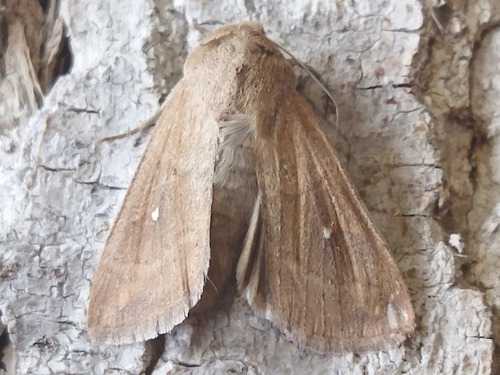
Forewings are rufous brown, dusted with greyer tones, and the reniform stigma creates a clear white spot at the lower end of the cell.
Source: Wikipedia
Size
Wingspan ranges from 30 to 35 mm. Forewing length varies between 14 and 17 mm.
Source: Wikipedia
Where it lives
Adults are most common in August and September, but can be seen from June to October.
Source: Wikipedia
What it eats
Larvae feed on a variety of grasses.
Source: Wikipedia
Life cycle
The species overwinters as a caterpillar; larvae are dull reddish-grey with characteristic dorsal and subdorsal lines.
Source: Wikipedia
When you see it
Flight period is mainly August-September in the British Isles; timing may differ elsewhere.
Source: Wikipedia
Where it comes from
Found throughout Europe, with a subspecies in Tunisia, and also present in Asia Minor, Armenia, Iran, and the northeastern United States.
Source: Wikipedia
Lookalikes
Similar species include Mythimna conigera, Mythimna ferrago, and Mythimna unipuncta.
Source: Wikipedia
More photos
Questions people ask
How can I tell the White-Point moth apart from similar species?
Look for the rufous-brown forewing with grey dusting and the distinct white spot made by the reniform stigma; other species lack that exact combination.
Source: Wikipedia
When are White-Point moths active?
They are most active in August and September, though sightings can occur from June through October.
Source: Wikipedia
Same family (Noctuidae)
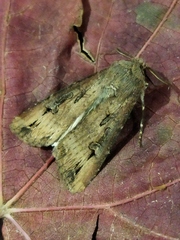 Ipsilon Dart MothAgrotis ipsilonDamages trees, gardens or crops
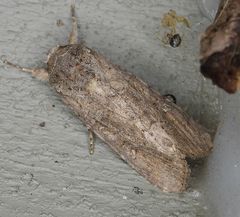 Fall Armyworm MothSpodoptera frugiperdaDamages trees, gardens or crops
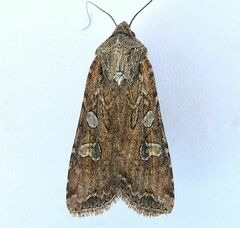 Army Cutworm MothEuxoa auxiliarisDamages trees, gardens or crops
 Large Yellow UnderwingNoctua pronubaDamages trees, gardens or crops
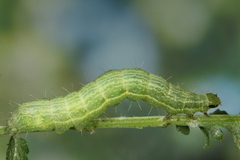 Silver ΥAutographa gamma
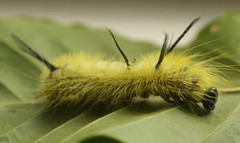 American DaggerAcronicta americanaCan irritate skin
Sources
- Wikipedia: https://en.wikipedia.org/wiki/Mythimna_albipuncta
Look it up elsewhere: GBIF · iNaturalist · BugGuide · Wikipedia
Text written 2026-10-22 from the sources above and checked sentence by sentence against them. Data fetched 2026-10-22.