 Bug FAQ
The Spectacle
Abrostola tripartita · Order: Lepidoptera · Family: Noctuidae
Also called: Spectacle
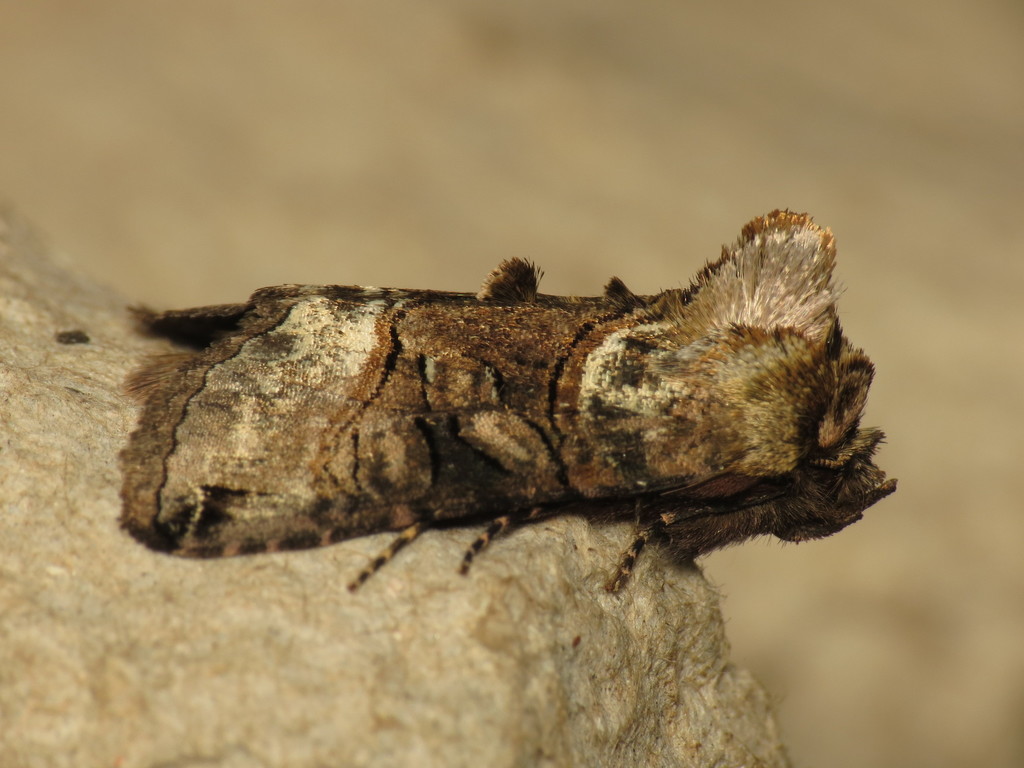
The Spectacle moth has forewings that are whitish-grey on the base and outer edge, with a darker grey-brown central area, and a distinctive whitish-grey, black-ringed mark on the front of the thorax. It lives across much of the Palearctic region, including most of Europe (except Iceland), Russia, Siberia, the Amur area, Kyrgyzstan and Kazakhstan, and its caterpillars feed on nettles (Urtica species).
Source: Wikipedia
How to recognize it
Forewings have whitish-grey basal and outer margins with fine darker grey mottling; the central area is grey-brown with darker brown spots. A whitish-grey, black-ringed “spectacle” mark appears in front of the thorax, and the raised scales on the wing crosslines and central area are especially distinct.
Source: Wikipedia
What it eats
The larvae feed on plants of the nettle genus Urtica.
Source: Wikipedia
Where it comes from
Its range covers most of Europe (except Iceland) and extends into Russia, Siberia, the Amur area, Kyrgyzstan and Kazakhstan.
Source: Wikipedia
More photos

Same family (Noctuidae)
 Ipsilon Dart MothAgrotis ipsilonDamages trees, gardens or crops
 Fall Armyworm MothSpodoptera frugiperdaDamages trees, gardens or crops
 Army Cutworm MothEuxoa auxiliarisDamages trees, gardens or crops
 Large Yellow UnderwingNoctua pronubaDamages trees, gardens or crops
 Silver ΥAutographa gamma
 American DaggerAcronicta americanaCan irritate skin
Sources
- Wikipedia: https://en.wikipedia.org/wiki/Abrostola_tripartita
Look it up elsewhere: GBIF · iNaturalist · BugGuide · Wikipedia
Text written 2026-10-22 from the sources above and checked sentence by sentence against them. Data fetched 2026-10-22.