 Bug FAQ
The Chestnut
Conistra vaccinii · Order: Lepidoptera · Family: Noctuidae
Also called: Chestnut
Source: Wikipedia
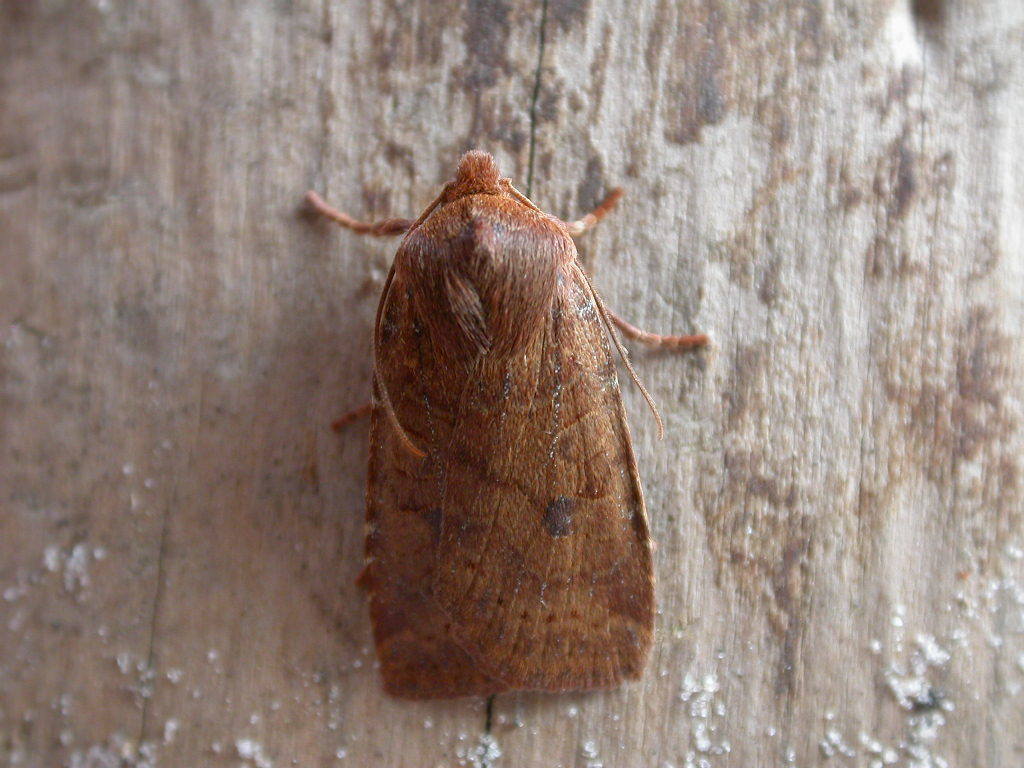
The chestnut moth has a wingspan of about 28 to 36 mm. Adults are on the wing from September through May, depending on where you are. It lives in many places, from open forests and gardens to dry or wet, cool or warm habitats.
Source: Wikipedia
How to recognize it
Its wing pattern and colour are highly variable, ranging from dove-grey to dark brown with light brown, reddish or black-brown markings.
Source: Wikipedia
Size
The wingspan measures between 28 and 36 mm.
Source: Wikipedia
Where it lives
It occurs in open forests, scrubland, downs, gardens, parkland and shrub-rich open country. These habitats may be dry or wet and can be cool or warm.
Source: Wikipedia
What it eats
The caterpillars feed on a variety of deciduous trees and shrubs, and later also eat herbaceous plants.
Source: Wikipedia
Life cycle
Adults fly from September to May, varying with location. The larva is reddish-brown above, greenish below, with a freckled dorsum and faint pale lines.
Source: Wikipedia
When you see it
The moth is active from September through May, depending on the region.
Source: Wikipedia
Where it comes from
The species is found throughout Europe, North Africa and across the Palearctic to Siberia. Its range stretches from Morocco in the west through the Mediterranean, Anatolia, Turkestan and into western and central Siberia.
Source: Wikipedia
Questions people ask
Do chestnut moth larvae damage garden plants?
Yes, the larvae feed on leaves of deciduous trees, shrubs and later on herbaceous garden plants, which can cause noticeable damage.
Source: Wikipedia
When can I see adult chestnut moths?
Adults are on the wing from September to May, though the exact timing depends on where you live.
Source: Wikipedia
Where does the chestnut moth live?
It inhabits a wide range of places, including open forests, gardens, scrubland and both dry and wet habitats.
Source: Wikipedia
Same family (Noctuidae)
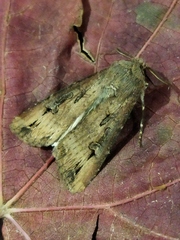 Ipsilon Dart MothAgrotis ipsilonDamages trees, gardens or crops
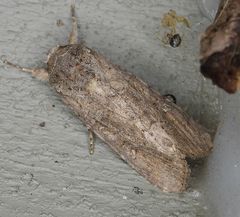 Fall Armyworm MothSpodoptera frugiperdaDamages trees, gardens or crops
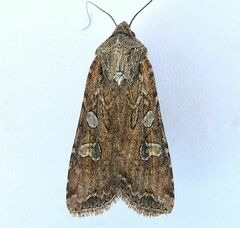 Army Cutworm MothEuxoa auxiliarisDamages trees, gardens or crops
 Large Yellow UnderwingNoctua pronubaDamages trees, gardens or crops
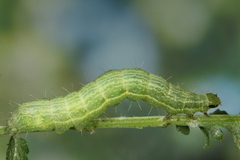 Silver ΥAutographa gamma
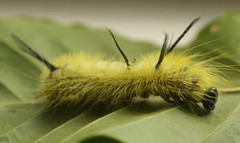 American DaggerAcronicta americanaCan irritate skin
Sources
- Wikipedia: https://en.wikipedia.org/wiki/Conistra_vaccinii
Look it up elsewhere: GBIF · iNaturalist · BugGuide · Wikipedia
Text written 2026-10-22 from the sources above and checked sentence by sentence against them. Data fetched 2026-10-22.