 Bug FAQ
The Bordered Straw
Heliothis peltigera · Order: Lepidoptera · Family: Noctuidae
Also called: Bordered Straw
Source: Wikipedia
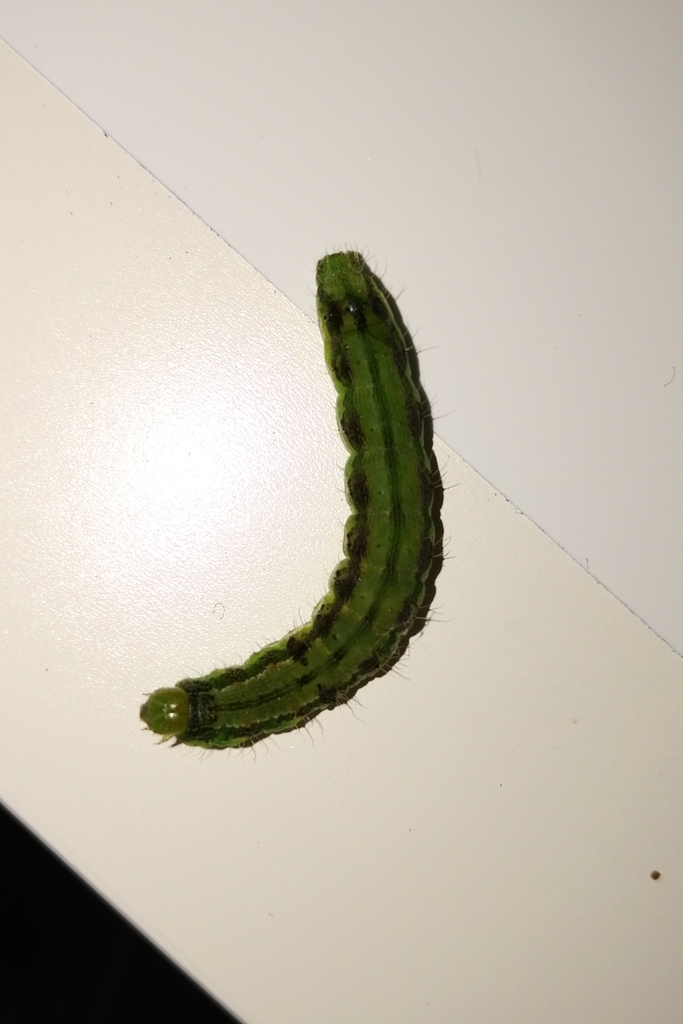
It has a wingspan of about 3 to 4 cm and forewings 1.6 to 1.9 cm long. The forewings are grey-ochre with a pale brown flush and a dark dot as the orbicular stigma, while the hindwings have a broad dark border with a pale spot. It lives on hot wastelands and warm slopes, occurs from Southern Europe to the Near East, Africa and Asia, and migrates northward from May to October.
Source: Wikipedia
How to recognize it
Forewings are greyish-ochre, flushed with pale brown, with indistinct brown lines and a dark dot as the orbicular stigma. Hindwings show a wide brown-black border that contains a pale blotch between the second and fourth wing cells.
Source: Wikipedia
Size
Wingspan ranges from 29 to 40 mm; forewing length is 16 to 19 mm.
Source: Wikipedia
Where it lives
Prefers hot wastelands and warm slopes.
Source: Wikipedia
What it eats
Adults feed on the flowers of many plants.
Source: Wikipedia
Life cycle
These moths migrate and are present from May to October, depending on location.
Source: Wikipedia
When you see it
They arrive between May and October, varying with region.
Source: Wikipedia
Where it comes from
Found in Southern Europe, the Near East, most of Africa and parts of Asia as far east as China and Laos.
Source: Wikipedia
Lookalikes
Similar species are Heliothis nubigera, which has less obvious kidney markings, and Helicoverpa armigera, which has lighter hindwings.
Source: Wikipedia
Questions people ask
When can I expect to see Bordered Straw moths?
They are present from May through October, depending on where you are.
Source: Wikipedia
Where does this moth live?
It prefers hot, open habitats like wastelands and warm slopes.
Source: Wikipedia
How can I tell it apart from similar moths?
Look for the dark border on the hindwings with a pale spot and the dark dot on the forewing; other species have lighter hindwings or less distinct markings.
Source: Wikipedia
Same family (Noctuidae)
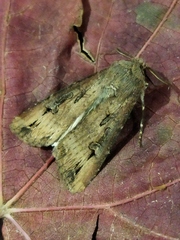 Ipsilon Dart MothAgrotis ipsilonDamages trees, gardens or crops
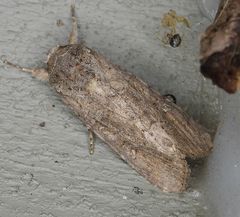 Fall Armyworm MothSpodoptera frugiperdaDamages trees, gardens or crops
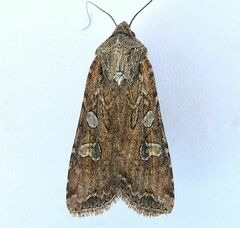 Army Cutworm MothEuxoa auxiliarisDamages trees, gardens or crops
 Large Yellow UnderwingNoctua pronubaDamages trees, gardens or crops
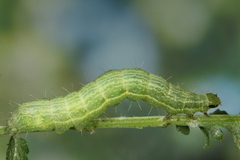 Silver ΥAutographa gamma
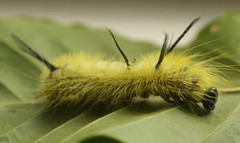 American DaggerAcronicta americanaCan irritate skin
Sources
- Wikipedia: https://en.wikipedia.org/wiki/Heliothis_peltigera
Look it up elsewhere: GBIF · iNaturalist · BugGuide · Wikipedia
Text written 2026-10-22 from the sources above and checked sentence by sentence against them. Data fetched 2026-10-22.