 Bug FAQ
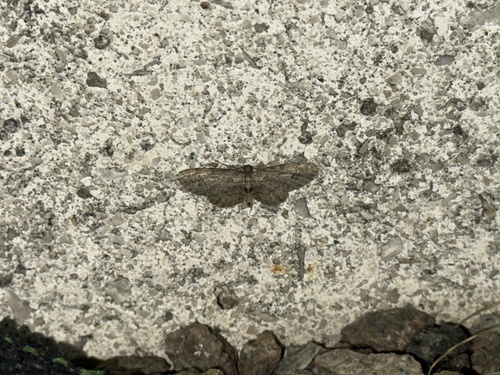
Texas Gray
Glenoides texanaria · Order: Lepidoptera · Family: Geometridae
Also called: Texas Gray Moth
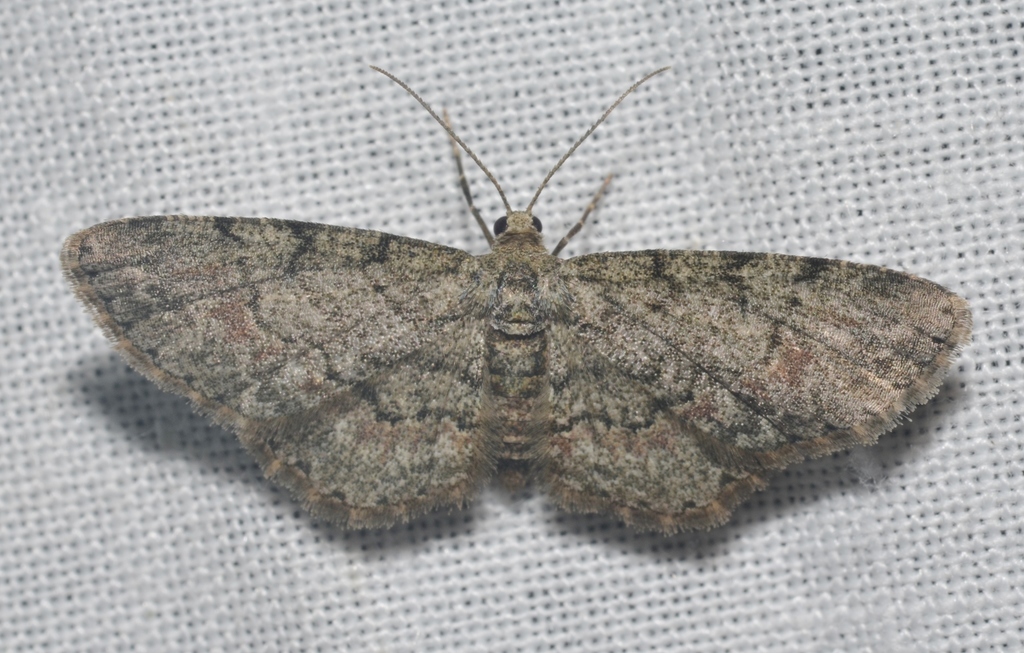
The Texas gray moth has a wingspan of about 16 to 24 mm. It lives in North America, recorded from Massachusetts down to Florida and west to Texas. In Florida, adults are mostly active from January to April and again from June to December.
Source: Wikipedia
How to recognize it
Glenoides texanaria, called the Texas gray moth, belongs to the Geometridae family.
Source: Wikipedia
Size
Its wingspan ranges between 16 and 24 mm.
Source: Wikipedia
When you see it
In Florida, adults are on the wing mainly January-April and June-December.
Source: Wikipedia
Where it comes from
Its recorded range includes the same North American states as above.
Source: Wikipedia
Where it is found in the US
Recorded in 34 of 51 states and DC. Most records: Texas, Alabama, Ohio, Pennsylvania, Maryland, New York, North Carolina, Connecticut.
Darker = more records. Counts are museum and citizen-science records, not population size.
Source: GBIF
Status: native in North America; native in Canada; native in United States. Source: iNaturalist
Months it is reported in the US
Source: GBIF
More photos
Same family (Geometridae)
 Willow BeautyPeribatodes rhomboidaria
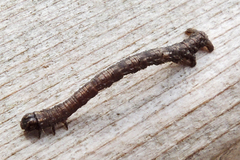 Pale BeautyCampaea perlataDamages trees, gardens or crops
 Large Lace-border MothScopula limboundataDamages trees, gardens or crops
 Riband WaveIdaea aversata
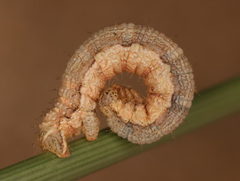 Yellow Shell MothCamptogramma bilineata
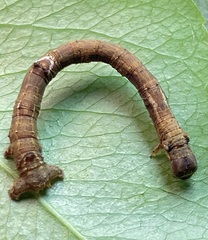 Large Maple Spanworm MothProchoerodes lineolaDamages trees, gardens or crops
Sources
- Wikipedia: https://en.wikipedia.org/wiki/Glenoides_texanaria
Look it up elsewhere: GBIF · iNaturalist · BugGuide · ITIS · Wikipedia
Text written 2026-10-22 from the sources above and checked sentence by sentence against them. Data fetched 2026-10-22.