 Bug FAQ
Tenebroides americanus
Tenebroides americanus · Order: Coleoptera · Family: Trogossitidae
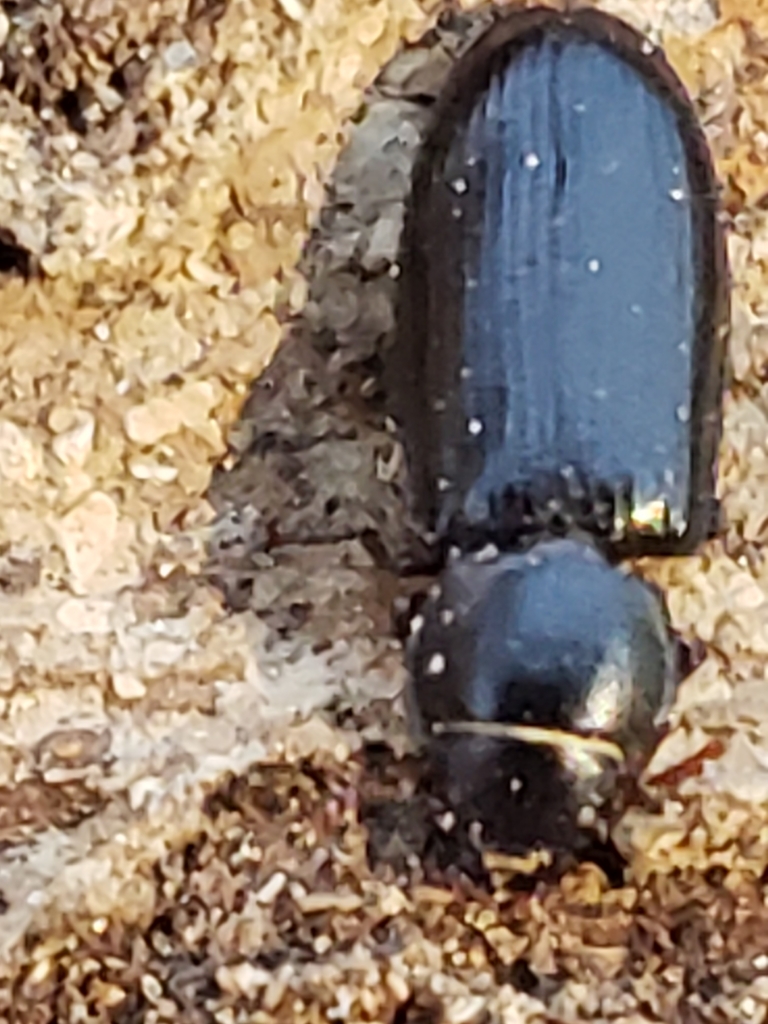
Tenebroides americanus is a bark-gnawing beetle belonging to the family Trogossitidae. All available sources describe it only as a member of this beetle family without mentioning any specific impacts.
Source: Wikipedia
How to recognize it
Tenebroides americanus is identified as a bark-gnawing beetle in the family Trogossitidae.
Source: Wikipedia
Is it a pest in the house?
It is listed as a bark-gnawing beetle, with no specific household pest information provided.
Source: Wikipedia
Can it bite, sting or make you sick?
No bite or sting information is given; it is only described as a bark-gnawing beetle.
Source: Wikipedia
What it eats
Its diet consists of material associated with bark, as it is a bark-gnawing beetle.
Source: Wikipedia
Lookalikes
It is identified solely as a bark-gnawing beetle.
Source: Wikipedia
Where it is found in the US
Recorded in 18 of 51 states and DC. Most records: Tennessee, Kentucky, Nebraska, Texas, Georgia, Massachusetts, New York, Michigan.
Darker = more records. Counts are museum and citizen-science records, not population size.
Source: GBIF
Status: native in North America; native in Canada. Source: iNaturalist
Months it is reported in the US
Source: GBIF
Questions people ask
What kind of insect is Tenebroides americanus?
It is a bark-gnawing beetle in the family Trogossitidae.
Source: Wikipedia
Same family (Trogossitidae)
Sources
- Wikipedia: https://en.wikipedia.org/wiki/Tenebroides_americanus
Look it up elsewhere: GBIF · iNaturalist · BugGuide · Wikipedia
Text written 2026-10-29 from the sources above and checked sentence by sentence against them. Data fetched 2026-10-29.