 Bug FAQ
Pine Trogossitid Beetle
Temnoscheila chlorodia · Order: Coleoptera · Family: Trogossitidae
Also called: Green Bark Beetle
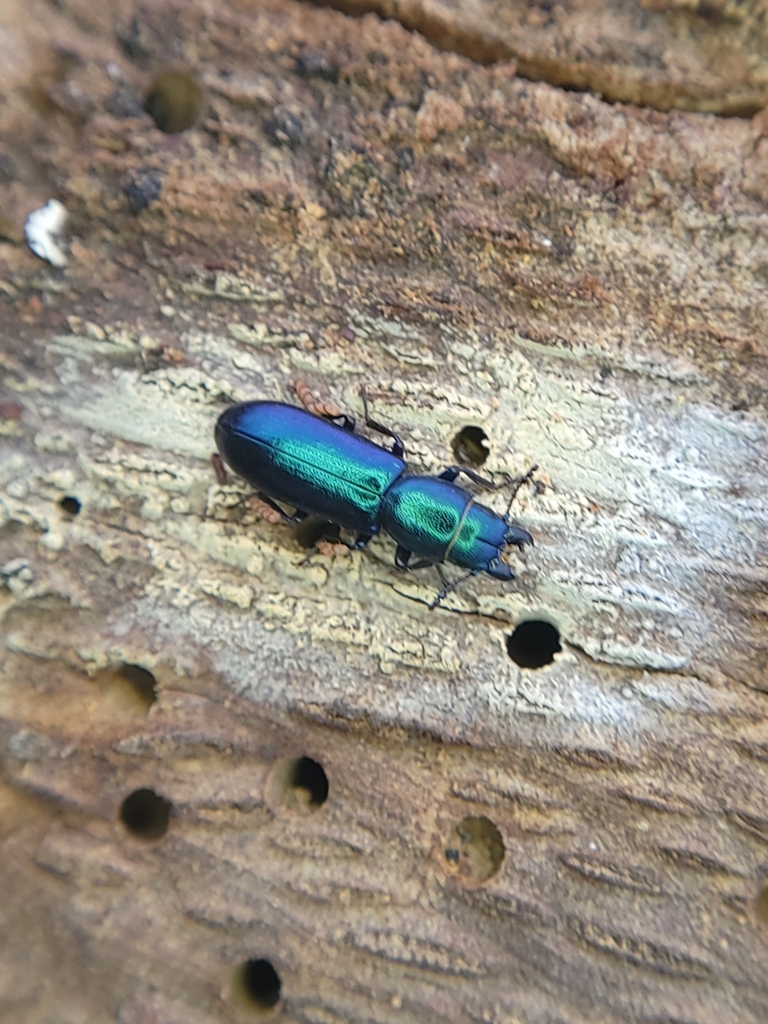
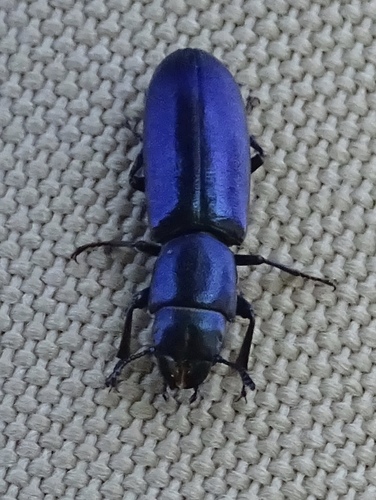
The pine trogossitid beetle is a dark metallic green or blue beetle that measures about 9 to 20 mm long.
Source: Wikipedia
How to recognize it
Adults have a dark metallic green or blue coloration.
Source: Wikipedia
Size
Adults range from 9 to 20 mm in length.
Source: Wikipedia
What it eats
Both adults and larvae prey on other small organisms under bark.
Source: Wikipedia
Life cycle
Adults are most abundant in late spring, with another peak in late summer.
Source: Wikipedia
When you see it
The beetles appear most often in late spring and again in late summer.
Source: Wikipedia
Where it is found in the US
Recorded in 12 of 51 states and DC. Most records: California, Oregon, Washington, Arizona, Idaho, Texas, Montana, Nevada.
Darker = more records. Counts are museum and citizen-science records, not population size.
Source: GBIF
Status: native in North America; native in Canada. Source: iNaturalist
Months it is reported in the US
Source: GBIF
More photos
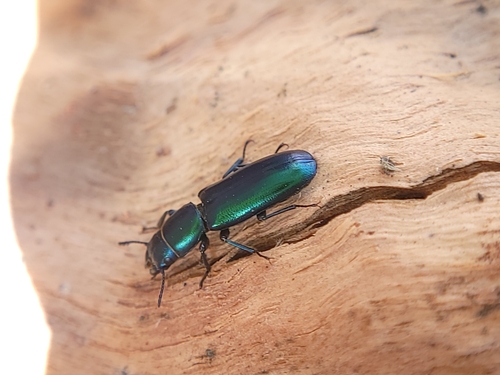
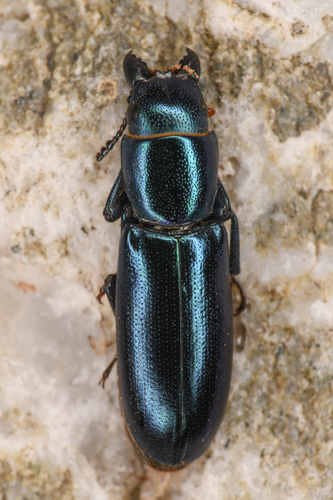
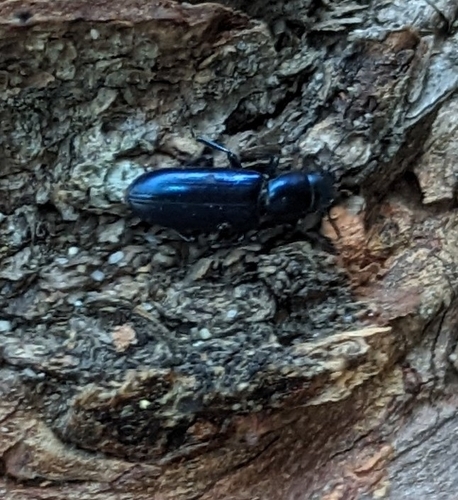
Questions people ask
What do pine trogossitid beetles look like?
They are dark metallic green or blue and measure about 9 to 20 mm long.
Source: Wikipedia
Sources
- Wikipedia: https://en.wikipedia.org/wiki/Temnoscheila_chlorodia
Look it up elsewhere: GBIF · iNaturalist · BugGuide · Wikipedia
Text written 2026-10-25 from the sources above and checked sentence by sentence against them. Data fetched 2026-10-25.