 Bug FAQ
Superb Ant-hill Hoverfly
Xanthogramma pedissequum · Order: Diptera · Family: Syrphidae
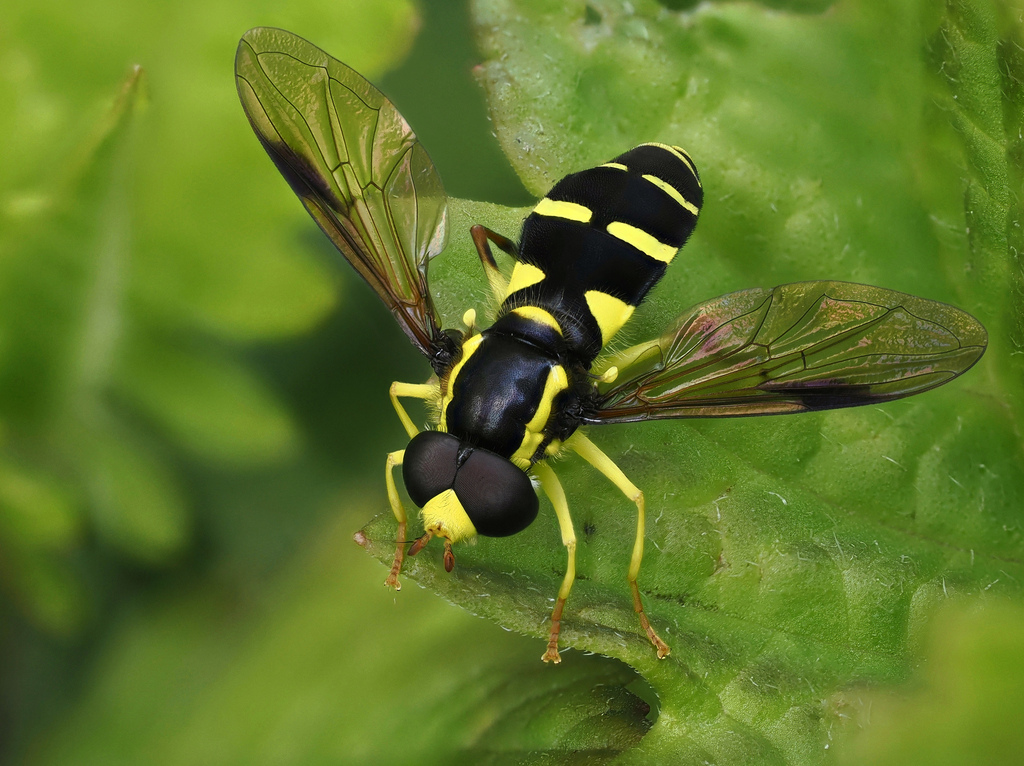
It lives in grasslands and open fields near deciduous forests across most of Europe, western Siberia, the Near East and North Africa, and adults visit flowers such as black horehound, creeping cinquefoil and hogweed. The larvae are found in ant nests underground, probably feeding on ant-tended root aphids.
Source: Wikipedia
How to recognize it
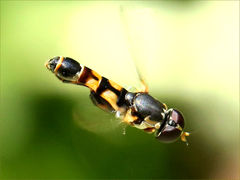
The second abdominal segment is wide and wedge-shaped.
Source: Wikipedia
Size
Adults are 10 to 13 mm long and have wings 7.25 to 9.75 mm in length.
Source: Wikipedia
Where it lives
It prefers grassland and open fields close to deciduous forest.
Source: Wikipedia
What it eats
Adults feed on flowers such as Ballota nigra, Potentilla erecta and Heracleum sphondylium. Larvae live in nests of Lasius niger and Lasius flavus ants, likely eating ant-tended root aphids.
Source: Wikipedia
Life cycle
Adults are on the wing from mid-May through September, peaking at the end of June. Little is known about the larval stages.
Source: Wikipedia
Where it comes from
It occurs in most of Europe, western Siberia, the Near East and North Africa.
Source: Wikipedia
Lookalikes
Before 2018 it was placed in the genus Xanthogramma, which is now a junior synonym.
Source: Wikipedia
More photos

Same family (Syrphidae)


Sources
- Wikipedia: https://en.wikipedia.org/wiki/Philhelius_pedissequus
Look it up elsewhere: GBIF · iNaturalist · BugGuide · Wikipedia
Text written 2026-10-23 from the sources above and checked sentence by sentence against them. Data fetched 2026-10-22.