 Bug FAQ
Striped Dung Fly
Oxysarcodexia varia · Order: Diptera · Family: Sarcophagidae
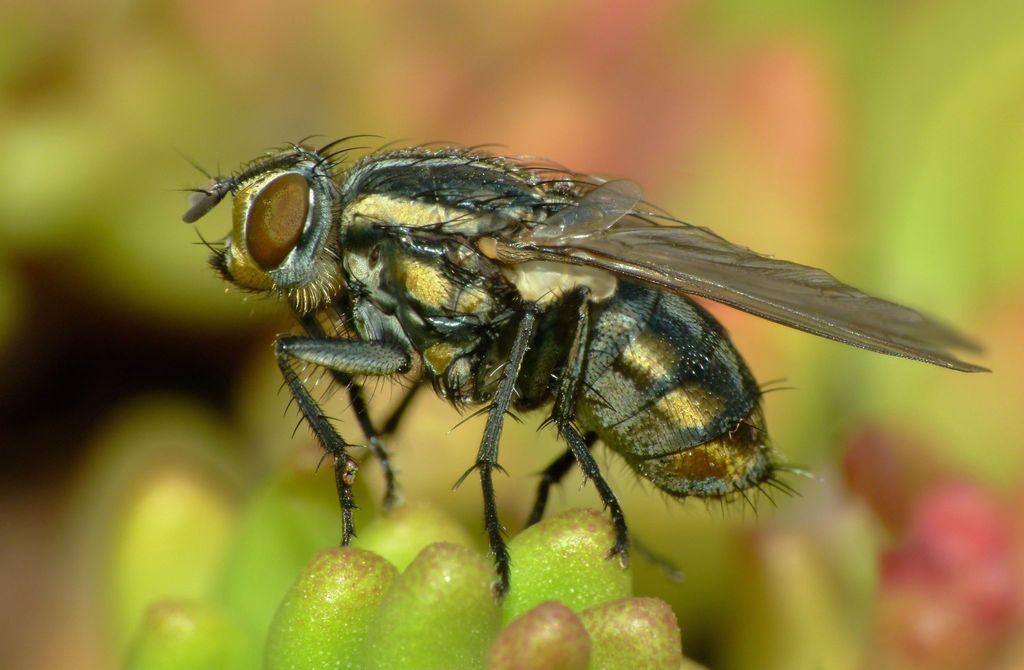
The striped dung fly has black and yellow stripes along its thorax and bristly legs. It originated in South America and now occurs in Oceania, including Polynesia, Norfolk Island and New Zealand. Females lay maggots on dung, carrion or wounds; the larvae feed there, pupate in soil and emerge as adults, with many generations per year (-).
Source: Wikipedia
How to recognize it
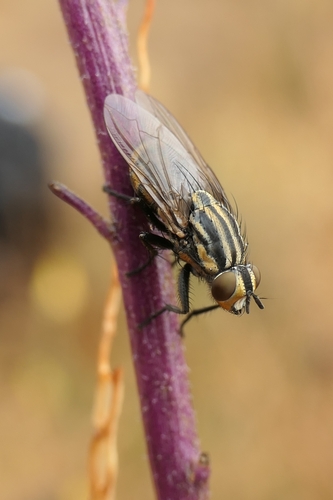
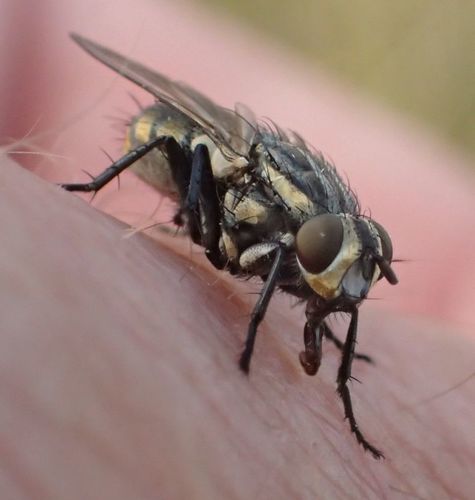
The thorax is striped from head to tail with black and yellow bands, and the legs appear fluffy due to bristles.
Source: Wikipedia
What it eats
Adults deposit hatched maggots on dung, carrion, decaying material or open mammal wounds.
Source: Wikipedia
Life cycle
Females lay eggs in dung; larvae hatch and feed on the dung for about three weeks. After feeding, larvae burrow into the soil to pupate and later emerge as adult flies. Several generations can occur within a single year.
Source: Wikipedia
Where it comes from
The species originated in South America.
Source: Wikipedia
Lookalikes
It closely resembles the European flesh fly and shares many traits.
Source: Wikipedia
More photos
Questions people ask
How can I tell a striped dung fly apart from similar flies?
Look for the black-and-yellow stripes running the length of the thorax and the fluffy-looking bristly legs.
Source: Wikipedia
Where might I encounter striped dung flies?
They are present in South America and have spread to parts of Oceania such as Polynesia, Norfolk Island and New Zealand.
Source: Wikipedia
Same family (Sarcophagidae)
Sources
- Wikipedia: https://en.wikipedia.org/wiki/Striped_dung_fly
Look it up elsewhere: GBIF · iNaturalist · BugGuide · Wikipedia
Text written 2026-10-23 from the sources above and checked sentence by sentence against them. Data fetched 2026-10-23.