 Bug FAQ
Straw Underwing
Thalpophila matura · Order: Lepidoptera · Family: Noctuidae
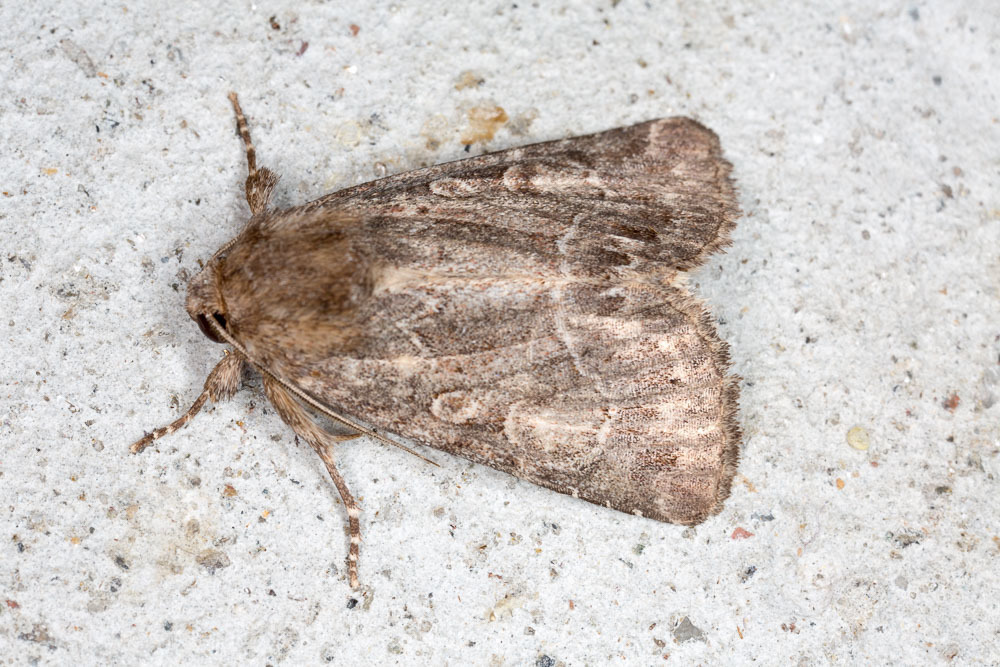
The straw underwing moth has a wingspan of about 38 to 46 mm and flies at night in July and August in the British Isles. Its forewings are dark brown with pale and reddish patches and a whitish band near the edge, while the hindwings are pale straw with a broad dark margin. It lives in dry grasslands, forest edges and park-like areas across a range from North Africa through much of Europe to western Asia.
Source: Wikipedia
How to recognize it
Forewings are dark brown, often variegated with lighter and reddish spots and a noticeable whitish band near the wing tip.
Source: Wikipedia
Size
Wingspan ranges from 38 to 46 mm.
Source: Wikipedia
Where it lives
Prefers dry grasslands, forest edges and park-like landscapes.
Source: Wikipedia
What it eats
Larvae feed on various grasses such as Dactylis.
Source: Wikipedia
Life cycle
Overwinters as a small larva; larvae are grey-brown with dark dorsal lines and pale-dark longitudinal lines on the sides.
Source: Wikipedia
When you see it
Adults fly at night during July and August in the British Isles; timing may vary elsewhere.
Source: Wikipedia
Where it comes from
Its eastern range extends to southern Russia, Asia Minor and the Caucasus.
Source: Wikipedia
Questions people ask
Are they a garden pest?
They feed on grasses as larvae, but there is no source saying they damage crops or garden plants.
Source: Wikipedia
When can I see them?
They are active at night in July and August in the British Isles.
Source: Wikipedia
Where do they live?
They prefer dry grasslands, forest edges and park-like areas across much of Europe and into western Asia.
Source: Wikipedia
Same family (Noctuidae)
 Ipsilon Dart MothAgrotis ipsilonDamages trees, gardens or crops
 Fall Armyworm MothSpodoptera frugiperdaDamages trees, gardens or crops
 Army Cutworm MothEuxoa auxiliarisDamages trees, gardens or crops
 Large Yellow UnderwingNoctua pronubaDamages trees, gardens or crops
 Silver ΥAutographa gamma
 American DaggerAcronicta americanaCan irritate skin
Sources
- Wikipedia: https://en.wikipedia.org/wiki/Straw_underwing
Look it up elsewhere: GBIF · iNaturalist · BugGuide · Wikipedia
Text written 2026-10-22 from the sources above and checked sentence by sentence against them. Data fetched 2026-10-22.