 Bug FAQ
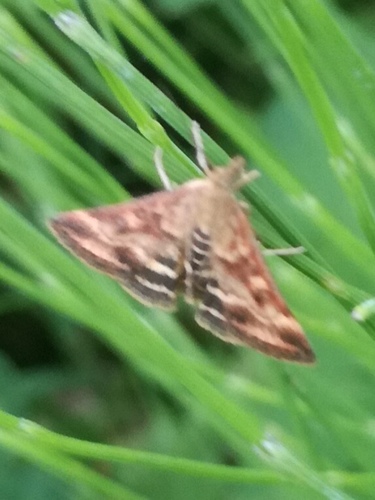
Straw-barred Pearl
Pyrausta despicata · Order: Lepidoptera · Family: Crambidae
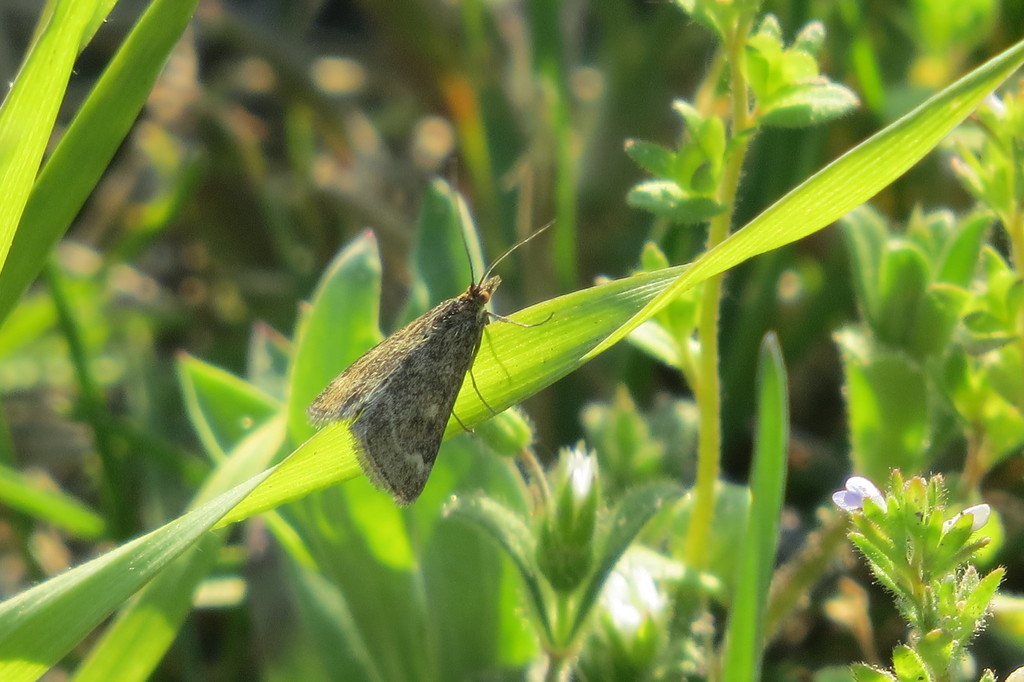
The straw-barred pearl has a wingspan of about 14 to 19 mm and its wings are brown or greyish with variable pale markings. It lives on chalky and limestone soils and is found across most of Europe. The caterpillars feed on Plantago lanceolata and Plantago major, and the adult flies from May to September in two generations, active in sunshine and at dusk.
Source: Wikipedia
How to recognize it
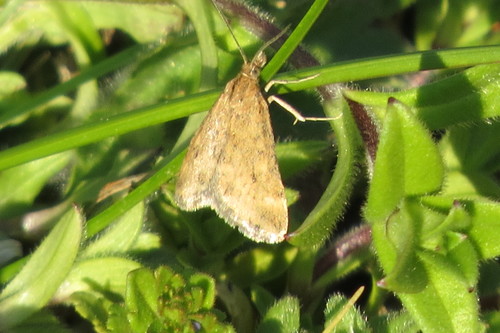
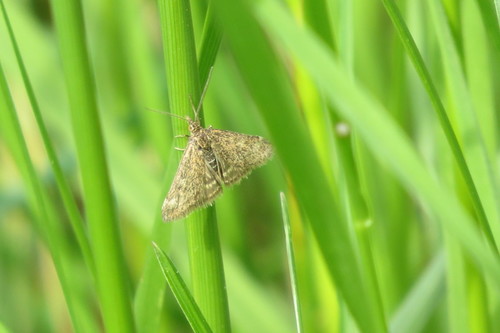
The forewings are brownish-grey, sometimes sprinkled with black, with an obscure pale first line and a second line that is often faint, especially on the costa; small darker orbicular and oval discal spots may be present, sometimes separated by a pale spot in females, and a pale subterminal streak can appear.
Source: Wikipedia
Size
Wingspan ranges from 14 to 19 mm.
Source: Wikipedia
Where it lives
Prefers chalky and limestone habitats.
Source: Wikipedia
Life cycle
Adults fly from May to September in two generations. Active in sunshine and at dusk.
Source: Wikipedia
When you see it
Flight period is May to September, depending on location, in two generations. Active in sunshine and at dusk.
Source: Wikipedia
Where it comes from
Found in most of Europe.
Source: Wikipedia
More photos
Same family (Crambidae)
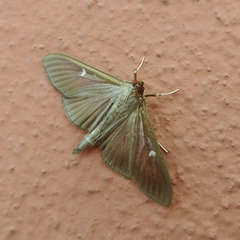 Box Tree MothCydalima perspectalisDamages trees, gardens or crops
 Celery Leaftier MothUdea rubigalisDamages trees, gardens or crops
 Elegant Grass-veneerMicrocrambus elegans
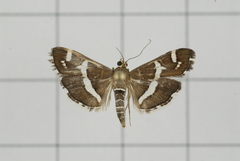 Hawaiian Beet Webworm MothSpoladea recurvalisDamages trees, gardens or crops
 Garden Grass-veneerChrysoteuchia culmellaDamages trees, gardens or crops
 Bluegrass Webworm MothParapediasia teterrellusDamages trees, gardens or crops
Sources
- Wikipedia: https://en.wikipedia.org/wiki/Pyrausta_despicata
Look it up elsewhere: GBIF · iNaturalist · BugGuide · Wikipedia
Text written 2026-10-22 from the sources above and checked sentence by sentence against them. Data fetched 2026-10-22.