 Bug FAQ
Spruce Cone Pug
Eupithecia mutata · Order: Lepidoptera · Family: Geometridae
Also called: cloaked pug, spruce cone looper, Spruce Cone Looper Moth
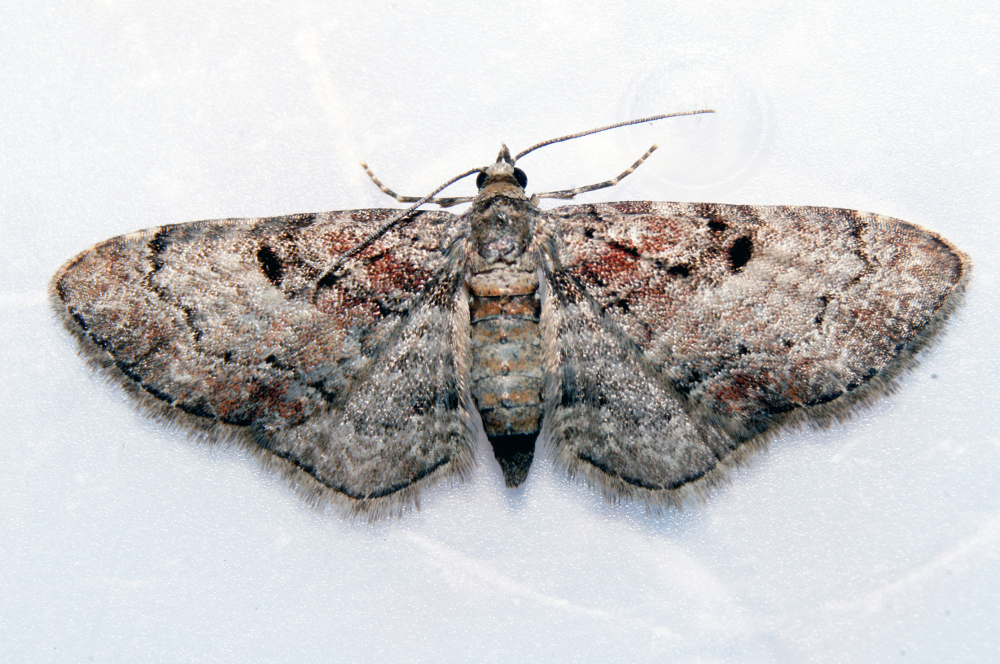
The spruce cone looper is a small moth with a wingspan of about 17 to 22 mm. It lives in the northern Atlantic region of the United States and eastern Canada, from New England up through Nova Scotia to northern Ontario. Its caterpillars eat the seeds inside spruce cones.
Source: Wikipedia
How to recognize it
Eupithecia mutata, known as the spruce cone looper or cloaked pug, belongs to the Geometridae family.
Source: Wikipedia
Size
Adults have a wingspan ranging from 17 to 22 mm.
Source: Wikipedia
What it eats
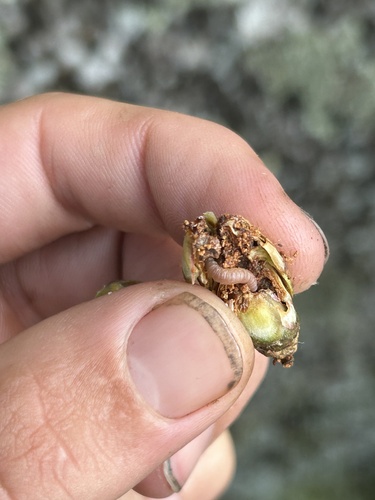
Larvae feed on the seeds inside spruce cones.
Source: Wikipedia
Where it is found in the US
Recorded in 16 of 51 states and DC. Most records: Washington, Wyoming, California, Vermont, Colorado, Maine, Michigan, Montana.
Darker = more records. Counts are museum and citizen-science records, not population size.
Source: GBIF
Status: native in North America; native in United States. Source: iNaturalist
Months it is reported in the US
Source: GBIF
More photos
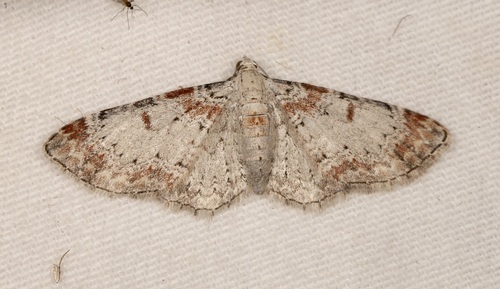
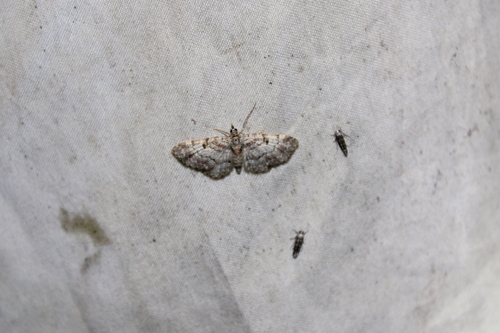
Questions people ask
What do the larvae of the spruce cone looper eat?
The caterpillars feed on seeds within spruce cones.
Source: Wikipedia
Same family (Geometridae)




Sources
- Wikipedia: https://en.wikipedia.org/wiki/Eupithecia_mutata
Look it up elsewhere: GBIF · iNaturalist · BugGuide · ITIS · Wikipedia
Text written 2026-10-28 from the sources above and checked sentence by sentence against them. Data fetched 2026-10-28.