 Bug FAQ
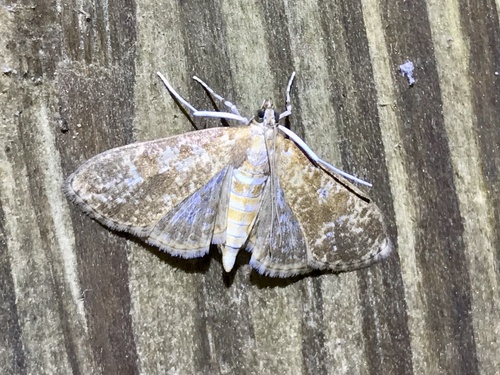
Splendid Palpita Moth
Palpita magniferalis · Order: Lepidoptera · Family: Crambidae
Also called: Splendid Palpita
Source: Wikipedia
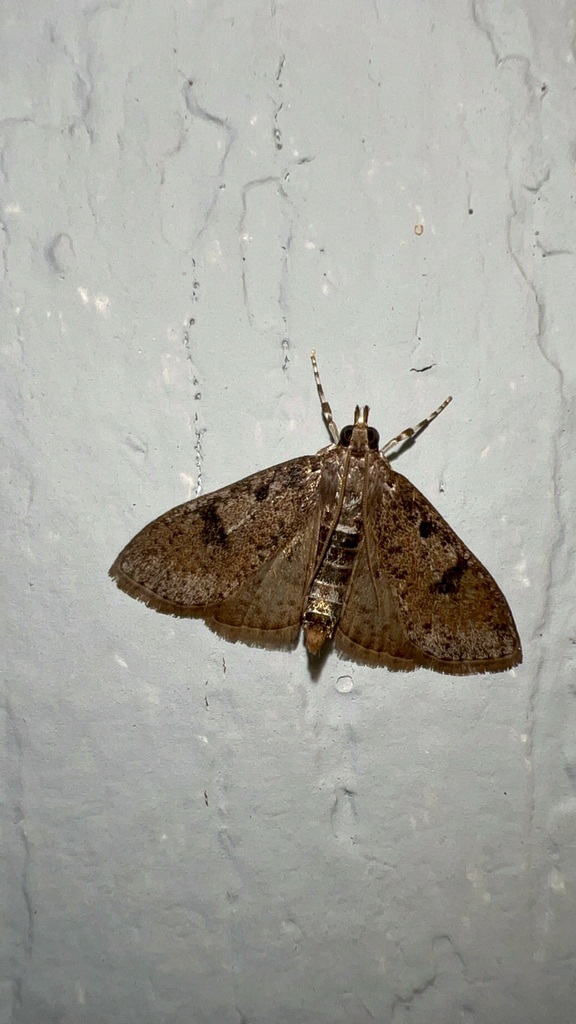
The splendid palpita moth has a wingspan of about 23 to 27 mm. Adults are seen flying from April through October. It lives in eastern North America.
Source: Wikipedia
How to recognize it
Palpita magniferalis belongs to the moth family Crambidae.
Source: Wikipedia
Size
Its wingspan ranges from 23 to 27 mm.
Source: Wikipedia
Where it lives
It is found in eastern North America.
Source: Wikipedia
What it eats
The caterpillars feed on ash (Fraxinus) species.
Source: Wikipedia
Life cycle
Adults are on the wing from April to October.
Source: Wikipedia
When you see it
You can see adults during the months April through October.
Source: Wikipedia
Where it comes from
Its native range is eastern North America.
Source: Wikipedia
Where it is found in the US
Recorded in 37 of 51 states and DC. Most records: Ohio, Texas, Alabama, Virginia, Pennsylvania, North Carolina, Vermont, Oklahoma.
Darker = more records. Counts are museum and citizen-science records, not population size.
Source: GBIF
Status: native in North America; native in Canada; native in United States. Source: iNaturalist
Months it is reported in the US
Source: GBIF
More photos
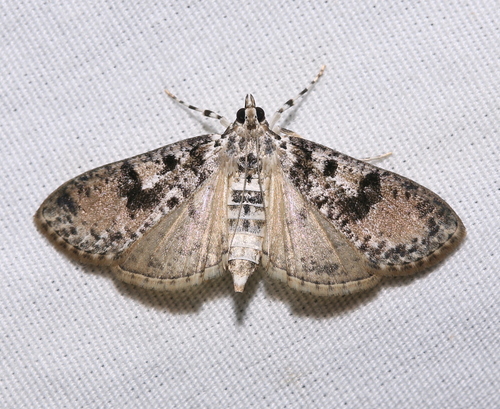
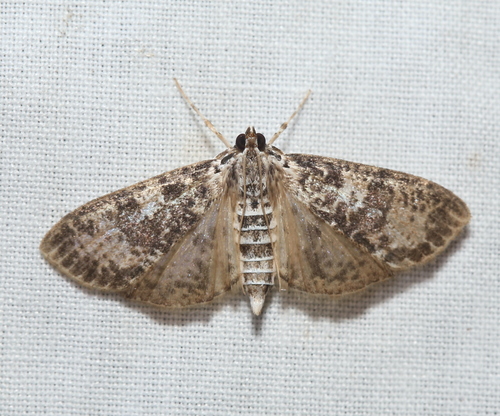
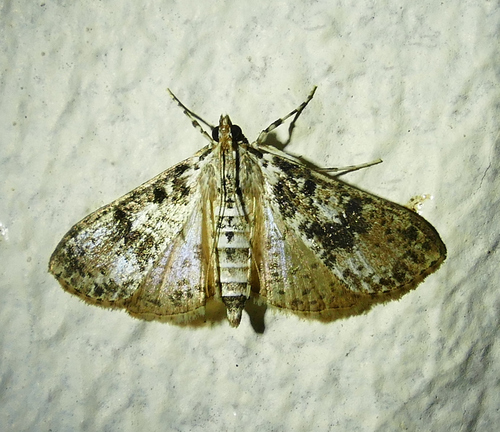
Questions people ask
What do the larvae of the splendid palpita moth eat?
The larvae feed on ash trees (Fraxinus species).
Source: Wikipedia
When are adult splendid palpita moths active?
Adults are active from April through October.
Source: Wikipedia
Same family (Crambidae)
 Box Tree MothCydalima perspectalisDamages trees, gardens or crops
 Celery Leaftier MothUdea rubigalisDamages trees, gardens or crops
 Elegant Grass-veneerMicrocrambus elegans
 Hawaiian Beet Webworm MothSpoladea recurvalisDamages trees, gardens or crops
 Garden Grass-veneerChrysoteuchia culmellaDamages trees, gardens or crops
 Bluegrass Webworm MothParapediasia teterrellusDamages trees, gardens or crops
Sources
- Wikipedia: https://en.wikipedia.org/wiki/Palpita_magniferalis
Look it up elsewhere: GBIF · iNaturalist · BugGuide · Wikipedia
Text written 2026-10-23 from the sources above and checked sentence by sentence against them. Data fetched 2026-10-23.