 Bug FAQ
Speckled Yellow
Pseudopanthera macularia · Order: Lepidoptera · Family: Geometridae
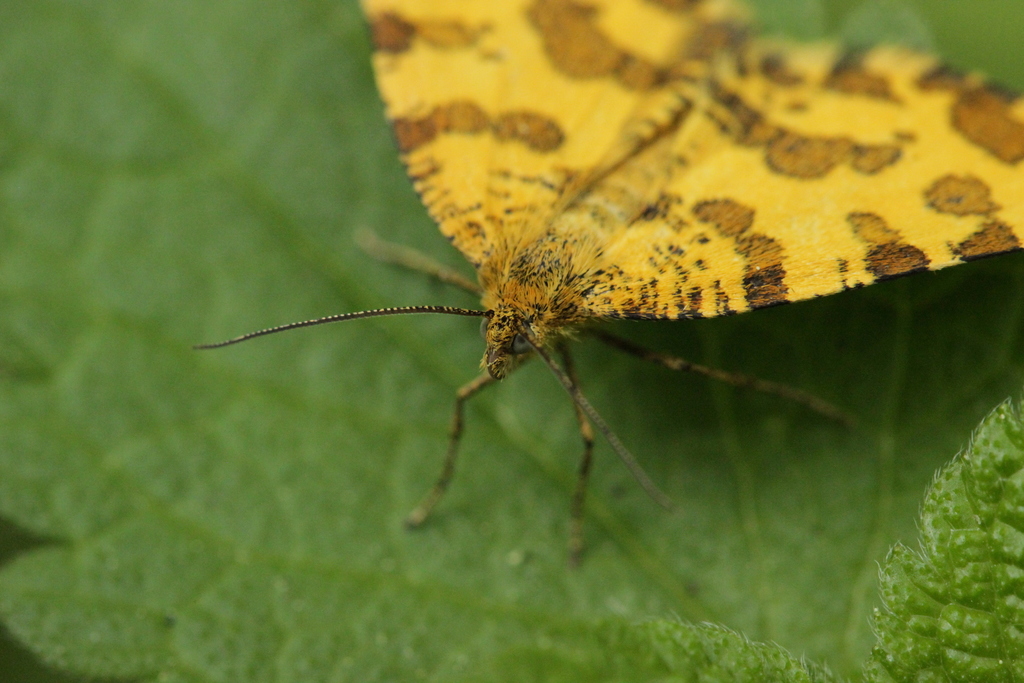
The speckled yellow moth has a wingspan of about 23 to 28 mm and is easily recognized by its broken, irregular yellow spots on both wing surfaces. It lives in woodlands across most of Europe and flies in daylight from April through early July, often appearing in large numbers.
Source: Wikipedia
How to recognize it
Its wings show large irregular yellow spots that break up the usual lines or bands, and the underside looks the same.
Source: Wikipedia
Size
The adult’s wingspan ranges from 23 to 28 mm.
Source: Wikipedia
Where it lives
It is common in woodland areas and is active during the day.
Source: Wikipedia
Life cycle
The larvae are green with white lines and a shiny green head.
Source: Wikipedia
When you see it
Adults fly from April until early July, often in noticeable numbers.
Source: Wikipedia
Where it comes from
The species occurs throughout Europe, from the Iberian Peninsula to the British Isles, Russia to the Urals, and extends eastward across the Palearctic to Transbaikal.
Source: Wikipedia
Lookalikes
Several rare forms exist, such as ab. transversaria with joined spots, ab. viridimaculata with olive-green spots, and others with different colour variations.
Source: Wikipedia
More photos

Questions people ask
Are they a pest for gardens or crops?
The larvae feed on woodsage, but there is no information that they damage other garden plants or crops.
Source: Wikipedia
How can I identify a speckled yellow moth?
Look for a 23 to 28 mm wingspan and large irregular yellow spots breaking up the usual wing lines on both sides of the wings.
Source: Wikipedia
Same family (Geometridae)
 Willow BeautyPeribatodes rhomboidaria
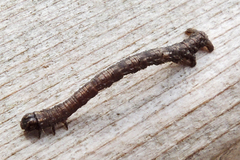 Pale BeautyCampaea perlataDamages trees, gardens or crops
 Large Lace-border MothScopula limboundataDamages trees, gardens or crops
 Riband WaveIdaea aversata
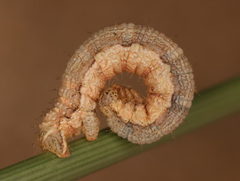 Yellow Shell MothCamptogramma bilineata
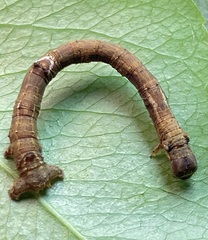 Large Maple Spanworm MothProchoerodes lineolaDamages trees, gardens or crops
Sources
- Wikipedia: https://en.wikipedia.org/wiki/Pseudopanthera_macularia
Look it up elsewhere: GBIF · iNaturalist · BugGuide · Wikipedia
Text written 2026-10-22 from the sources above and checked sentence by sentence against them. Data fetched 2026-10-22.