 Bug FAQ
Southern Michelin Ant
Amblyopone australis · Order: Hymenoptera · Family: Formicidae
Also called: Large Native Ant
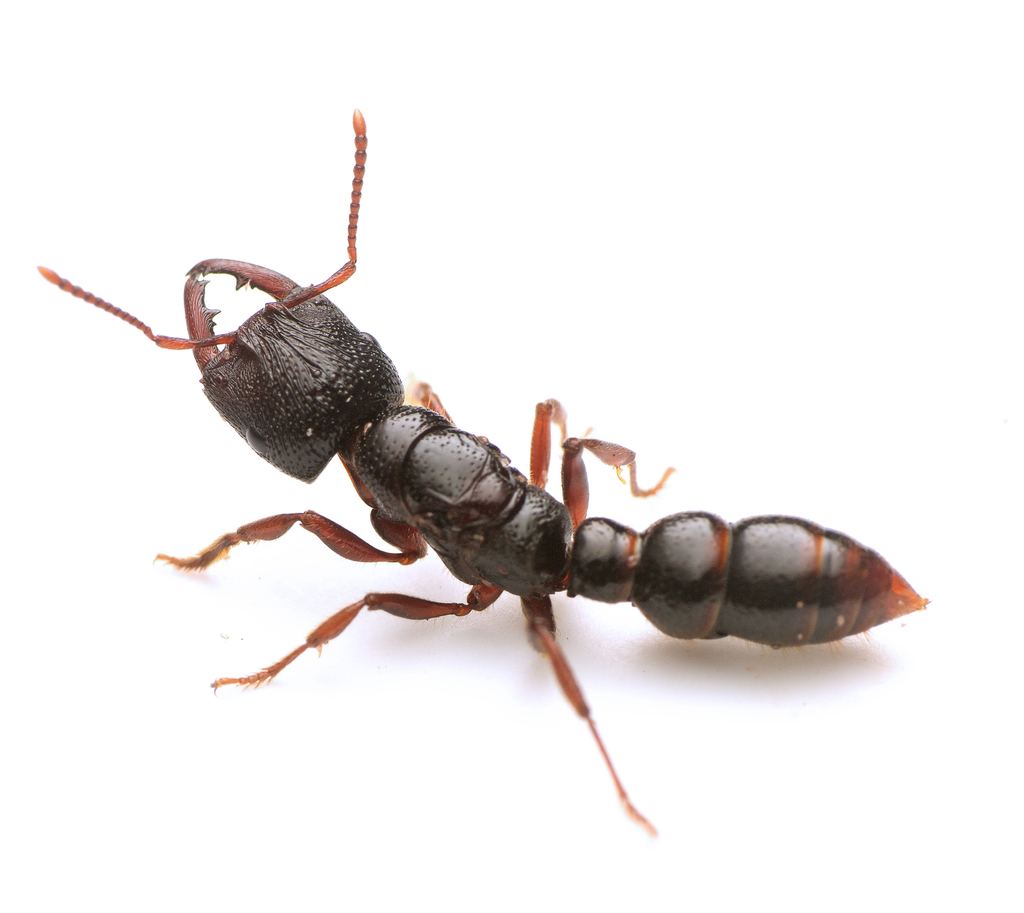
Southern Michelin ants are 4.5 to 8 mm long, with queens a bit larger. They form small colonies of up to about 2 000 individuals, usually nesting under logs or stones.
Source: Wikipedia
How to recognize it
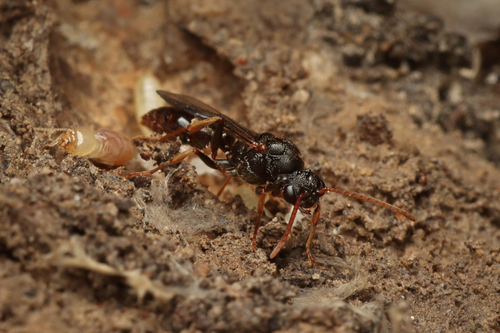
Workers can be yellow, dark brown, or black in colour.
Source: Wikipedia
Size
Body length is 4.5 to 8 mm; queens are larger.
Source: Wikipedia
Where it lives
Colonies contain tens to a few thousand ants and are typically found under logs or stones.
Source: Wikipedia
What it eats
Adults hunt other arthropods, using their sting to paralyse prey, and feed larvae with the dissected body parts.
Source: Wikipedia
Life cycle
Amblyopone australis was first described by Wilhelm Ferdinand Erichson in 1842.
Source: Wikipedia
Where it comes from
The species is native to Australia.
Source: Wikipedia
More photos
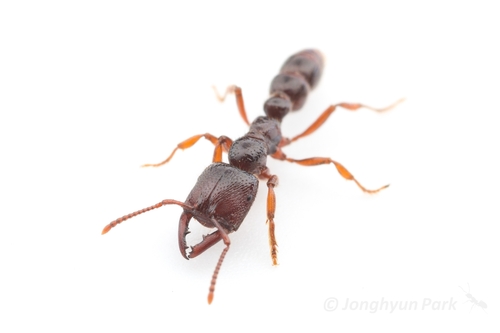
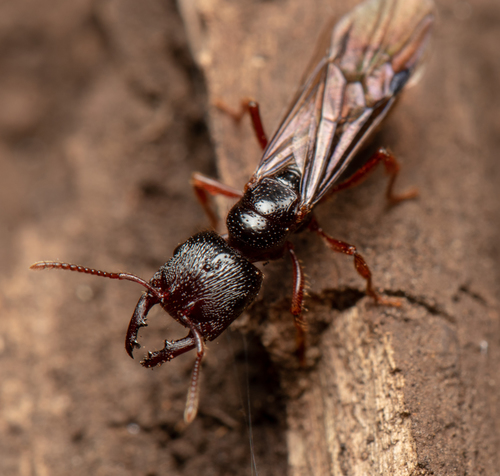
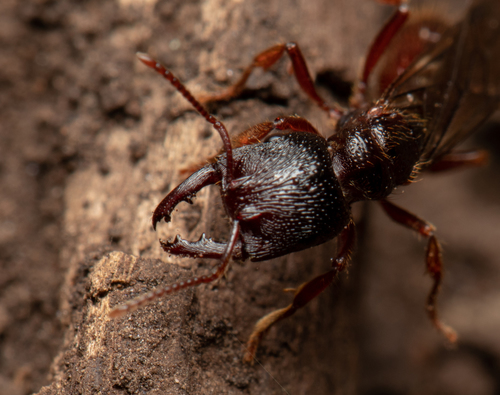
Questions people ask
How big are southern Michelin ants?
They measure about 4.5 to 8 mm, with queens a little larger.
Source: Wikipedia
Where do these ants live?
They nest in small colonies under logs or stones, usually in Australia.
Source: Wikipedia
What do southern Michelin ants eat?
Adults prey on other arthropods, using their sting to immobilise them, and feed larvae with the dissected prey parts.
Source: Wikipedia
Same family (Formicidae)
 Eastern Black Carpenter AntCamponotus pennsylvanicusCan damage your home
 Red Imported Fire AntSolenopsis invictaCan sting
 American Winter AntPrenolepis imparis
 Argentine AntLinepithema humileNuisance, not dangerous
 Immigrant Pavement AntTetramorium immigransCan sting
 Odorous House AntTapinoma sessileCan damage your home
Sources
- Wikipedia: https://en.wikipedia.org/wiki/Amblyopone_australis
Look it up elsewhere: GBIF · iNaturalist · BugGuide · ITIS · Wikipedia
Text written 2026-10-23 from the sources above and checked sentence by sentence against them. Data fetched 2026-10-23.