 Bug FAQ
Southern heliodor
Libellago indica · Order: Odonata · Family: Chlorocyphidae
Also called: River Helidoor
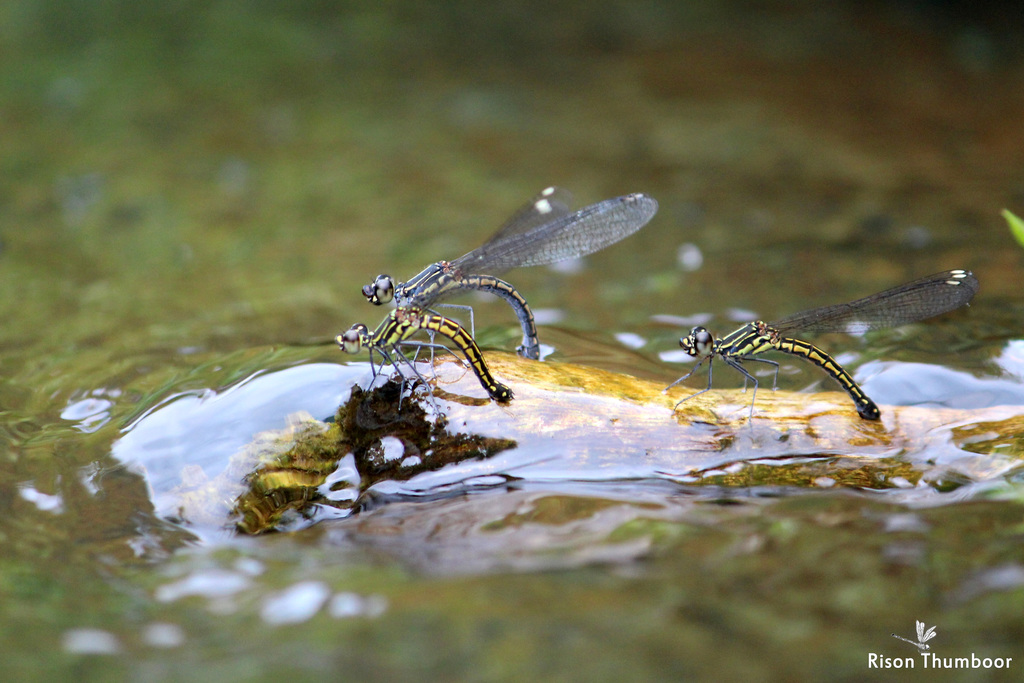
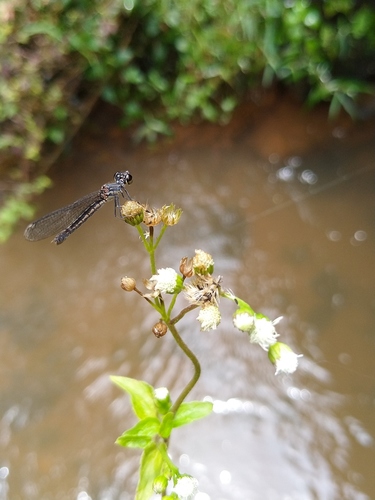
The Southern heliodor is a small damselfly with a large head and brown-capped yellowish eyes. It lives along forest rivers and streams in South India, often perching on water-plant leaves and overhanging bushes.
Source: Wikipedia
How to recognize it
Its thorax is black with yellow markings. The wings are clear and have black spots at the tips of the fore-wings. Segments 2-5 show broad black stripes along the middle of the back.
Source: Wikipedia
Size
It is a small damselfly with a relatively large head and brown-capped yellowish eyes.
Source: Wikipedia
Where it lives
Adults often sit on emergent water plants and on overhanging bushes. It breeds in hill streams and rivers.
Source: Wikipedia
Where it comes from
The species is found only in South India.
Source: Wikipedia
Lookalikes
Its abdominal markings make it easy to tell apart from other Libellago lineata. Young males also have clear wings, which helps differentiate them.
Source: Wikipedia
More photos
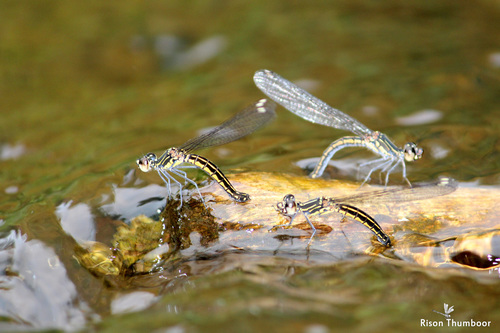
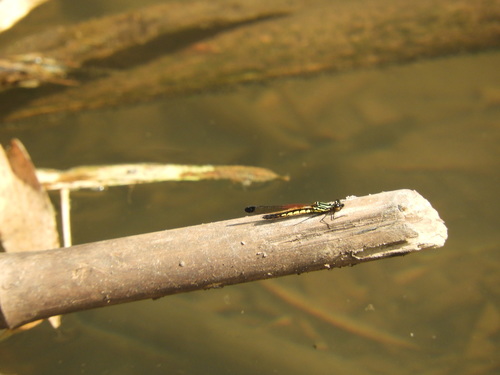
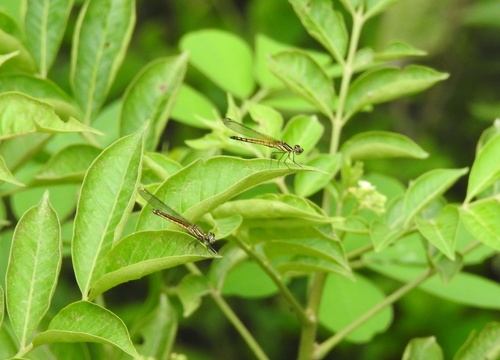
Questions people ask
How can I recognize this damselfly?
Look for a black thorax with yellow marks, clear wings with black tips, and a black abdomen with large yellow side spots and mid-dorsal black stripes on segments 2-5.
Source: Wikipedia
Same family (Chlorocyphidae)

Sources
- Wikipedia: https://en.wikipedia.org/wiki/Libellago_indica
Look it up elsewhere: GBIF · iNaturalist · BugGuide · Wikipedia
Text written 2026-10-24 from the sources above and checked sentence by sentence against them. Data fetched 2026-10-23.