 Bug FAQ
Dancing Jewel
Platycypha caligata · Order: Odonata · Family: Chlorocyphidae

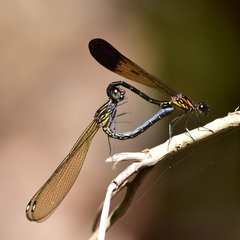
Males flash bright leg colors and wave their abdomens during courtship and territorial displays. The white front and red rear leg colors help attract mates and signal other males. It lives in shady parts of streams, rivers, lakeshores, forests, woodlands, savannas and shrublands across eastern, central and southern Africa.
Source: Wikipedia
How to recognize it
Males perform bright leg flashing, foot-waggling and abdomen waving as part of courtship and territory defense. White front coloration attracts mates, while red on the tibia signals other males.
Source: Wikipedia
Where it lives
Found in shady sections of tropical and subtropical streams, rivers, lake shores, forests, woodlands, savannas and shrublands.
Source: Wikipedia
Where it comes from
Occurs from Ethiopia through Angola to South Africa in eastern, central and southern Africa.
Source: Wikipedia
Lookalikes
Platycypha caligata, known as the dancing jewel, belongs to the damselfly family Chlorocyphidae.
Source: Wikipedia
More photos


Questions people ask
How can I recognize a dancing jewel damselfly?
Males have bright, flattened tibiae that they flash and vibrate, plus a white front and red rear leg coloration used in courtship and territorial signals.
Source: Wikipedia
Where might I find a dancing jewel?
They live in shady parts of streams, rivers, lake edges, forests, woodlands, savannas and shrublands across eastern, central and southern Africa.
Source: Wikipedia
Same family (Chlorocyphidae)
Sources
- Wikipedia: https://en.wikipedia.org/wiki/Platycypha_caligata
Look it up elsewhere: GBIF · iNaturalist · BugGuide · Wikipedia
Text written 2026-10-23 from the sources above and checked sentence by sentence against them. Data fetched 2026-10-23.