 Bug FAQ
Southern Dogface
Zerene cesonia · Order: Lepidoptera · Family: Pieridae
Also called: Eastern Dogface, Dog Face, Dogface Butterfly
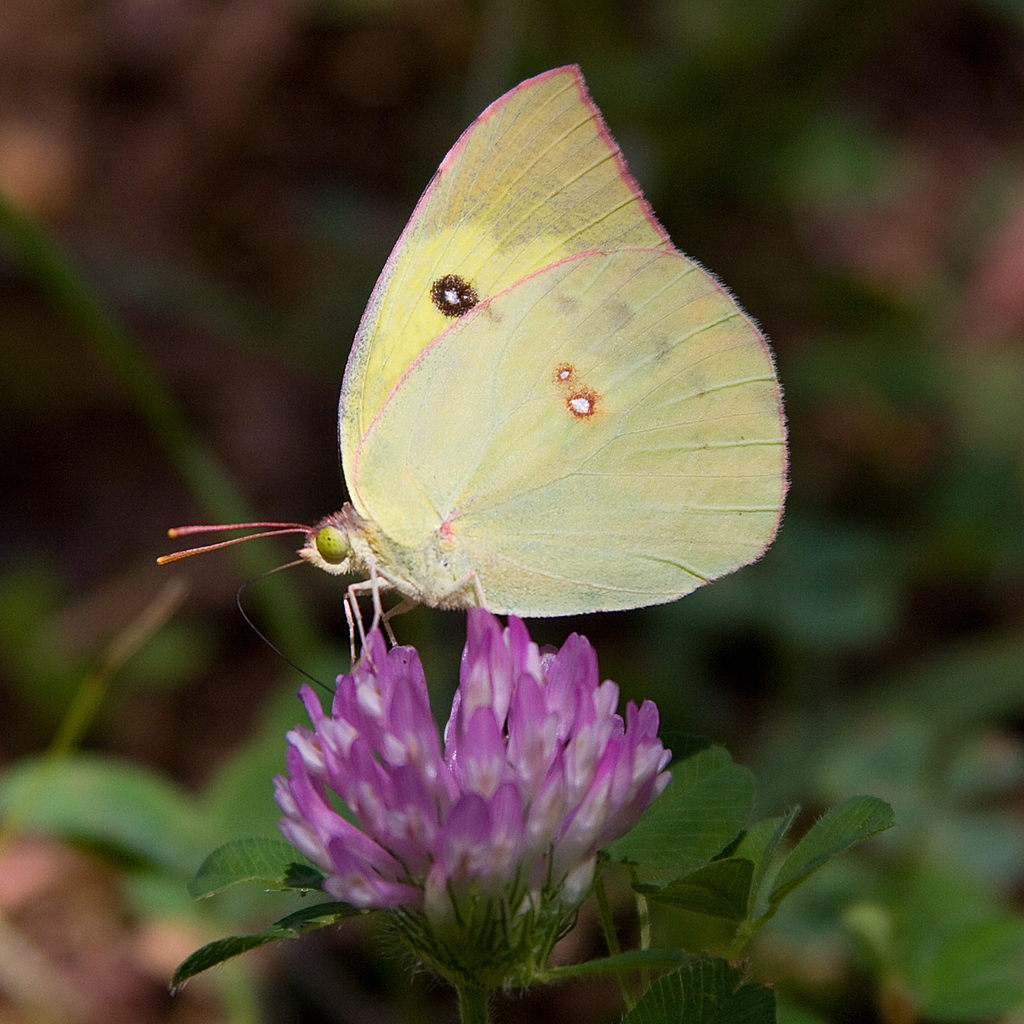
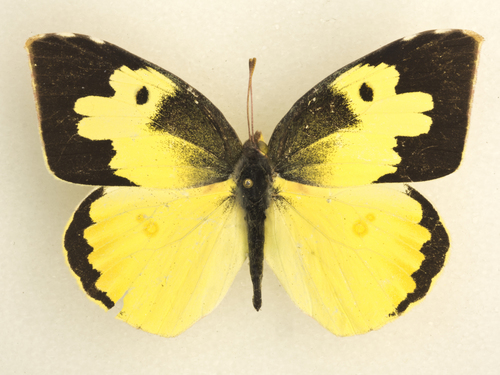
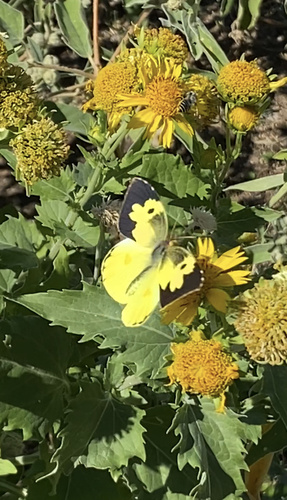
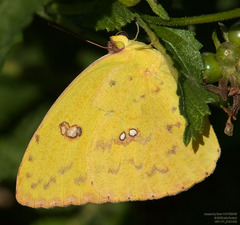
The southern dogface has yellow wings with black borders and a distinctive dog-face pattern on the upper side of the forewings. Adults feed on a variety of flowers such as alfalfa, coreopsis, houstonia and verbena, while their larvae use plants like leadplant, false indigo, soybean, alfalfa, dalea species and clover as hosts.
Source: Wikipedia
How to recognize it
The upper side of the forewings shows a dog-face pattern.
Source: Wikipedia
What it eats
Adults feed on flowers such as alfalfa, coreopsis, houstonia and verbena. Larvae use host plants including leadplant, false indigo, soybean, alfalfa, various dalea species and clover.
Source: Wikipedia
Life cycle
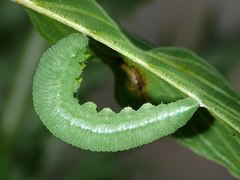
The green chrysalis hangs upright and is held by a silken girdle.
Source: Wikipedia
Where it comes from
The species occurs in North and South America.
Source: Wikipedia
Lookalikes
It was formerly placed in the related genus Colias.
Source: Wikipedia
Where it is found in the US
Recorded in 34 of 51 states and DC. Most records: Texas, Arizona, Florida, New Mexico, Illinois, Arkansas, Missouri, Tennessee.
Darker = more records. Counts are museum and citizen-science records, not population size.
Source: GBIF
Status: native in North America; native in United States. Source: iNaturalist
Months it is reported in the US
Source: GBIF
More photos
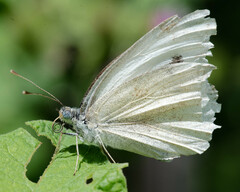
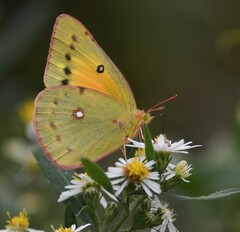
Same family (Pieridae)


Sources
- Wikipedia: https://en.wikipedia.org/wiki/Zerene_cesonia
Look it up elsewhere: GBIF · iNaturalist · BugGuide · ITIS · Wikipedia
Text written 2026-10-22 from the sources above and checked sentence by sentence against them. Data fetched 2026-10-22.