 Bug FAQ
Southern Beet Webworm Moth
Herpetogramma bipunctalis · Order: Lepidoptera · Family: Crambidae
Also called: Two-spotted Herpetogramma Moth, Southern beet webworm, Two-spotted Herpetogramma
Source: Wikipedia
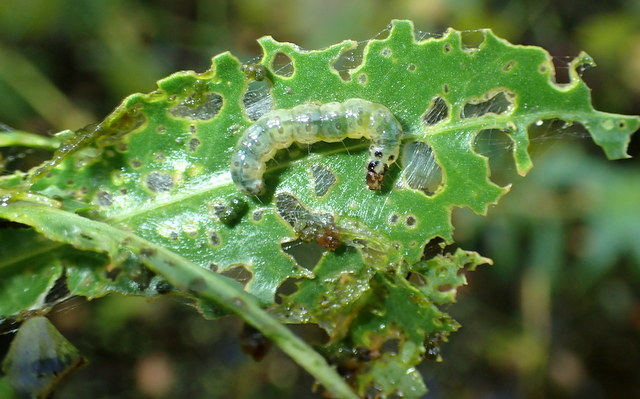
Adults have a wingspan of about 23-24 mm and are creamy brown on both fore- and hind-wings with wavy discoidal spots. The moth occurs from New England down the Atlantic coast to Florida, west to Texas and Illinois, and further south through Central America, the Caribbean and South America. Larvae feed on leaf tissue and later bore holes in stems to reach the soil for pupation, damaging the plants.
Source: Wikipedia
How to recognize it
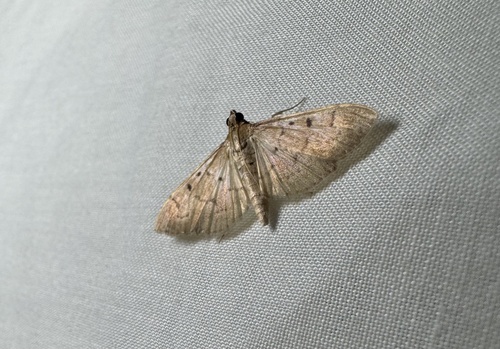
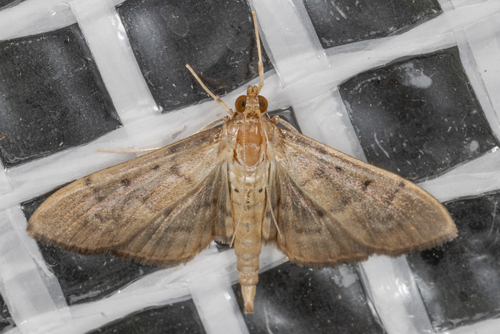
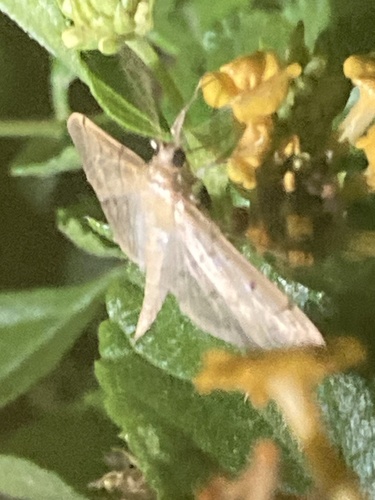
Both pairs of wings are a creamy brown color. The wings show wavy, discoidal spots. The abdomen has two dark spots on the dorsal side.
Source: Wikipedia
Size
The adult moth’s wingspan measures 23-24 mm.
Source: Wikipedia
Where it lives
In the southern part of its range it extends through Central America, the Caribbean and South America.
Source: Wikipedia
What it eats
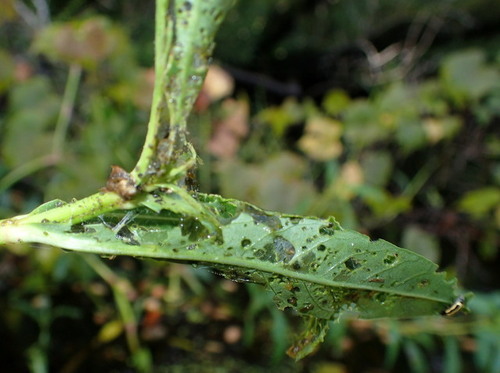
Early larvae eat leaf tissue, and later stages make exit holes in stems to reach the soil for pupation.
Source: Wikipedia
Life cycle
The species goes through five larval instars. Development from egg to adult takes about 23 to 39 days.
Source: Wikipedia
Where it comes from
Its native range includes the eastern United States from New England to Florida and west to Texas and Illinois. Further south it is native to Central America, the Caribbean and South America.
Source: Wikipedia
Where it is found in the US
Recorded in 38 of 51 states and DC. Most records: Texas, Oklahoma, Illinois, Florida, Alabama, Indiana, Louisiana, Georgia.
Darker = more records. Counts are museum and citizen-science records, not population size.
Source: GBIF
Status: native in North America; native in Canada; native in United States. Source: iNaturalist
Months it is reported in the US
Source: GBIF
More photos
Questions people ask
How big is the Southern Beet Webworm Moth?
Adults have a wingspan of roughly 23-24 mm.
Source: Wikipedia
What does this moth look like?
Both fore- and hind-wings are creamy brown with wavy discoidal spots, and the abdomen shows two dark dorsal spots.
Source: Wikipedia
Does it damage plants?
Yes, the larvae feed on leaves and later bore holes in stems, harming garden plants and crops.
Source: Wikipedia
Same family (Crambidae)
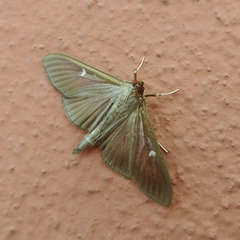 Box Tree MothCydalima perspectalisDamages trees, gardens or crops
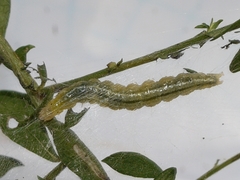 Celery Leaftier MothUdea rubigalisDamages trees, gardens or crops
 Elegant Grass-veneerMicrocrambus elegans
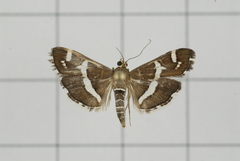 Hawaiian Beet Webworm MothSpoladea recurvalisDamages trees, gardens or crops
 Garden Grass-veneerChrysoteuchia culmellaDamages trees, gardens or crops
 Bluegrass Webworm MothParapediasia teterrellusDamages trees, gardens or crops
Sources
- Wikipedia: https://en.wikipedia.org/wiki/Herpetogramma_bipunctalis
Look it up elsewhere: GBIF · iNaturalist · BugGuide · Wikipedia
Text written 2026-10-23 from the sources above and checked sentence by sentence against them. Data fetched 2026-10-23.