 Bug FAQ
Southern Armyworm
Persectania aversa · Order: Lepidoptera · Family: Noctuidae
Source: Wikipedia
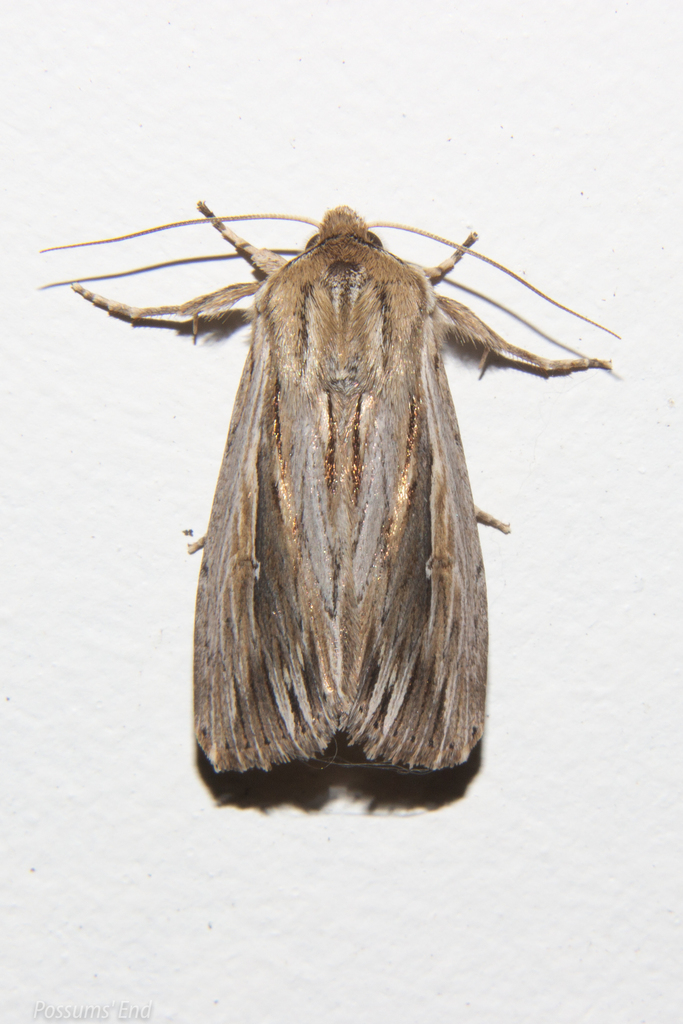
Adults have a wingspan of about 1½ inches and are pale fawn-coloured with distinctive brown bands and white-bordered lines on the wings. The larvae feed on many grass species, including cultivated crops like oats, barley, wheat and pasture grasses, making the species an agricultural pest.
Source: Wikipedia
How to recognize it
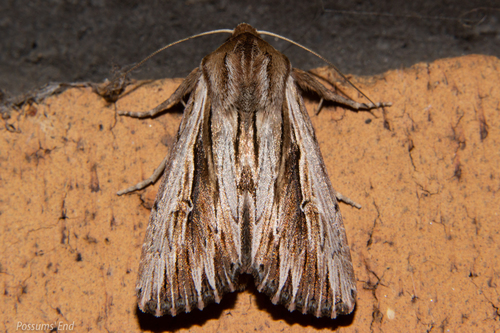
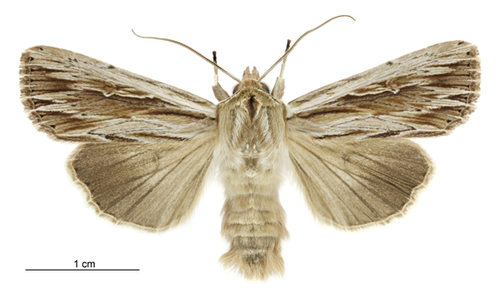
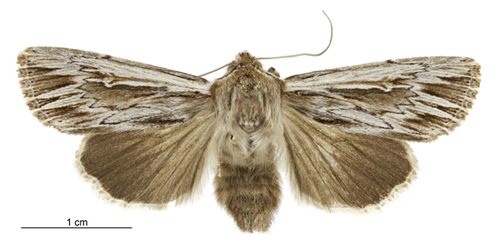
Adults are pale fawn-coloured; the thorax has front brown bands, forewings show a white brown-bordered discal line and brown white-bordered streaks, and hind wings are pale with broad brownish borders.
Source: Wikipedia
Size
The adult wingspan is about 1½ inches.
Source: Wikipedia
Is it a pest in the house?
It is regarded as an agricultural pest and is known for damaging graminaceous crops.
Source: Wikipedia
How to get rid of it
Introducing a parasitic wasp as a biological control has greatly reduced its numbers. It has been used in research to develop electrified fences that contain Lepidoptera larvae.
Source: Wikipedia
Where it lives
It lives in open grasslands and pastures.
Source: Wikipedia
What it eats
Larvae feed on many grasses, including oats, barley, wheat, ryegrass, fescues and other pasture species.
Source: Wikipedia
Life cycle
Eggs are white or light brown-yellow and are laid on host plants; they hatch after about seventeen days. Pupation occurs on or just under the soil surface; the species usually overwinters as a pupa but can also hibernate as an adult.
Source: Wikipedia
When you see it
Adults can be found flying throughout the year.
Source: Wikipedia
Where it comes from
It is endemic to New Zealand.
Source: Wikipedia
More photos
Questions people ask
How can I control Southern Armyworm infestations?
Biological control with a parasitic wasp has been effective at lowering their populations.
Source: Wikipedia
What crops are affected by Southern Armyworm?
The larvae feed on grasses such as oats, barley, wheat and various pasture species.
Source: Wikipedia
Where does Southern Armyworm naturally occur?
It is native to New Zealand and lives in open grasslands and pastures.
Source: Wikipedia
Same family (Noctuidae)
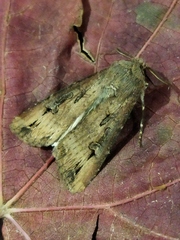 Ipsilon Dart MothAgrotis ipsilonDamages trees, gardens or crops
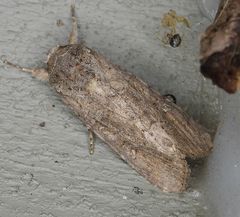 Fall Armyworm MothSpodoptera frugiperdaDamages trees, gardens or crops
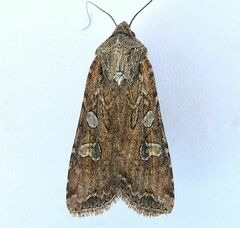 Army Cutworm MothEuxoa auxiliarisDamages trees, gardens or crops
 Large Yellow UnderwingNoctua pronubaDamages trees, gardens or crops
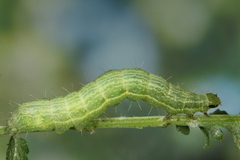 Silver ΥAutographa gamma
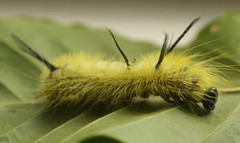 American DaggerAcronicta americanaCan irritate skin
Sources
- Wikipedia: https://en.wikipedia.org/wiki/Persectania_aversa
Look it up elsewhere: GBIF · iNaturalist · BugGuide · Wikipedia
Text written 2026-10-23 from the sources above and checked sentence by sentence against them. Data fetched 2026-10-23.