 Bug FAQ
Smokey Oak Millipede
Narceus gordanus · Order: Spirobolida · Family: Spirobolidae
Also called: Smokey Ghost Millipede, grayish-green millipede, smoky ghost millipede, smoky oak millipede
Source: Wikipedia
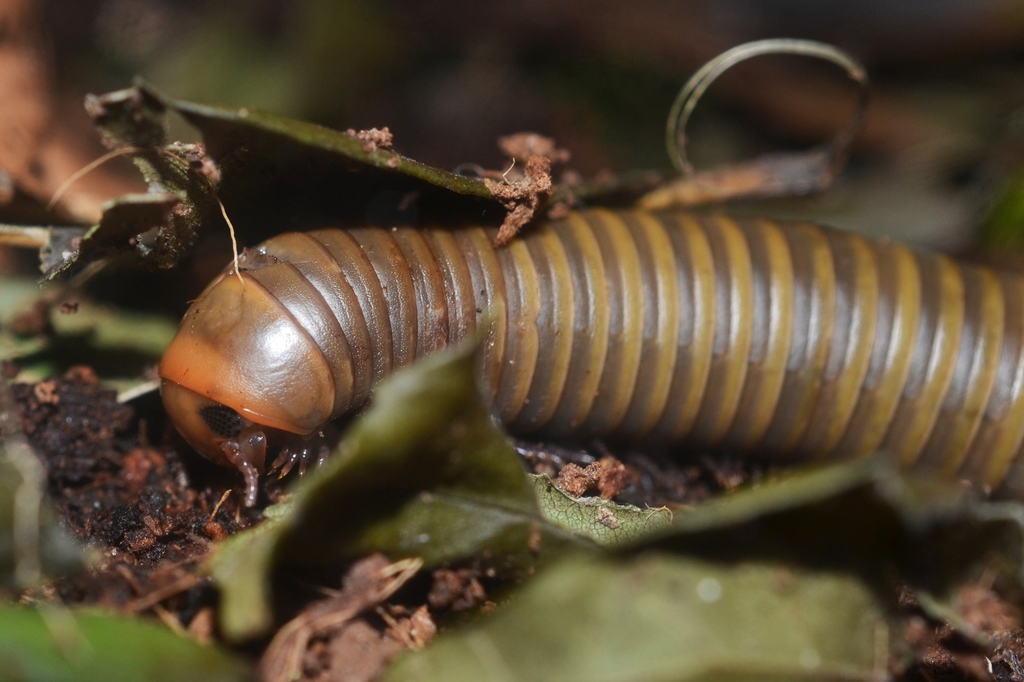
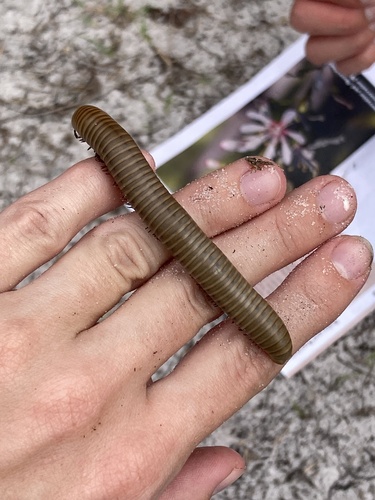
Adults are 60 to 120 mm long, up to 13 mm wide, and have 45 to 65 body segments. They live in Florida scrub and nearby southeastern states, matching the sand color of some habitats and are mainly active at night.
Source: Wikipedia
How to recognize it
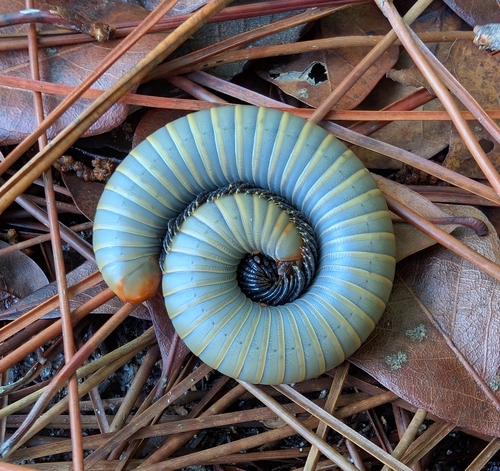
The rings are a light greenish-tan with a darker tan band, giving the body a lighter overall color than other Narceus species. It has shorter legs and a deeper groove on the head where the antennae rest.
Source: Wikipedia
Size
Adults range from about 60 to 120 mm (2.4 to 4.7 in) in length and can be up to 13 mm wide, with 45 to 65 segments.
Source: Wikipedia
Where it lives
It occurs in Florida scrub habitat and its range extends north to South Carolina, with possible records in Tennessee. Its coloration matches the sand in some Florida habitats, though it is primarily nocturnal.
Source: Wikipedia
What it eats
It feeds on decaying leaves, wood and other detritus.
Source: Wikipedia
When you see it
It is mainly active at night.
Source: Wikipedia
Where it comes from
Narceus gordanus, also called the smokey oak or smokey ghost millipede, is native to the southeastern United States.
Source: Wikipedia
Lookalikes
It can be distinguished from other Narceus species by its lighter body color.
Source: Wikipedia
Where it is found in the US
Recorded in 1 of 51 states and DC. Most records: Florida.
Darker = more records. Counts are museum and citizen-science records, not population size.
Source: GBIF
Status: endemic in United States; native in North America. Source: iNaturalist
Months it is reported in the US
Source: GBIF
More photos
Questions people ask
What does a millipede burn look like?
The secretions leave a harmless discoloration on the skin, often called a millipede burn.
Source: Wikipedia
How can I tell this millipede apart from other Narceus species?
Its rings are lighter greenish-tan with a darker tan band, making the overall color lighter than its relatives.
Source: Wikipedia
Same family (Spirobolidae)

Sources
- Wikipedia: https://en.wikipedia.org/wiki/Narceus_gordanus
Look it up elsewhere: GBIF · iNaturalist · BugGuide · ITIS · Wikipedia
Text written 2026-10-25 from the sources above and checked sentence by sentence against them. Data fetched 2026-10-25.